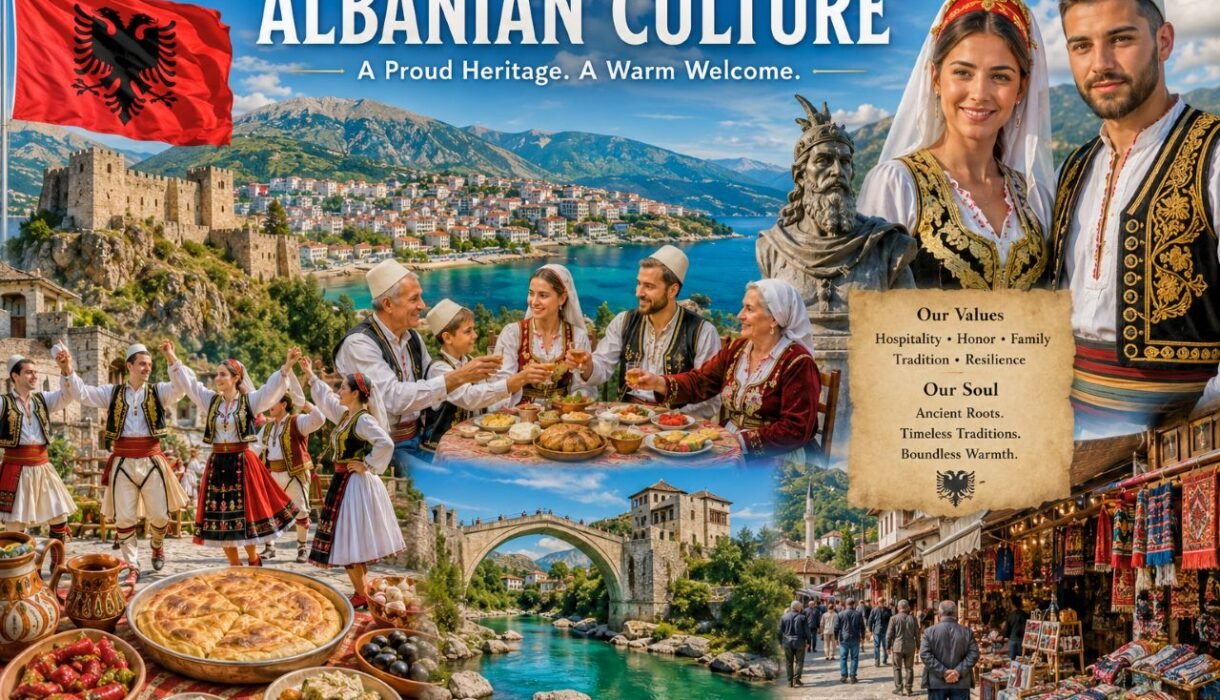

Nestled in the southwestern corner of the Balkan Peninsula, Albania possesses one of Europe’s most captivating, resilient, and distinct cultures. The Albanian people, who refer to themselves as Shqiptarë (often translated as “sons of eagles”) and their homeland as Shqipëria, have preserved a deep-rooted identity that sets them apart from their Slavic and Greek neighbors.
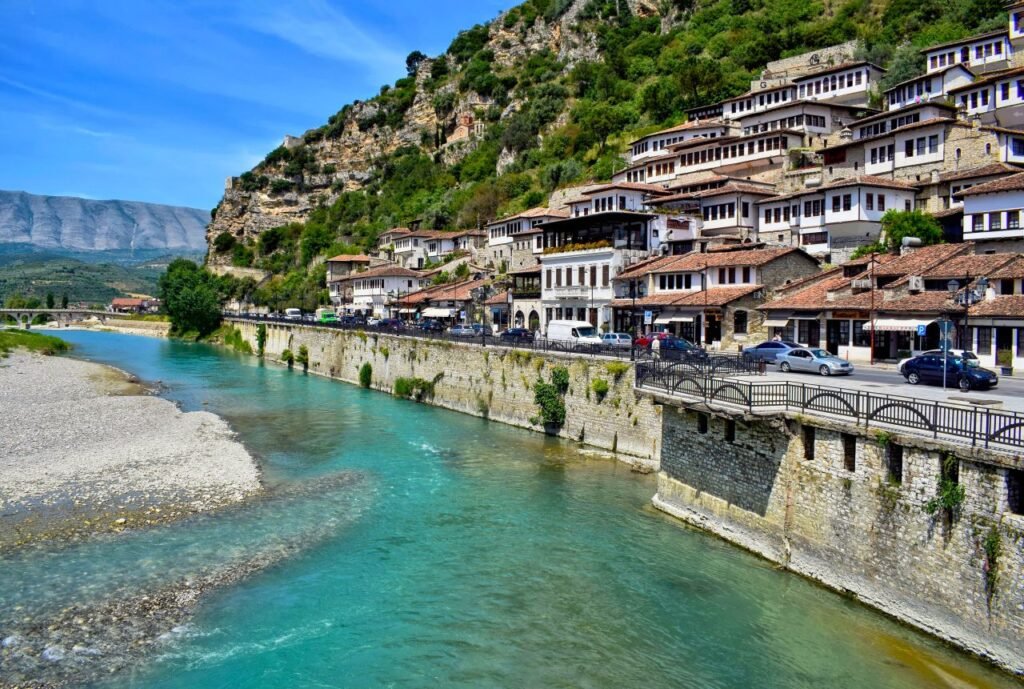
Albanian culture is defined by a striking paradox: it is an ancient, deeply traditional society governed by thousands-of-years-old codes of honor, yet it is simultaneously forward-looking, warm, and exceptionally welcoming to outsiders. Central to their way of life is the sacred concept of hospitality, turning strangers into honored guests.
History & Origins
The roots of Albanian culture stretch far back into European antiquity.
[Illyrian Tribal Foundations] ➔ [Roman & Byzantine Eras] ➔ [500 Years of Ottoman Rule] ➔ [20th Century Communism] ➔ [Modern Democracy]
- The Illyrian Legacy: Modern Albanians are widely recognized as the direct descendants of the ancient Illyrians, Indo-European tribes who inhabited the Western Balkans long before the arrival of the Slavs.
- The Age of Skanderbeg: In the 15th century, national hero Gjergj Kastrioti, known as Skanderbeg, successfully united Albanian principalities to resist the invading Ottoman Empire for over two decades. His legacy remains the ultimate cultural symbol of freedom and resistance.
- Ottoman and Communist Transformations: Following Skanderbeg’s death, Albania fell under Ottoman rule for nearly 500 years, drastically altering its religious and architectural landscape. In the 20th century, following independence in 1912, the nation survived a grueling, hyper-isolated 40-year communist dictatorship under Enver Hoxha, emerging in the 1990s as a resilient democratic society.
Culture, Traditions & Customs
Marriage & Weddings
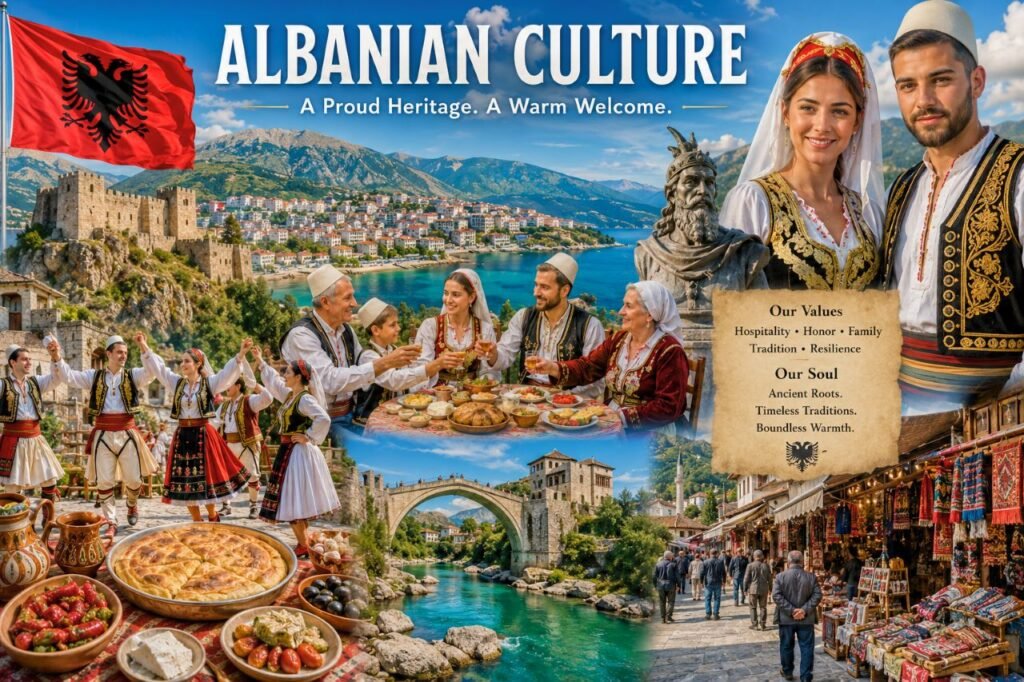
Albanian weddings (dasma) are legendary, epic celebrations that frequently last an entire week. Traditional weddings feature separate celebrations hosted by the bride’s and groom’s families. A key custom is the exchange of the paja (dowry), consisting of hand-woven linens and embroidery made by the bride. The festivities involve massive communal street dancing, excessive feasting, and the firing of symbolic celebratory shots in rural areas.
Naming Ceremonies & Rites of Passage
The birth of a child is met with intense family celebration. A traditional custom includes placing a small eye amulet or a silver coin under the baby’s pillow to ward off the syri i keq (evil eye). First haircuts and major birthdays are significant milestones, representing the child’s formal introduction to the extended clan network.
Festivals & Holidays
- Dita e Verës (Summer Day): Celebrated every March 14th, this ancient pagan festival marks the end of winter and the rebirth of nature. People wear a red-and-white braided bracelet (verore) and feast on ballokume, a large, sweet corn-flour cookie.
- Independence Day (November 28): Known as Flag Day, this holiday commemorates the declaration of independence from the Ottomans in 1912, coating the country in the national colors of red and black.
Languages & Communication
The Albanian language, Shqip, is a linguistic wonder. It occupies its own completely independent branch on the Indo-European language family tree, meaning it has no close living relatives.
Dialects & Structural Split
The language is divided geographically by the Shkumbin River into two primary dialects:
- Gheg: Spoken in the rugged north, known for its nasal vowels and historic oral epics.
- Tosk: Spoken in the south, forming the structural foundation for modern Standard Albanian.
Greetings & Gestures
When greeting, men traditionally shake hands firmly, while close friends exchange cheek kisses.
Important Cultural Note: Body language in Albania can be notoriously confusing to travelers. A gentle shake of the head side-to-side traditionally means “Yes,” while a sharp up-and-down nod means “No.”
Proverbs & Expressions
- “Bukë, kripë e zemër të bardhë.”
Translation: “Bread, salt, and a white (pure) heart.” This core phrase highlights the peak value of hospitality—even if a host has nothing but basic food to offer, it is given with absolute love and sincerity.
Geography
Albania’s culture is deeply shaped by its dramatic physical landscape. Bordered by the Adriatic and Ionian Seas to the west, its coastline features pristine beaches, while its interior is dominated by the imposing Albanian Alps (Prokletije, or “The Accursed Mountains”).
This geographic divide historically separated the isolated, fiercely independent mountainous northern tribes from the more agrarian, open trading cultures of the southern valleys and coastal ports.
Economy
Historically agricultural, Albania has undergone significant modernization. Today, its economy is heavily driven by services, construction, and textiles. Crucially, tourism has exploded as a primary economic engine, with travelers arriving to explore both the Albanian Riviera and UNESCO-protected historic towns like Berat and Gjirokastër. Remittances from the massive Albanian diaspora living across Europe and North America also play a critical role in supporting local family businesses.
Politics
Albania is a unitary parliamentary constitutional republic. After casting off the shackles of one of the world’s most oppressive communist regimes in 1991, the nation completely overhauled its political landscape. It joined NATO in 2009 and actively continues its path toward full European Union membership. Politics in Albania is vibrant and intensely debated, with a young populace that is overwhelmingly pro-European and globalist in outlook.
Ethnic Groups
The population of Albania is remarkably homogeneous, with over 90% identifying as ethnically Albanian. However, the nation proudly embraces several historic minority communities, including Greeks (predominantly settled in the south), Aromanians, Roma, and small populations of Macedonians and Montenegrins. The distinct sub-cultural groups of Ghegs (in the north) and Tosks (in the south) form the internal identity framework of the country.
Beliefs & Values
Religious Harmony
Albania is globally celebrated for its exceptional model of interfaith tolerance. The population is split among Sunni Muslims, Orthodox Christians, Catholic Christians, and the Bektashi (a unique, highly mystical Sufi dervish order headquartered in Tirana). Throughout history, Albanians have prioritized national identity over religious dogma.
The Kanun and Besa
Traditional Albanian morality is anchored by the Kanun, an ancient code of customary law compiled in the mountains by Lekë Dukagjini. The Kanun introduced the absolute cultural concept of Besa—a sacred oath or promise.
Once an Albanian gives their Besa, they are morally obligated to protect you with their own life. This unbreakable code is famously why Albania was one of the only European nations to end World War II with a larger Jewish population than it had at the beginning; local families hid refugees, refusing to break their Besa.
Food & Cuisine
Albanian cuisine is a delightful Mediterranean blend influenced by Greek, Turkish, and Italian culinary heritages, built around fresh olive oil, cheeses, vegetables, and slow-roasted meats.
- Tavë Kosi: The undisputed national dish. It consists of tender pieces of lamb baked in an earthenware dish with a rich, velvety mixture of rice, eggs, and sour sheep’s milk yogurt.
- Byrek: A ubiquitous, savory pie made of paper-thin layers of flaky phyllo pastry stuffed with minced meat, spinach, or salty cottage cheese (gjizë).
- Raki: The traditional alcoholic drink distilled from grapes or plums. Serving a glass of Raki is the ultimate universal gesture of welcome in any Albanian household.
Clothing & Symbols
Albanian traditional costumes are highly ornate, with over 200 regional variations reflecting the wearer’s social status, age, and clan affiliation.
- Fustanella: A striking, pleated white skirt-like garment worn traditionally by men across the south, made of dozens of fabric folds representing military pride.
- Xhubleta: Worn by northern highland women, this bell-shaped heavy wool dress is unique for its undulating, corrugated black waves. In 2022, it was officially inscribed on the UNESCO Intangible Cultural Heritage list to preserve its ancient design.
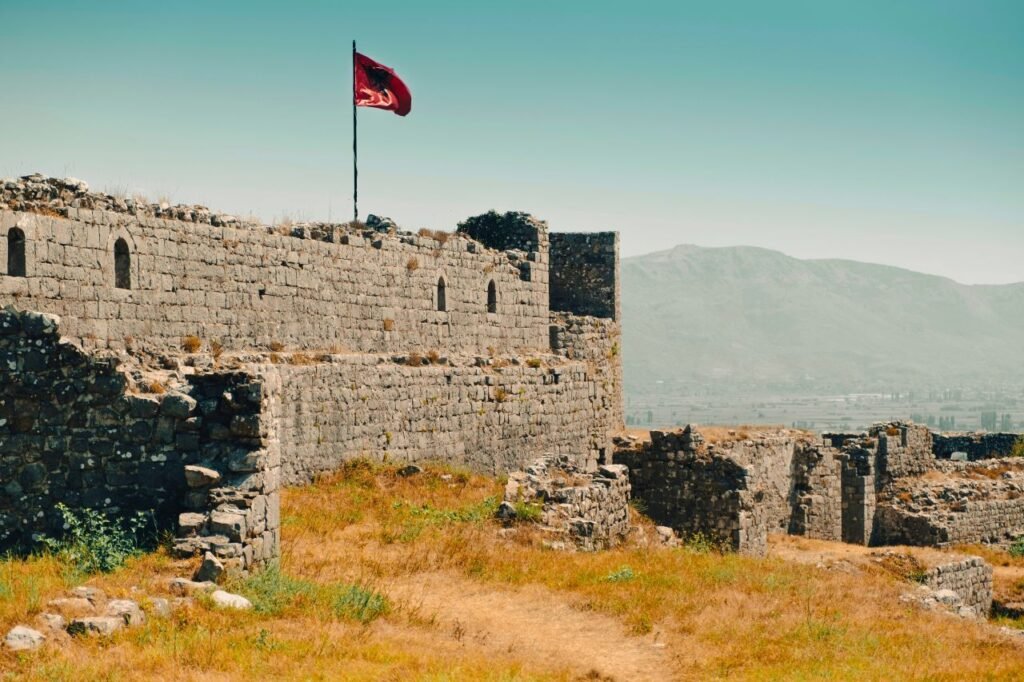
- The Double-Headed Eagle: Extracted from Skanderbeg’s medieval coat of arms, the black double-headed eagle set against a striking red backdrop is the definitive cultural symbol of the Albanian people, representing vigilance, strength, and soaring freedom.
Music, Dance & Art
Polyphonic Singing
In the south, the culture preserves Albanian Iso-Polyphony, a mesmerizing form of traditional vocal music where multiple parts weave a complex melody over a continuous, low drone (iso). This ancient vocal style is recognized worldwide by UNESCO.
Traditional Instruments
- Çiftelia: A unique wooden acoustic string instrument featuring only two strings, used by northern musicians to tell epic historical tales.
- Lahuta: A single-stringed instrument played with a bow, historically used by highland bards to perform long oral histories of battles and heroic deeds.
Art and Dance
Albanian dance is highly physical and energetic, characterized by the synchronized, proud movements of the Vallja e Shqipeve (Dance of the Eagles). In the visual arts, the country honors a rich lineage, ranging from the medieval master painter Onufri, famous for his secret red pigment formulas, to brilliant modern sculptors and painters working in the heart of Tirana.
Summary
Albania’s culture is a testament to the power of human endurance. Having survived centuries of imperial conquests, total isolation, and rapid modern shifts, the Albanian people have protected an unyielding ancestral heritage. Through their mesmerizing language, their strict codes of honor, their unforgettable cuisine, and an unmatched tradition of hospitality, they continue to offer the world a beautiful lesson in preserving diversity while embracing the global future.
At Best Culture Insight, we see culture as the heartbeat of every society – the way people live, connect, and express their identity.