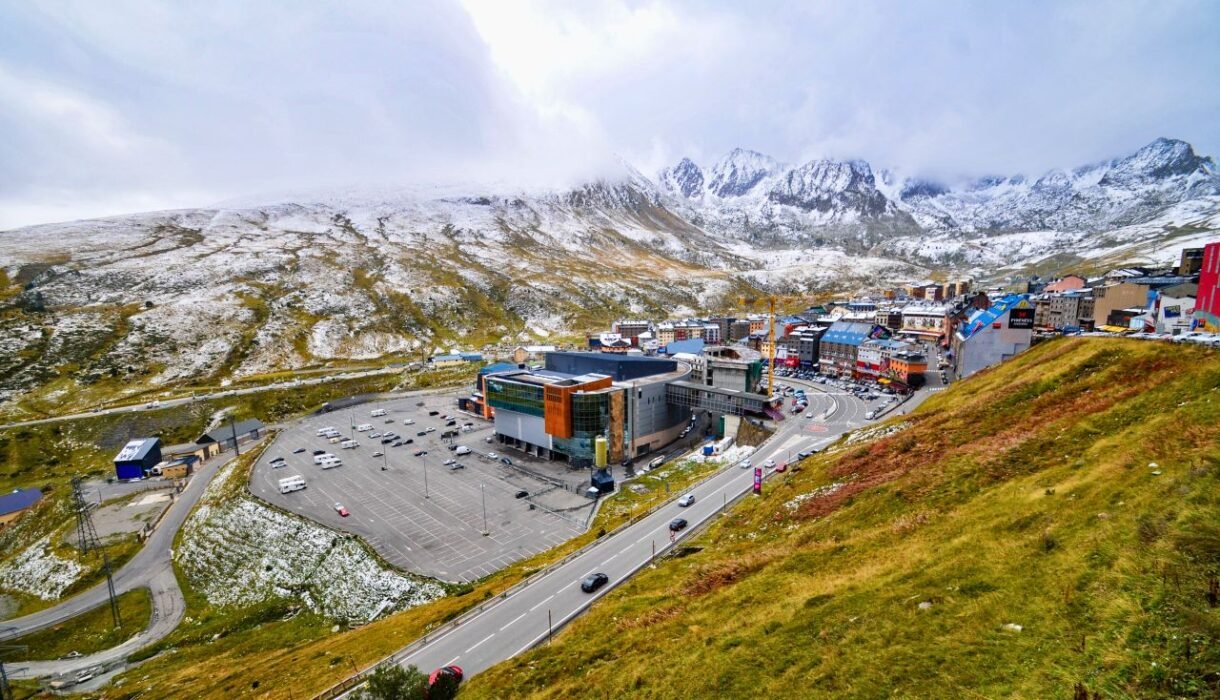

Tucked high within the rugged peaks of the Pyrenees mountains between France and Spain lies Andorra, one of Europe’s oldest and smallest microstates. Far more than just a duty-free haven or a winter ski destination, Andorra boasts a deeply rich, resilient culture that has survived intact for over a millennium.
The people of Andorra, known as Andorrans (Andorrans or Andorranes), possess a distinct identity anchored heavily in Catalan heritage. Having lived in isolation for centuries within their steep-walled valleys, they have developed a unique way of life that balances an ancient pastoral history with a hyper-modern, international outlook.
History & Origins
The historical tapestry of Andorra is unique, defined by geographic isolation and political diplomacy.
[Charlemagne's 805 Charter]➔[1278 Act of Pareage: Co-Principality]➔[Centuries of Neutral Isolation]➔[1993 Modern Constitution]
- Charlemagne’s Shield: According to local tradition, the great Emperor Charlemagne granted a charter to the Andorran people in the year 805 as a reward for their help fighting the Saracens.
- The Acts of Paréage: In 1278 and 1288, to resolve bitter territorial disputes between the Spanish Bishop of Urgell and the French Counts of Foix, the Acts of Paréage were signed. This document established a unique feudal arrangement: a Co-Principality where power was shared equally between a French ruler and a Spanish bishop. This clever diplomatic solution kept Andorra neutral and free from foreign conquest for over 700 years.
- The Modern Turn: In 1993, Andorra officially updated its ancient feudal system. While keeping the French President and the Bishop of Urgell as symbolic Co-Princes, the nation adopted a democratic constitution, establishing itself as a sovereign state.
Culture, Traditions & Customs
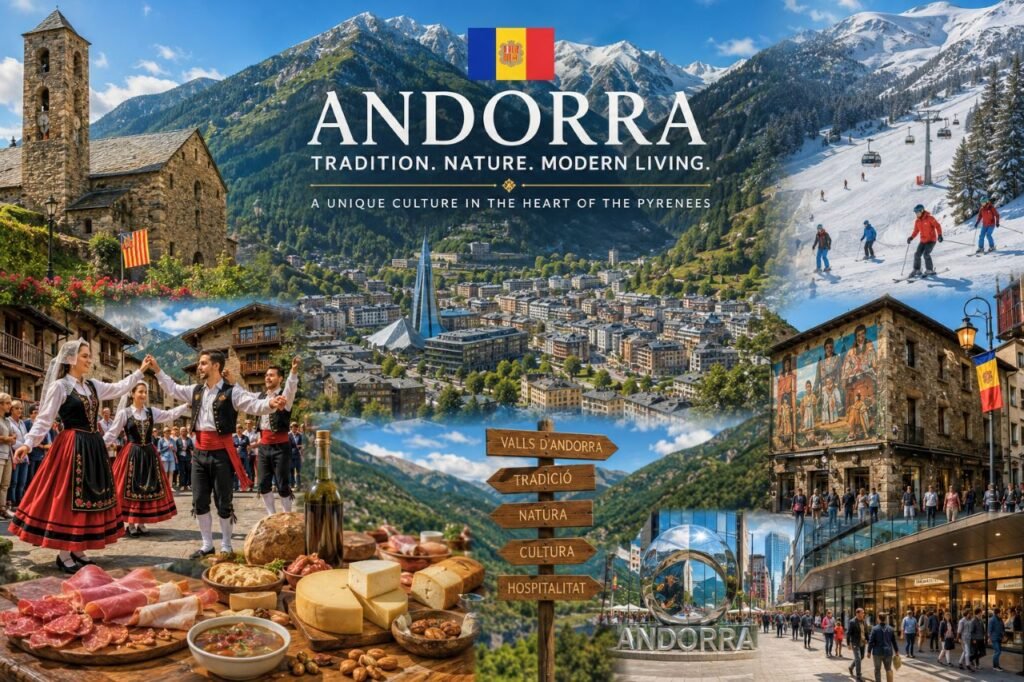
Andorra: culture, tradition, nature, modern living
Marriage & Family Systems
Historically, Andorran family life was governed by the hereu (male heir) or pubilla (female heir) system. To prevent family land in the narrow mountain valleys from being broken up, the family estate was passed down entirely to the eldest child. Weddings were highly community-focused events, traditionally celebrated with hearty multi-day feasts featuring stews, roasts, and local music.
Festivals & Holidays
- Our Lady of Meritxell (September 8): The most significant national and religious holiday in Andorra. Locals make a pilgrimage to the Sanctuary of Meritxell to honor the patron saint of the valleys, celebrating with traditional music, solemn masses, and community reunions.
- The Bonfires of the Summer Solstice: In June, young people carry burning torches (falles) down from the mountains to light giant bonfires in the town squares. This ancient Pyrenean fire festival is recognized on the UNESCO Intangible Cultural Heritage list.
Languages & Communication
Andorra holds a unique linguistic honor: it is the only sovereign country in the world where Catalan is the sole official language.
Multilingualism in Practice
While Catalan is the language of government, education, and national pride, the country is highly multilingual. Because of geography and immigration, nearly all citizens speak Spanish fluently, and a significant portion of the population is fluent in French and Portuguese.
Common Expressions & Idioms
- Bon dia: The universal greeting for “Good morning” or “Good day.”
- “Qui dia passa, any empeny.”
Translation: “He who gets through the day pushes the year along.” A classic mountain proverb reflecting the traditional Andorran value of taking life one day at a time with quiet resilience.
Geography
Andorra’s physical landscape consists entirely of high, rugged mountains cut by three narrow, Y-shaped valleys where its rivers flow. The country sits at an average elevation of nearly 2,000 meters (around 6,500 feet), with its highest peak, Coma Pedrosa, towering at 2,942 meters.
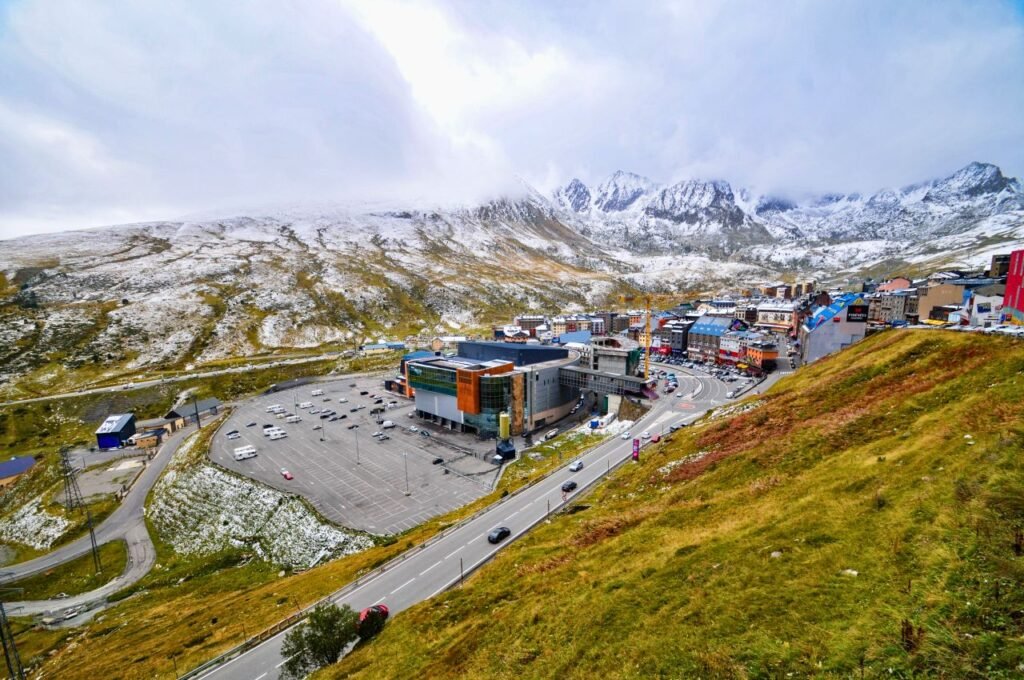
Historically, this steep terrain cut the communities off from the outside world during heavy winter snows, which played a major role in preserving their distinct language and traditions.
Economy
For most of its history, Andorra relied on a simple mountain economy driven by transhumance (moving livestock between seasonal pastures), small-scale tobacco farming, and iron forging.
The mid-20th century completely transformed the country. Today, Andorra is a wealthy nation driven by tourism—attracting millions of visitors every year for winter skiing, summer hiking, and duty-free shopping. Additionally, its robust banking and financial services sector serves as a core pillar of the national economy.
Politics
Andorra functions under a unique parliamentary co-principality system.
The executive branch is headed by a Prime Minister, while the legislative branch is run by the General Council (Consell General), one of Europe’s oldest continuously operating parliaments, founded back in 1419.
The two symbolic, non-voting heads of state remain the Co-Princes: the President of France and the Catholic Bishop of Urgell in Catalonia, Spain. This unique setup blends centuries of European feudal history with modern democratic governance.
Ethnic Groups
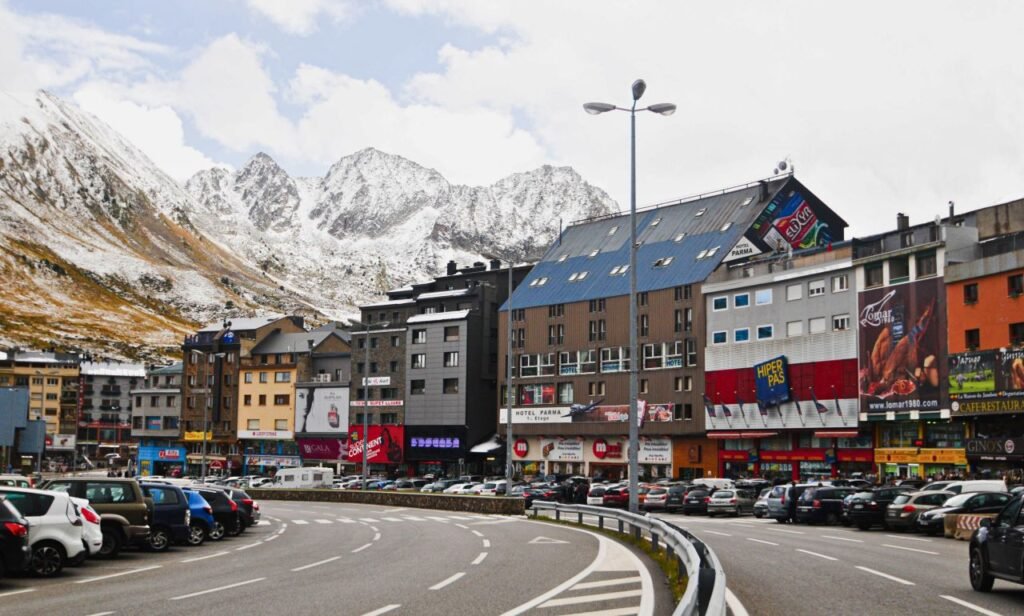
Due to its economic boom over the last several decades, Andorra has transformed into a diverse, multicultural melting pot. Interestingly, native ethnic Andorrans actually form a minority in their own country, making up roughly 48% of the population. The rest of the population consists of large expatriate communities, primarily Spaniards (around 25%), Portuguese (11%), and French (4%), creating a dynamic blend of cultures within the mountain towns.
Beliefs & Values
The vast majority of Andorrans identify as Roman Catholic, and the church has deeply influenced the nation’s legal and cultural heritage for centuries.
However, modern Andorra is a thoroughly secularized and open society. Its core cultural values are built on a deep respect for individual privacy, community safety, and political neutrality. There is also an intense pride in protecting the natural environment, as the mountains are viewed as both a sacred ancestral home and the country’s primary economic resource.
Food & Cuisine
Traditional Andorran cuisine (cuina andorrana) is classic high-mountain fare—hearty, rustic, and designed to provide energy during freezing winter months. It relies heavily on game meat, wild mushrooms, river trout, and winter vegetables.
- Escudella: The national dish. A thick, comforting stew loaded with pork, chicken, beef, sausages (botifarra), potatoes, cabbage, and white beans, traditionally served during winter festivals.
- Trinxat: A comforting winter staple made by mashing together boiled potatoes and green cabbage, pan-frying the mixture until crispy, and topping it with thick slices of salted pork belly (cansalada).
- Cargols a la Llauna: Oven-roasted land snails seasoned generously with salt, garlic, and olive oil, reflecting a strong culinary link to neighboring Catalonia.
Clothing & Symbols
Traditional Attire
Historically, men wore thick wool trousers, white shirts, a dark vest, and a barretina—a traditional red, floppy Catalan cap. Women wore long, dark skirts, white chemises, and embroidered black shawls. Today, these historic outfits are reserved for national holidays and folk dance performances.
Historic Architecture as a Symbol
The ultimate physical symbol of the country’s heritage is its rustic architecture. Across the valleys, historic stone structures stand alongside medieval Romanesque churches built with slate roofs and heavy granitic stone.
The National Flag
The Andorran flag features three vertical stripes of blue, yellow, and red, combining the colors of France and Catalonia to honor its historic protectors. At its center sits the national coat of arms, bearing the Latin motto: Virtus Unita Fortior (“Virtue United is Stronger”).
Music, Dance & Art
Andorra shares a vibrant artistic lineage with the wider Catalan cultural sphere.
The Art of Dance
Folk dances serve as a major highlight during community festivals. The most famous is the Contrapàs, a structured, rhythmic circle dance traditionally performed by men. Another beloved dance is the Marratxa, a graceful, courtly performance representing the historic political agreement between the two Co-Princes.
Music and Architecture
Musically, Andorra hosts major international classical and jazz festivals in the summer. In the visual arts, the country is famous for its collection of 11th- to 12th-century Romanesque art, including striking, preserved frescoes and wood carvings found inside ancient valley churches like Sant Joan de Caselles.
Summary
The culture of Andorra is a beautiful story of balance and preservation. By using clever diplomacy to maintain its independence, this small Pyrenean nation protected its unique Catalan roots and ancient mountain traditions while evolving into a wealthy, welcoming, and modern European state. From the ancient fire rituals of the summer solstice to the comforting warmth of a winter escudella, Andorra continues to prove that a nation’s cultural value is measured by its character and heritage, not its physical size.
At Best Culture Insight, we see culture as the heartbeat of every society – the way people live, connect, and express their identity.