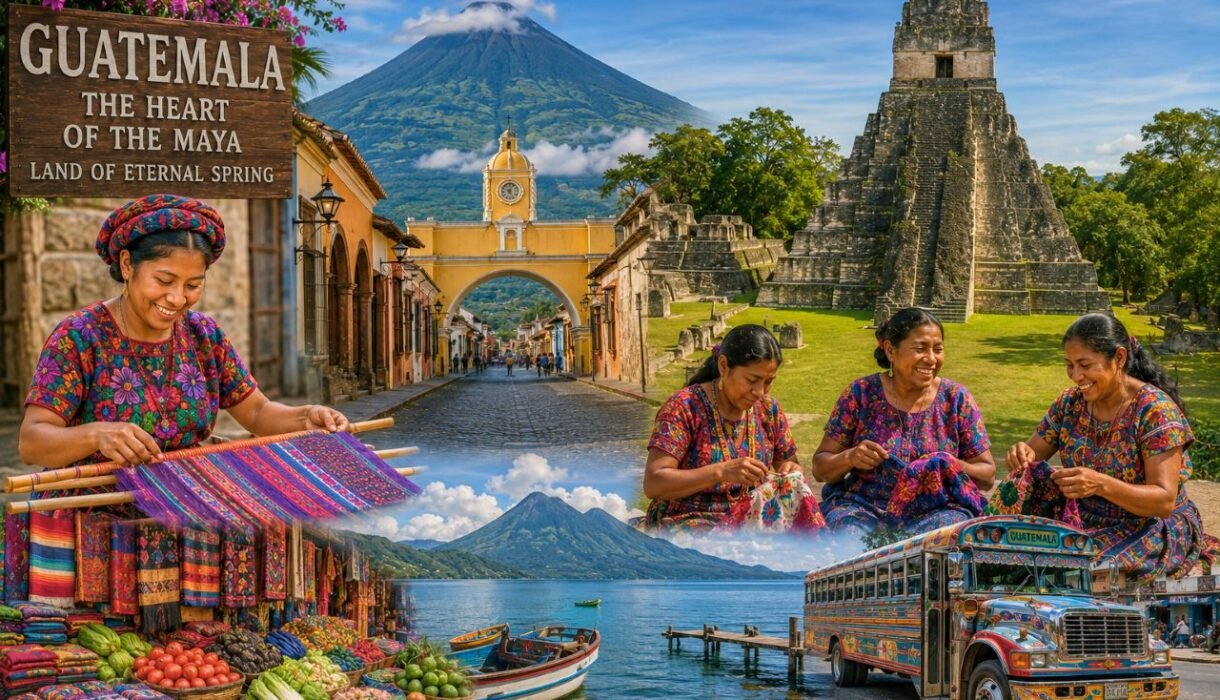
The Heart of the Maya: Exploring the Vibrant Tapestry of Guatemala Culture
Posted in :

Guatemala, a nation located in the southern tier of North America (Central American region), is an extraordinary landscape where ancient history and contemporary life merge seamlessly. Known as the “Land of Eternal Spring” due to its year-round temperate climate, Guatemala boasts a cultural profile that is among the richest, most resilient, and visually captivating in the world. – Guatemala Culture
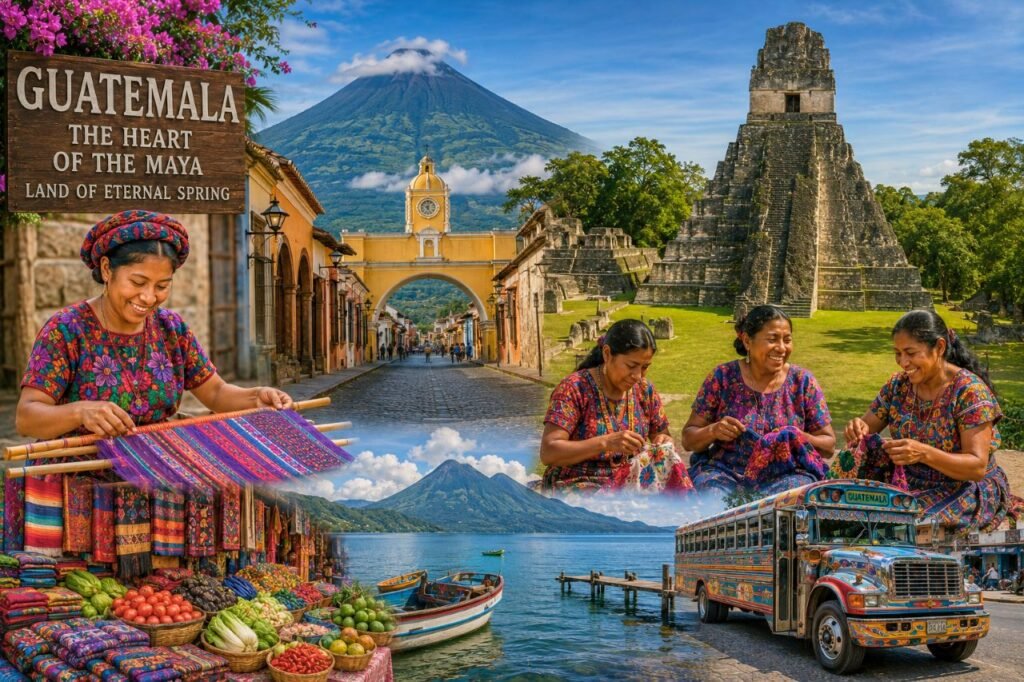
Vibrant Guatemalan culture and landscape
Guatemala is home to a deeply textured society primarily shaped by its indigenous Maya heritage and Spanish colonial history. This unique blend has produced a “Mestizo” or Ladino mainstream culture operating alongside dozens of vibrant, distinct indigenous communities. Visitors and researchers alike are drawn to its volcanic backdrops, colonial architecture, and bustling open-air marketplaces. To truly understand Guatemala is to understand a people who, despite historical hardships, have preserved their ancestral connection to the earth, their specialized crafts, and a profound sense of community identity.
History & Origins
The cultural bedrock of Guatemala belongs to the ancient Maya Civilization, which reached its intellectual and architectural peak during the Classic Period (250 AD to 900 AD). Monumental cities like Tikal, El Mirador, and Quiriguá flourished in the northern lowlands, leaving behind advanced systems of mathematics, astronomy, hieroglyphic writing, and agricultural technology.
[Ancient Maya Era] —> [Spanish Conquest (1524)] —> [Colonial Rule] —> [Independence (1821)]
In 1524, Spanish conquistador Pedro de Alvarado arrived, initiating a brutal era of conquest and colonization. The Spanish established their capital in what is now Antigua Guatemala, introducing Catholicism, the Spanish language, and European architectural and administrative systems. Over three centuries of colonial rule, the indigenous population adapted to these pressures by blending European practices with their traditional worldviews.
Guatemala gained independence from Spain on September 15, 1821. The 20th century brought significant political instability, culminating in a 36-year civil war (1960–1996) that disproportionately impacted indigenous Maya communities. The signing of the Peace Accords in 1996 officially recognized Guatemala as a multiethnic, pluricultural, and multilingual nation, setting the stage for a modern cultural renaissance focused on cultural preservation and human rights.
Culture, Traditions & Customs
Guatemalan life revolves around family solidarity, spiritual devotion, and community celebrations. Traditions vary slightly between urban Ladino populations and rural Maya villages, but several foundational customs define the national identity:
- Marriage Customs: Traditional Maya marriages often involve a formal courtship ritual where the groom’s family visits the bride’s family with gifts (such as bread, chocolate, and fruit) to request her hand in marriage. A spiritual guide (Ajq’ij) may be consulted to select an auspicious date based on the Maya calendar. In Ladino communities, traditional Catholic weddings with large receptions featuring lively dancing and extensive feast menus are standard.
- Naming Ceremonies: Among many Maya groups, a child is given a traditional name alongside a Spanish legal name. The child’s birth date on the Cholq’ij (the 260-day sacred calendar) determines their Nawal—a spiritual co-essence or protective animal spirit that guides their character and destiny.
- Festivals: Festivals are spectacular, sensory affairs. The most globally recognized is Semana Santa (Holy Week) in Antigua Guatemala. The city features massive processions carrying heavy religious floats over hand-designed alfombras (carpets) made of dyed sawdust, pine needles, and fresh flowers. Another major event is the Sumpango Giant Kite Festival (Festival de Barriletes Gigantes) held on All Saints’ Day (November 1), where colossal, brightly colored paper kites are flown to communicate with the spirits of departed ancestors.
Languages & Communication
While Spanish is the official language used in government, education, and commerce, Guatemala is a multilingual powerhouse. The government officially recognizes 22 distinct Maya languages, alongside Garífuna (spoken by Afro-Amerindian communities on the Caribbean coast) and Xinka (an indigenous non-Maya language). Among the most widely spoken Maya languages are K’iche’, Q’eqchi’, Kaqchikel, and Mam.
Common Expressions and Cultural Phrases
- Greetings: Standard Spanish greetings like “Buenos días” (Good morning) and “Buenas tardes” (Good afternoon) are fundamental. In Maya communities, greetings show deep respect for elders. For instance, in Kaqchikel, a common greeting is “Xsaqaric” (Good morning).
- “¡Chapín!” / “¡Chapina!”: A proud, affectionate demonym that Guatemalans use to refer to themselves.
- “¡Buen provecho!”: Said before eating; it means “enjoy your meal” and is considered an essential sign of polite manners at any table.
- Proverb: “A la mejor cocinera se le queman los frijoles.” (Even the best cook burns the beans.) — A popular phrase reminding people that everyone makes mistakes, reinforcing a cultural trait of humility.
Geography
Guatemala’s geography is dramatically diverse, divided into three major structural zones:
- The Central Highlands: Home to the majority of the population, mountainous terrains, and a chain of 37 volcanoes (including Tajumulco, the highest peak in Central America).
- The Pacific Coast: A fertile, low-lying coastal plain primarily dedicated to large-scale agriculture.
- The Petén Lowlands: A massive, tropical limestone plateau covered in dense rainforests, masking thousands of ancient Maya ruins.
The country’s unique topography creates microclimates that directly shape regional architecture, agricultural capabilities, and traditional clothing styles. Major bodies of water like the stunning Lake Atitlán—ringed by steep volcanic cones and indigenous villages—hold significant spiritual and cultural weight.
Economy
Guatemala possesses the largest economy in Central America, yet it faces distinct structural challenges regarding wealth distribution. The nation relies heavily on agriculture, with key exports including:
- Premium Arabica Coffee
- Sugar and Bananas
- Cardamom (Guatemala is one of the world’s top exporters)

Traditional hand-woven textiles, jade jewelry, and wooden crafts also fuel a robust informal economy and artisan export market. Tourism is a principal economic driver, centering on historical sites like Antigua and Tikal. Additionally, financial remittances from Guatemalans living abroad provide a critical lifeline for millions of rural households, funding education and community development.
Politics
Guatemala is a constitutional democratic republic led by a democratically elected President who serves as both head of state and head of government for a single four-year term. The legislative branch consists of the unicameral Congress of the Republic.
Modern political efforts focus heavily on strengthening democratic institutions, rooting out deep-seated corruption, and expanding legal protections for indigenous territories and cultural autonomy. The 1996 Peace Accords remain the historical benchmark for legislative efforts to create an inclusive, multiethnic national identity.
Ethnic Groups
Guatemala’s demographic layout is roughly divided into two halves, creating a fascinating cultural duality:
| Ethnic Category | Approximate Share | Core Attributes |
| Ladino / Mestizo | ~56% | People of mixed Spanish and Indigenous descent, or Indigenous people who adopt a westernized, Spanish-speaking lifestyle. |
| Maya | ~42% | Descendants of the original inhabitants, divided into 22 distinct linguistic and cultural subgroups (e.g., K’iche’, Kaqchikel). |
| Garífuna & Xinka | ~2% | The Garífuna reside on the Caribbean coast (Lívingston) with unique Afro-Indigenous roots. The Xinka are a non-Maya indigenous group in the southeast. |
Beliefs & Values
Spirituality in Guatemala is dynamic and highly visible. While the majority of the population identifies as Roman Catholic or Evangelical Protestant, these institutional faiths frequently coexist with ancient ancestral systems.
Maya Syncretism
In many highland communities, people practice a beautiful blending of faiths called religious syncretism. A famous example occurs at the 400-year-old Church of Santo Tomás in Chichicastenango. Here, Maya practitioners burn copal incense and offer prayers on the church steps, mapping Catholic saints directly onto traditional Maya deities.
Another prominent figure is Maximón (also known as San Simón), a unique folk saint who accepts offerings of tobacco, alcohol, and candles in exchange for protection, healing, or prosperous business deals.
At its core, the traditional Guatemalan worldview emphasizes a deep harmony with nature, respect for ancestral wisdom, and the balance of community obligations over individual desires.
Food & Cuisine
Guatemalan cuisine is a delicious, earthy fusion of Maya ingredients (corn, chilies, beans, and squash) and Spanish culinary techniques (pork, chicken, and warm spices). In 2007, the government officially declared several traditional stews as national cultural heritages to preserve their historical lineage.
- Pepián: Arguably the national dish, Pepián is a rich, thick meat stew featuring a complex sauce made from roasted tomatoes, chilies, and ground pumpkin seeds (pepitorias). It is typically served alongside white rice and warm corn tortillas.
- Jocón: A vibrant, green chicken stew made with tomatillos, cilantro, scallions, and green chilies.
- Tamales: Guatemalan tamales are typically wrapped in large, green bijao or banana leaves rather than corn husks, creating a smooth, moist texture. They are a staple of celebratory weekend dinners and Christmas Eve traditions.
Clothing & Symbols
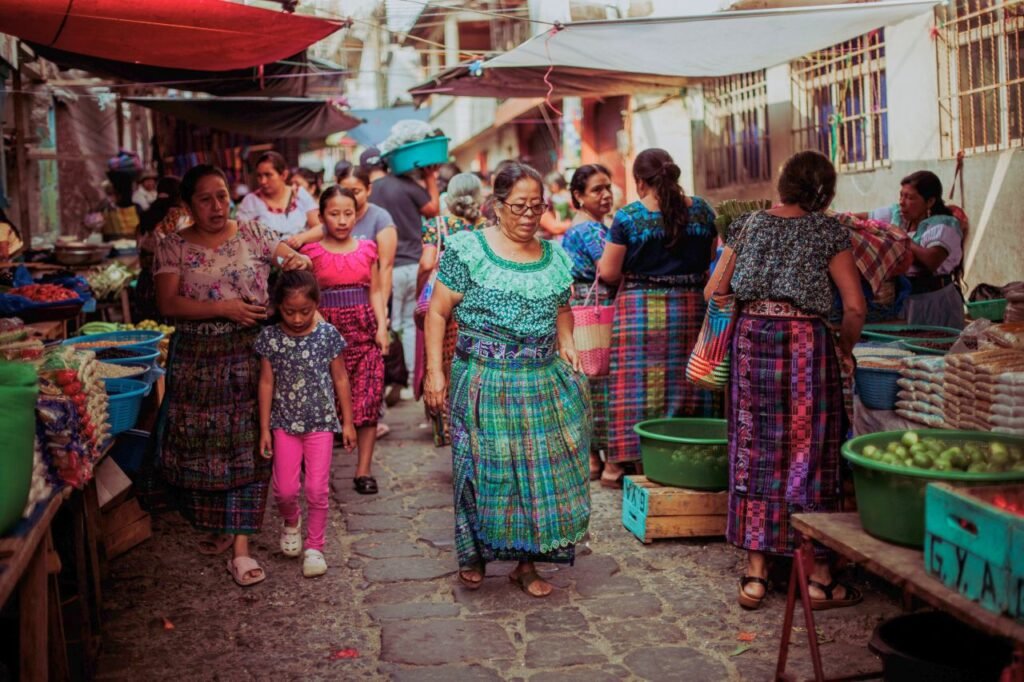
One of the most striking visual aspects of Guatemala is the widespread daily use of traditional indigenous attire, known as traje.
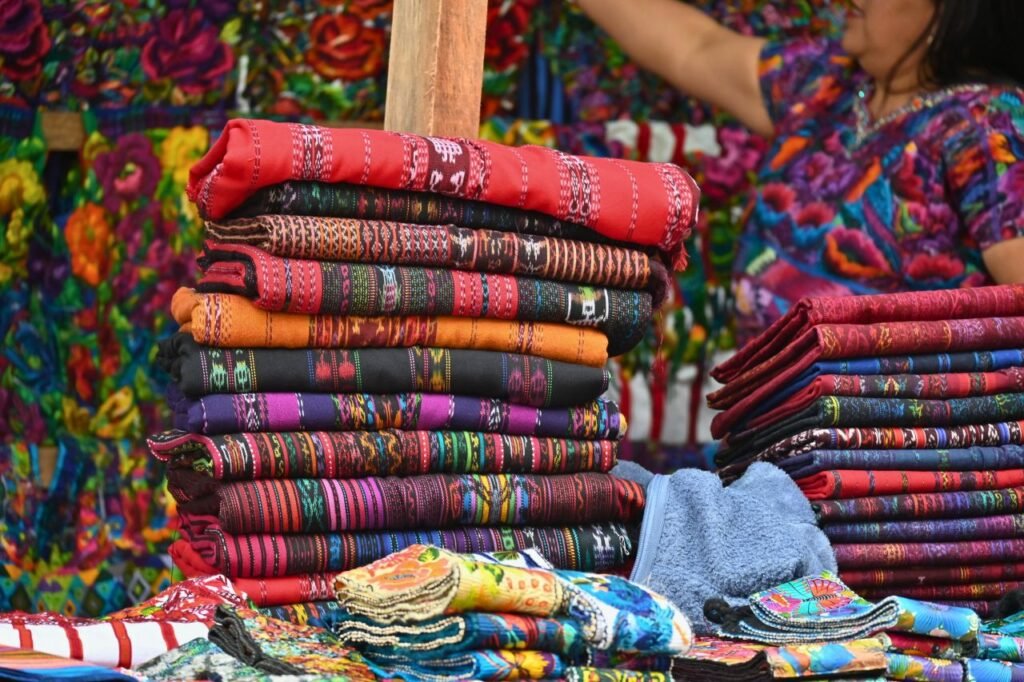
- Huipil: The traditional blouse worn by Maya women. Each huipil is hand-woven on a backstrap loom and acts as a wearable canvas. The complex geometric patterns, animals, and flowers woven into the fabric explicitly identify the wearer’s hometown village, marital status, and personal spiritual beliefs.
- Corte: A heavy, wrapped skirt secured by a beautifully embroidered sash (faja).
National Symbols
- The Resplendent Quetzal: The national bird, symbolizing freedom and autonomy. Its long, iridescent green tail feathers were used as currency by ancient Maya royalty. The national currency is named after it.
- The Ceiba Tree: The sacred national tree, representing the connection between the underworld, the earthly realm, and the heavens in ancient Maya cosmology.
Music, Dance & Art
Artistic expression in Guatemala is rich with texture and historical narrative.
- The Marimba: The national instrument of Guatemala. This percussion instrument features wooden keys struck with mallets, amplified by resonators beneath. Marimba ensembles are the acoustic heartbeat of public squares, family birthdays, and national holidays.
- Traditional Dances: Festivals frequently feature narrative dances where performers wear elaborate wooden masks and historical costumes. The Dance of the Conquest (Danza de la Conquista) dramatically re-enacts the tragic clash between Pedro de Alvarado and the K’iche’ hero Tecún Umán, serving as a powerful community mechanism for historical storytelling.
- Visual Arts: Contemporary Guatemalan art flourishes in street murals, primitive oil painting styles found in communities around Lake Atitlán (like San Juan La Laguna), and pottery traditions that preserve ancient techniques passed down through generations.
Summary
Guatemala’s culture is an enduring testament to the power of heritage. By masterfully weaving the profound spiritual philosophy of the ancient Maya with centuries of Spanish colonial influences, Guatemala has cultivated a distinct, resilient, and multi-layered identity. From the geometric stories woven into every colorful huipil to the resonant tones of the marimba and the rich aromas of simmering pepián, the traditions of this North American gem continue to educate, inspire, and celebrate the magnificent diversity of human expression.
At Best Culture Insight, we see culture as the heartbeat of every society – the way people live, connect, and express their identity.