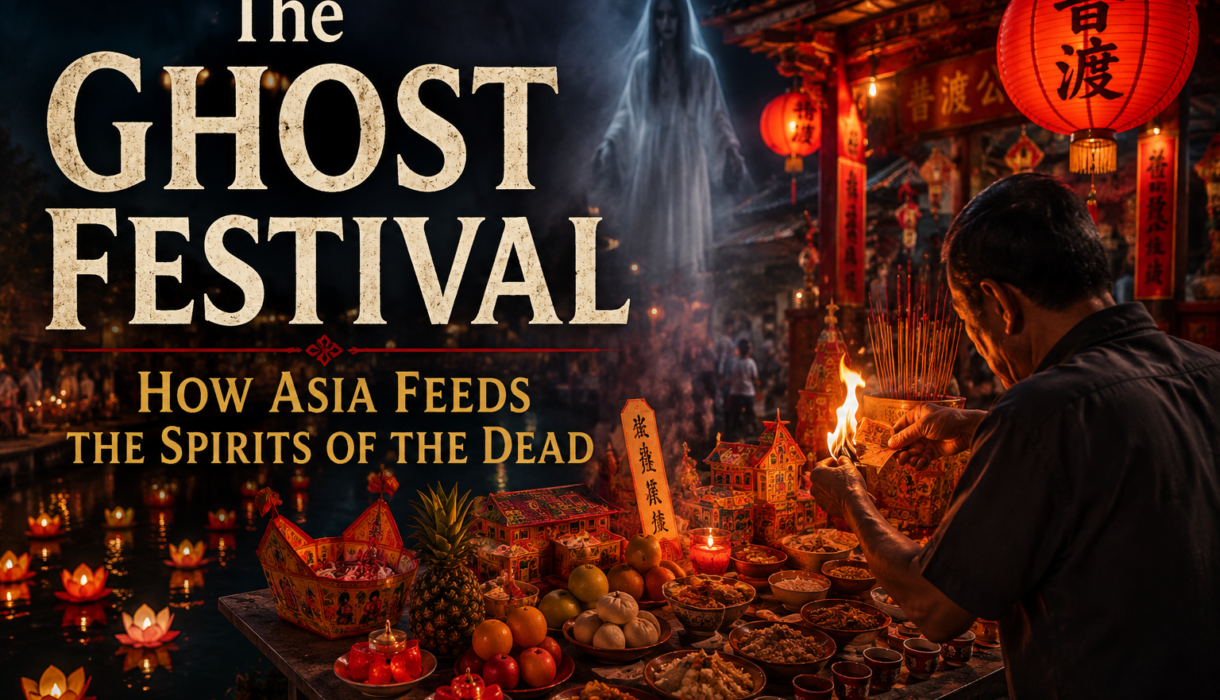

Every year during the seventh month of the lunar calendar, millions across East and Southeast Asia observe the Ghost Festival—also known as Zhongyuan Jie in Taoism or the Yulanpen Festival in Buddhism. Rooted in centuries-old traditions, this sacred month marks a time when the gates of the underworld open, allowing the spirits of deceased ancestors and restless, wandering ghosts to visit the realm of the living. Rather than reacting with fear, communities respond with deep reverence and hospitality, transforming ancient beliefs about the afterlife into an extraordinary display of familial piety and public ritual.
Nourishing the Spirit Realm
Central to the Ghost Festival is the belief that spirits require sustenance, comfort, and respect just like the living. Families set up elaborate altars outside their homes and shopfronts, laying out generous feasts featuring roasted meats, fresh fruits, steamed buns, and traditional sweets. Alongside these food offerings, living relatives burn incense and “joss paper”—also known as spirit money—which is believed to transfer wealth directly into the spiritual bank accounts of the deceased. In modern celebrations, paper replicas of luxury items, including designer clothes, smartphones, and cars, are burned to ensure ancestral spirits enjoy every comfort in the afterlife.
Comforting the Homeless Spirits
Beyond honoring direct ancestors, a key spiritual objective of the festival is appeasing “hungry ghosts”—spirits who died without living descendants or suffered tragic, unremembered deaths. Because these wandering souls lack family to care for them, they are believed to cause misfortune if ignored. Neighborhood organizations host large public ceremonies called Pudu, where massive, community-funded banquets are set up specifically to feed these forgotten specters. By offering food, prayers, and entertainment to unattached spirits, the community practices a unique form of spiritual charity, transforming potential bad luck into communal harmony.
Entertainment and Cultural Spectacle
The Ghost Festival is not merely solemn; it is a lively cultural phenomenon. In countries like Singapore and Malaysia, communities erect temporary stages to host Getai—vibrant, high-energy concerts featuring traditional Chinese opera, modern pop music, and comedy acts. A key cultural rule governs these performances: the first row of red seats must always remain empty, reserved strictly for the invisible spirit guests in attendance. Additionally, floating lotus-shaped lanterns are released into rivers and lakes at night, serving as glowing, peaceful beacons to guide lost souls safely back to the underworld before the spiritual gates close.
A Lasting Legacy of Compassion
At its core, the Ghost Festival is far more than a collection of ghostly superstitions or spooky folklore. It is a powerful cultural reminder of filial piety, empathy, and collective memory that continues to thrive in modern, fast-paced Asian societies. By bridging the gap between past and present generations, the festival teaches that respect for life extends far beyond death. Feeding the dead ultimately serves as a profound act of compassion, comforting the living as they honor those who came before them.