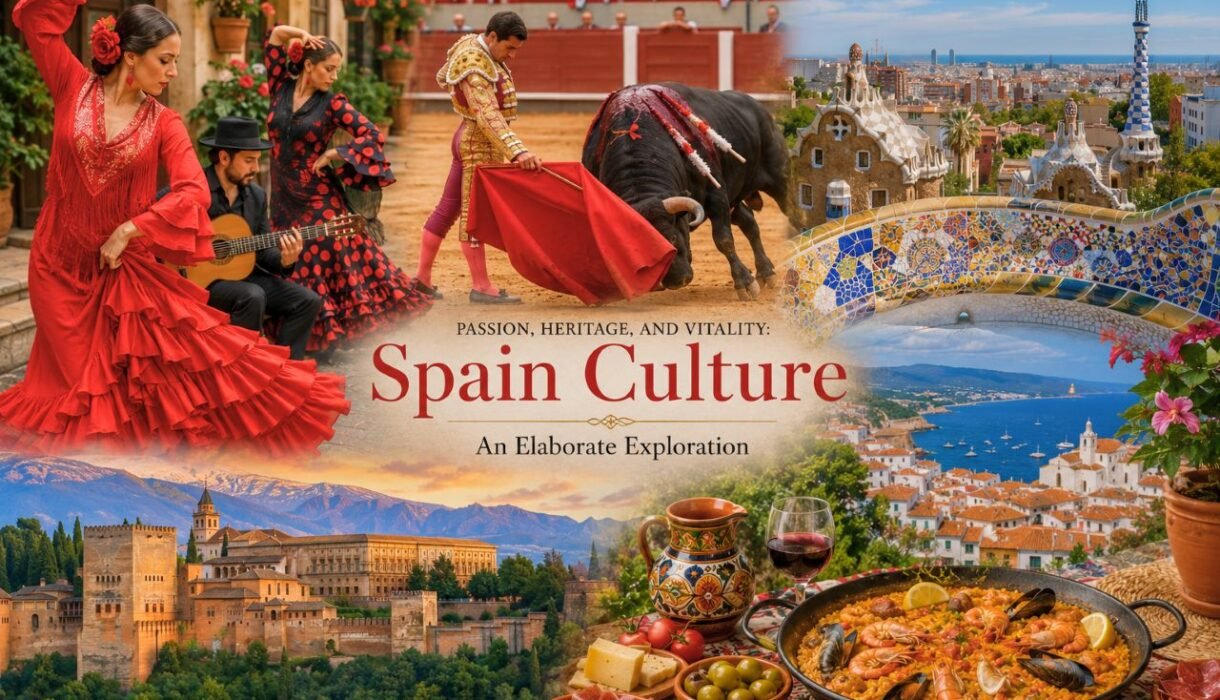

Anchored on the Iberian Peninsula in Southwestern Europe, Spain is a captivating nation defined by sun-drenched landscapes, historic architecture, and an unmistakable passion for life. The rich Culture of Spain—known natively as la cultura española—is a vibrant, multi-faceted mosaic forged over millennia at the strategic nexus of the Atlantic Ocean and the Mediterranean Sea. Far from being a single monolithic identity, Spanish heritage is a harmonious tapestry of distinct regional identities, ranging from the fiery rhythms of Andalusia in the south to the green, maritime hillsides of Galicia and the Basque Country in the north. The Spanish people are celebrated globally for their deep-rooted social bonds, infectious enthusiasm, architectural genius, and an unshakeable belief in prioritizing community, leisure, and meaningful human connection above all else.
History & Origins
Spain’s cultural history is an epic saga marked by powerful civilizations colliding, coexisting, and leaving behind an indelible architectural and societal imprint.
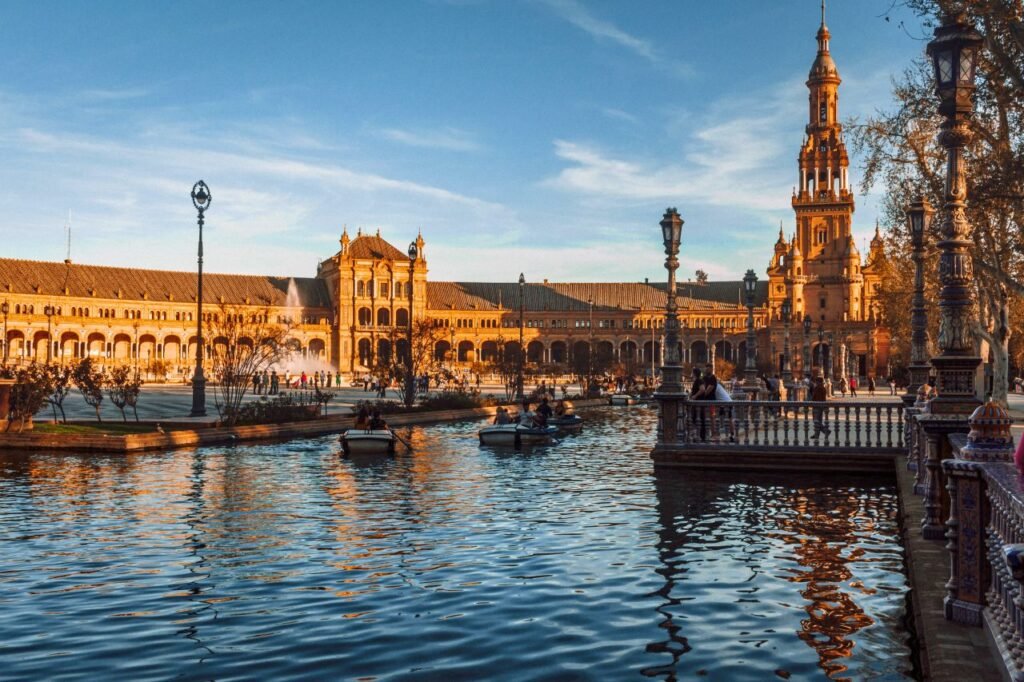
- Antiquity & Roman Hispania: Before foreign conquest, indigenous Iberians and Celts inhabited the peninsula. Following the Punic Wars, the region was integrated into the Roman Empire as Hispania. Rome left behind an enduring legacy of Latin speech (the ancestor of modern Spanish), Roman law, aqueducts, and early Christian traditions.
- Al-Andalus & Islamic Influence: In 711 CE, Moorish armies crossed the Strait of Gibraltar, establishing Al-Andalus. For nearly eight centuries, Islamic rule fostered a golden age of science, mathematics, philosophy, and architectural grandeur—seen today in landmarks like the Alhambra in Granada and the Great Mosque of Córdoba. This era saw centuries of Convivencia (coexistence) among Muslims, Christians, and Jews.
- The Reconquista & The Global Empire: The Christian Reconquista culminated in 1492 with the fall of Granada and the unification of Spain under the Catholic Monarchs, Ferdinand and Isabella. That same year, Christopher Columbus’s voyage marked the birth of the global Spanish Empire, spreading the Spanish language and religion across the Americas.
- Modern Rebirth: Following a turbulent 20th century marked by the Spanish Civil War (1936–1939) and decades of authoritarian rule under Francisco Franco, Spain successfully transitioned into a vibrant, modern democracy in the late 1970s, rapidly emerging as a leading cultural and economic powerhouse in the European Union.
Culture, Traditions & Customs
The Rhythms of Social Life: Siesta & Sobremesa
Spanish daily life follows a unique social clock designed to foster human connection:
- La Siesta: While the traditional afternoon nap has largely faded in fast-paced modern cities, the midday break remains culturally important. Businesses often pause during early afternoon hours for an extended family lunch, avoiding the hottest time of the day.
- La Sobremesa: Literally meaning “over the table,” this cherished tradition describes the lingering period after a meal where family and friends stay seated for hours, engaging in lively conversation, drinking coffee, or sharing digestifs.
Marriage & Life Milestones
Spanish weddings (bodas) are joyous, multi-generational affairs. Couples typically exchange 13 gold coins (Las Arras), blessed by a priest, symbolizing shared material wealth and mutual commitment to steward household resources together. Rather than a maid of honor or best man, the couple’s father and mother traditionally serve as padrinos (godparents of the wedding).
Fiestas & World-Famous Festivals
- La Tomatina (Buñol): An energetic summer festival where thousands gather to participate in a massive, cheerful tomato fight in the town streets.
- Las Fallas (Valencia): A week-long spring celebration featuring towering, intricate papier-mâché artistic statues (ninots) that are ultimately set ablaze in dramatic bonfires accompanied by pyrotechnic light shows (mascletà).
- Feria de Abril (Seville): A breathtaking Andalusian festival filled with flamenco dancing, horse-drawn carriages, traditional dresses, and lively temporary tents (casetas).
Languages & Communication
Linguistic Diversity
The official national language is Spanish (Castellano or Castilian), a Romance language spoken by over 500 million people globally. However, Spain is officially co-lingual, recognizing co-official regional languages that hold deep historical pride:
- Catalan (Català): Spoken in Catalonia, the Balearic Islands, and Valencia (as Valencian).
- Basque (Euskara): Spoken in the Basque Country and Navarre; a fascinating language isolate with no known living linguistic relatives on Earth.
- Galician (Galego): Spoken in northwestern Galicia, closely related to Portuguese.
Communication Style & Greetings
Communication in Spain is warm, expressive, and tactile. Personal space is closer than in Northern Europe, and animated hand gestures are standard.
- Greetings: Friends and acquaintances greet each other with two cheek kisses (dos besos)—starting with the right cheek—regardless of gender in social settings. Men often shake hands or embrace warmly.
- Key Expressions:
- ¡Hola! (Hello!)
- Muchas gracias (Thank you very much)
- ¡Salud! (Cheers! / To health!)
Proverbs & Wisdom
- “Quien tiene un amigo, tiene un tesoro.”
Meaning: “He who has a friend has a treasure”—reflecting the paramount value placed on lifelong loyalty and social ties.
- “No por mucho madrugar amanece más temprano.”
Meaning: “Rushing won’t make the sun rise any faster”—encouraging patience and letting life unfold naturally.
Geography
Covering roughly 505,990 square kilometers, Spain occupies the vast majority of the Iberian Peninsula, bordered by Portugal, France, Andorra, the Atlantic Ocean, and the Mediterranean Sea. It also includes the Balearic Islands in the Mediterranean, the Canary Islands off the coast of Africa, and the autonomous cities of Ceuta and Melilla in North Africa.
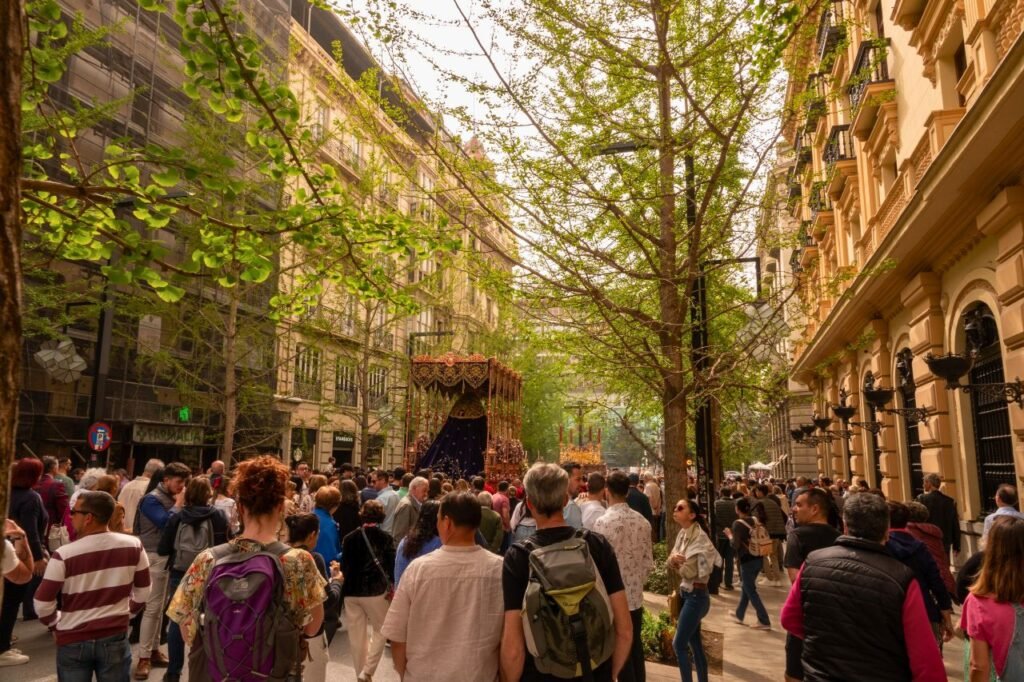
- The Meseta Central: A vast, elevated plateau dominating the interior of the country, surrounded by rugged mountain systems like the Pyrenees in the north and the Sierra Nevada in the south.
- Coastlines & Valleys: Ranging from the lush, green, fjord-like rias of Galicia (España Verde) to the arid, sun-drenched coastal plains of the Costa del Sol.
Economy
Spain boasts an advanced, high-income market economy—the fourth-largest in the Eurozone.
Spain is a global titan in tourism, ranking among the most visited countries in the world every year. Beyond hospitality, the nation boasts powerhouse sectors in renewable energy (wind and solar), high-speed rail technology, banking, automobile assembly, and aerospace. Additionally, Spain is the world’s top producer of olive oil, accounting for roughly half of the global supply.
Politics
Spain is a constitutional monarchy with a parliamentary system of governance.
- Monarch: The King (currently King Felipe VI) serves as the ceremonial Head of State, symbolizing national unity and serving as commander-in-chief of the armed forces.
- President of the Government (Presidente del Gobierno): The Prime Minister serves as the Head of Government, holding executive authority.
- Cortes Generales: A bicameral parliament consisting of the Congress of Deputies (Congreso de los Diputados) and the Senate (Senado).
- Autonomous Communities: Spain is decentralized into 17 Autonomous Communities (e.g., Andalusia, Catalonia, Galicia), each possessing significant self-governing powers over regional education, healthcare, and infrastructure.
Ethnic Groups
The population of approximately 48 million is composed primarily of native Spaniards, complemented by vibrant regional communities and a modern immigrant population:
| Regional / Ethnic Group | Historic Core Region | Distinctive Cultural Heritage |
| Andalusians | Andalusia (South) | Deep Moorish architectural history; birthplace of Flamenco and tapas customs. |
| Catalans | Catalonia (Northeast) | Distinct language (Català); industrial power; unique traditions like Castells (human towers). |
| Basques | Basque Country (North) | Ancient non-Indo-European language (Euskara); renowned culinary mastery. |
| Galicians | Galicia (Northwest) | Celtic roots; bagpipe musical traditions (gaita); maritime cuisine focus. |
Beliefs & Values
Religious Landscape
Historically dominated by Roman Catholicism, modern Spain is a secular state where freedom of worship is guaranteed. While roughly 55–60% of citizens identify as Catholic, daily practice is primarily concentrated during major life events (baptisms, weddings) and local patron saint festivities.
Core Values
Spaniards prioritize familismo (strong family loyalty) and disfrutar la vida (enjoying life). True wealth is measured not by professional stress or material excess, but by time spent surrounded by loved ones, enjoying good food, sun, and lively conversation.
Food & Cuisine
Spanish gastronomy is a celebrated Mediterranean masterpiece centered on olive oil, fresh garlic, seafood, legumes, cured meats, and seasonal vegetables.
- Tapas: A world-famous social dining style consisting of small savory dishes—such as Patatas Bravas (spicy fried potatoes), Gambas al Ajillo (garlic shrimp), and Tortilla de Patatas (Spanish potato omelet)—shared among friends while moving from bar to bar.
- Paella: Originating from the coastal lagoons of Valencia, authentic Paella Valenciana features round-grain rice cooked in a wide shallow pan with saffron, green beans, rabbit, chicken, and sometimes snails, forming a prized crispy bottom rice layer called socarrat.
- Jamón Ibérico: Cured ham derived from black Iberian pigs that forage on acorns (bellotas) in oak forests, yielding a buttery, nutty delicacy aged for years.
- Gazpacho & Salmorejo: Cold tomato-based soups originating in Andalusian heat, blended smoothly with olive oil, garlic, and bread.
Clothing & Symbols
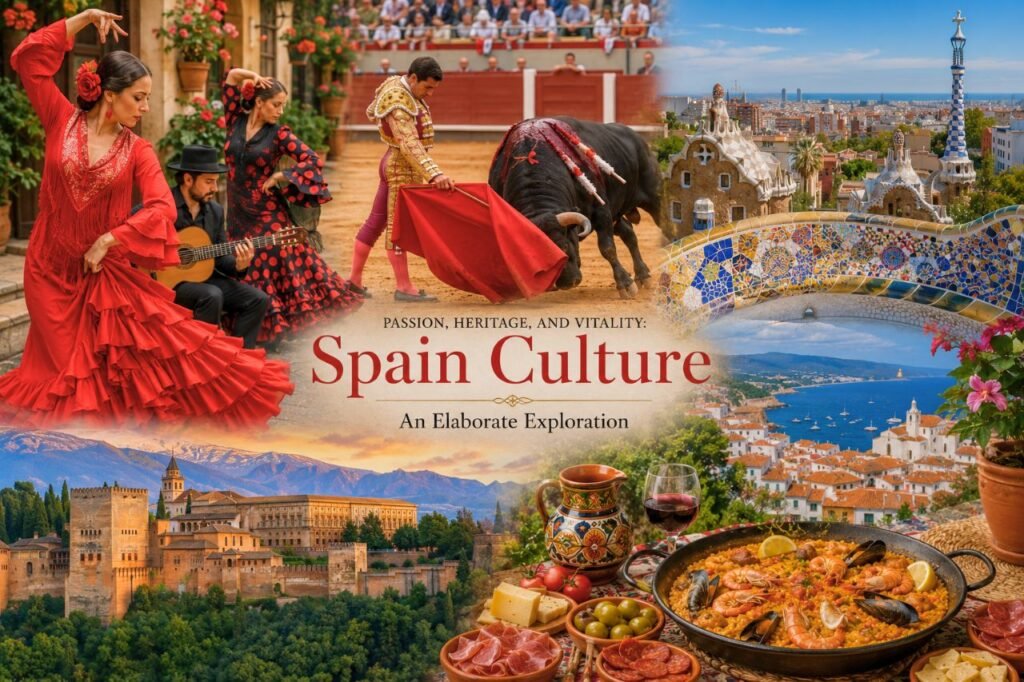
vibrant spanish culture collage
Traditional Attire
Traditional Spanish dress varies widely across regions:
- Flamenco Dress (Traje de Flamenca): Originating in Andalusia, a fitted body dress featuring cascading ruffled skirts, vibrant polka dots, and worn with a silk shawl (mantón de Manila) and hair flowers.
- Traje de Luces: The ornate “suit of lights” adorned with gold and silver embroidery worn by traditional bullfighters.
Iconic Symbols
- The Spanish Fan (Abanico): Historically used not only to beat the summer heat, but as a complex non-verbal language of courtship and social cues.
- The Osborne Bull: Majestic black bull silhouettes positioned on hillsides across Spanish highways, transformed from cognac advertisements into an unofficial national symbol of the countryside.
Music, Dance & Art
Flamenco: The Soul of Andalusia
Inscribed on the UNESCO Intangible Cultural Heritage list, Flamenco is an emotionally charged art form created by Romani, Moorish, and Andalusian folk roots. It combines four core elements: Cante (passionate singing), Toque (virtuosic guitar playing), Baile (expressive dance with intricate footwork), and Palmas (rhythmic hand clapping).
Masterpieces of Visual Art & Architecture
Spain has produced some of history’s most revolutionary artistic geniuses:
- Paintings: Masters like Diego Velázquez (Las Meninas), Francisco Goya, and 20th-century pioneers Pablo Picasso (inventor of Cubism) and surrealist Salvador Dalí.
- Architecture: Antoni Gaudí’s organic Modernist architecture in Barcelona—most famously the Sagrada Família and Park Güell—alongside medieval Gothic cathedrals and Moorish palaces.
Summary
In summary, Spain Culture stands as an extraordinary celebration of human vitality, artistic genius, and historical resilience. By safeguarding its diverse regional languages, honoring ancient traditions like La Sobremesa and Flamenco, and enjoying life with warmth and openness, the people of Spain have created one of the world’s most enduring and beloved civilizations. It is a nation that warmly invites travelers to slow down, share a dish of tapas, and savor the passion of the Iberian soul.
At Best Culture Insight, we see culture as the heartbeat of every society – the way people live, connect, and express their identity.