New Zealand Culture: History, Traditions, Arts, and Heritage
Posted in :

The Culture of New Zealand (Aotearoa in Te Reo Māori) is a rich, dynamic fusion of indigenous Polynesian heritage and British colonial influences, enriched today by a thriving multicultural Pacific and Asian diaspora. Known affectionately around the world as “Kiwis,” the people of New Zealand have forged a distinct national identity grounded in deep respect for the land (Manaakitanga and Kaitiakitanga), egalitarian values, creative innovation, and intense pride in their dual heritage. From the ceremonial power of the Māori Haka to the relaxed, outdoorsy “number 8 wire” ingenuity of modern Kiwi life, New Zealand offers a unique cultural landscape in Oceania that honors its ancestral roots while looking boldly toward the future.
History & Origins
New Zealand’s cultural timeline is characterized by late human settlement, Treaty diplomacy, and rapid modern social evolution:
- Māori Arrival & Settlement (circa 1250–1300 CE): Polynesian navigators led by legendary voyagers like Kupe traveled across vast Pacific expanses in double-hulled canoes (Waka). Settling across the North (Te Ika-a-Māui) and South (Te Waipounamu) Islands, they established tribal societies (Iwi) and sub-tribes (Hapū), adapting tropical East Polynesian customs to New Zealand’s cooler temperate climate.
- European Contact & The Treaty of Waitangi (1840): Dutch explorer Abel Tasman made brief contact in 1642, followed by British captain James Cook in 1769. Whalers, traders, and Christian missionaries followed. On February 6, 1840, the Treaty of Waitangi (Te Tiriti o Waitangi) was signed between representatives of the British Crown and over 500 Māori chiefs. It remains New Zealand’s founding document, establishing British sovereignty while guaranteeing Māori land and chieftainship rights—though differing translation interpretations led to historical land conflicts (New Zealand Wars).
- Colonial Growth & Social Innovation: During the 19th and 20th centuries, massive waves of British, Irish, and Scottish settlers arrived. New Zealand emerged as a pioneer in global social rights—becoming the first self-governing nation in the world to grant women the right to vote in 1893.
- Modern Biculturalism & Renaissance: The late 20th century saw a major cultural revitalization (Māori Renaissance), establishing Te Reo Māori as an official language, settling historical treaty grievances via the Waitangi Tribunal, and shaping a proudly bicultural modern nation.
Culture, Traditions & Customs
Life in New Zealand balances deep tribal customs with casual, community-oriented Kiwi social life:
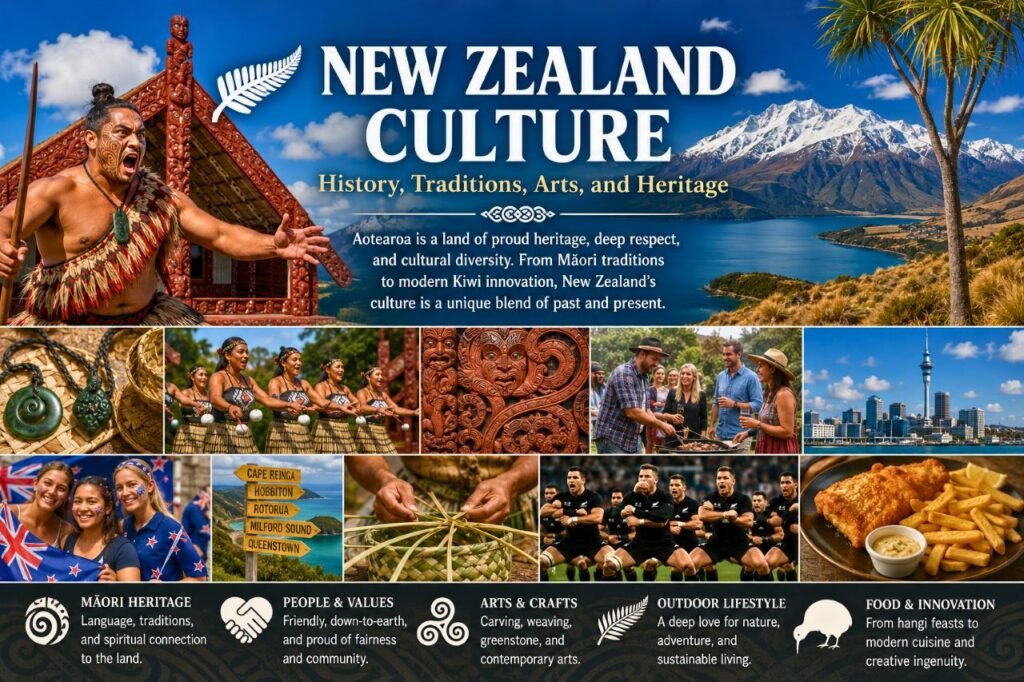
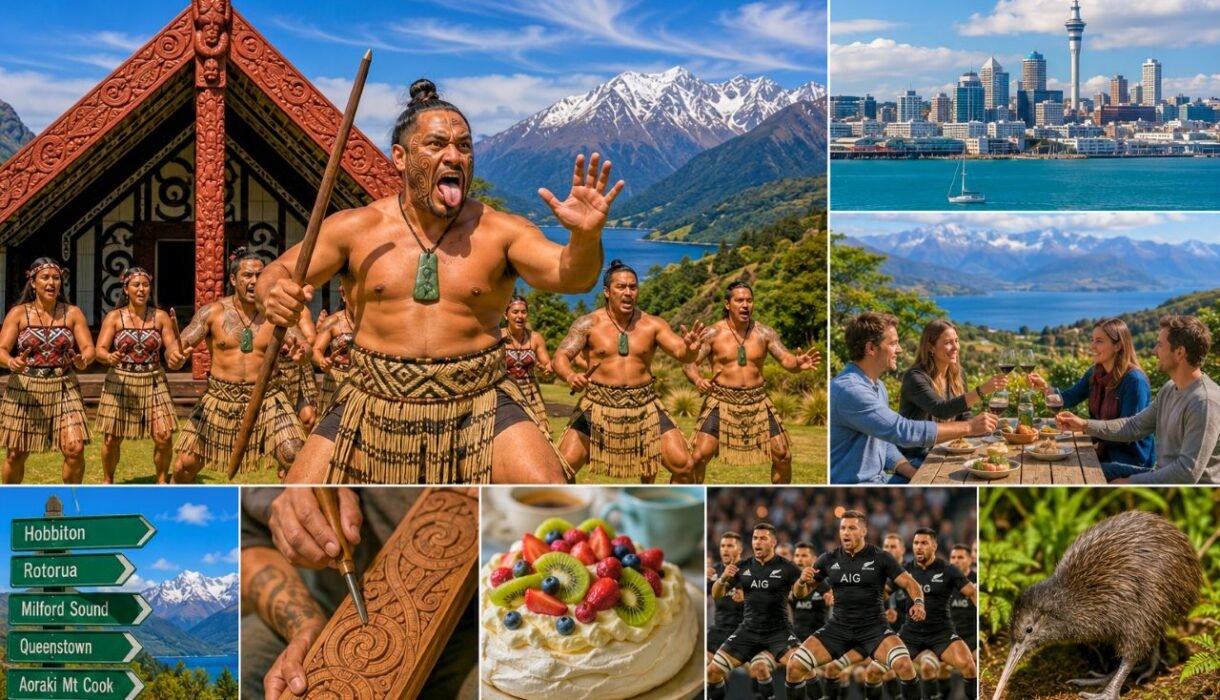
- The Marae Protocol (Pōwhiri): The Marae is the sacred communal meeting grounds of Māori tribes. A formal welcome ceremony (Pōwhiri) involves the Wero (a warrior challenge), Karanga (a ceremonial call by elder women), Whaikōrero (formal speeches), and the Hongi—a traditional greeting where two people press noses and foreheads together, symbolically sharing the breath of life (Ha).
- National Holidays & Festivals:
- Waitangi Day (February 6): National day reflecting on treaty history, commemorated with cultural performances, royal navy salutes, and interfaith services at Waitangi.
- Anzac Day (April 25): Solemn dawn services remembering soldiers who served in World War I and all global conflicts.
- Matariki: The Māori New Year, marked by the mid-winter appearance of the Pleiades star cluster. It became an official national public holiday celebrating reflection, harvest, and new beginnings.
- Kiwi Ethos & “Number 8 Wire” Ingenuity: Non-indigenous Kiwi culture is famous for its understated, modest, and practical approach to life. The term “Number 8 wire mentality” refers to the legendary resourcefulness of early farmers who could fix almost anything using basic fencing wire.
Languages & Communication
Languages Spoken
- English: Spoken by over 95% of the population, characterized by a distinct Kiwi accent, relaxed rhythm, and colorful colloquialisms.
- Te Reo Māori: An official language of New Zealand since 1987. Experiencing a massive nationwide revival, Te Reo words (such as Aotearoa, Whānau, and Mana) are integrated into everyday television, government, and public conversation.
- New Zealand Sign Language (NZSL): Recognized as an official language in 2006, widely used across inclusive educational and civic spaces.
Greetings, Expressions & Slang
- “Kia Ora” — The universal Māori greeting wishing health and wellness; used by all New Zealanders for “Hello,” “Welcome,” and “Thank you.”
- “Sweet As” — A ubiquitous Kiwi slang phrase meaning “Great,” “No problem,” or “Sounds good.”
- “Choice” — Slang for “Awesome” or “Excellent.”
- “Whānau” — Māori term for extended family and tight-knit community networks.
Geography
New Zealand is an island nation situated in the southwestern Pacific Ocean:
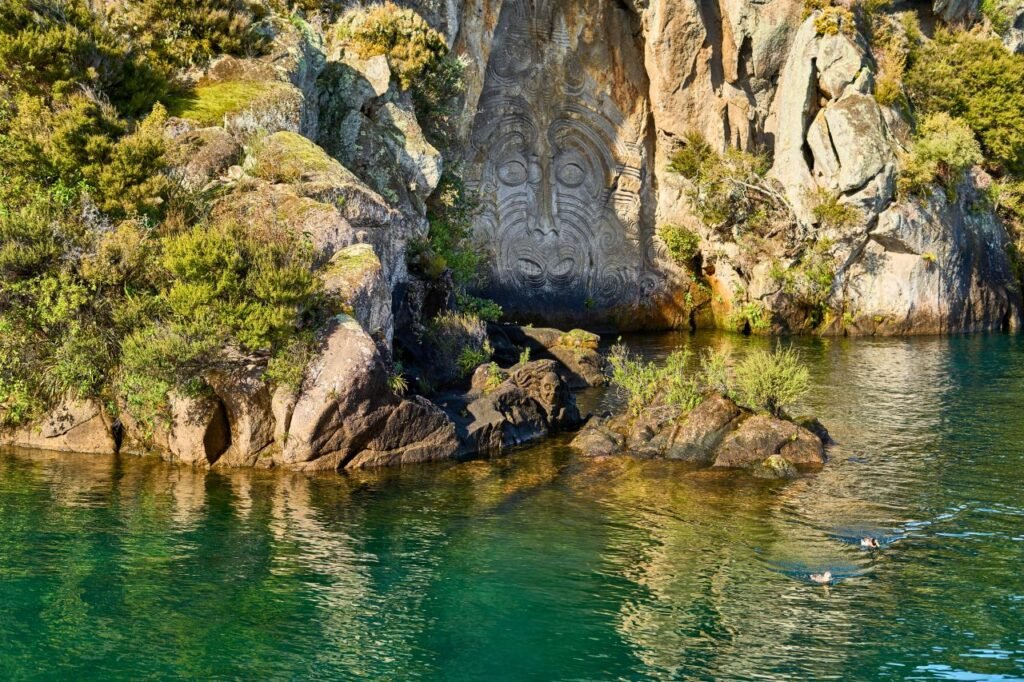
- North Island (Te Ika-a-Māui): Home to geothermal activity (Rotorua geysers), active volcanoes (Mount Ruapehu), rolling farmland, and major metropolitan centers including Auckland and the national capital, Wellington.
- South Island (Te Waipounamu): Renowned for its dramatic natural landscapes, including the Southern Alps, towering glaciers (Franz Josef), turquoise lakes, and deep coastal fjords (Milford Sound).
Economy
New Zealand operates an advanced, market-driven economy deeply connected to trade and green tourism:
- Agriculture & Dairy: New Zealand is one of the world’s largest exporters of dairy products (Fonterra), sheep meat, wool, wine (Marlborough Sauvignon Blanc), and kiwifruit.
- Eco-Tourism & Film Industry: Known globally as “Middle-earth” due to the Lord of the Rings film franchises, international tourism and a sophisticated high-tech film production industry (Wētā FX) contribute significantly to GDP.
Politics
New Zealand is a constitutional monarchy with a parliamentary democracy:
- Governance: The head of state is King Charles III (represented locally by the Governor-General), while the head of government is the Prime Minister leading the elected unicameral House of Representatives.
- Māori Electorates: New Zealand features a unique electoral system (MMP – Mixed Member Proportional) that includes reserved seats specifically for Māori representatives, ensuring indigenous representation in parliament.
Ethnic Groups
- European / Pākehā (~67–70%): Primarily of British, Irish, Scottish, and broader European descent.
- Māori (~17%): The indigenous Polynesian people of Aotearoa.
- Asian Communities (~15%): Growing populations of Chinese, Indian, Filipino, and Korean New Zealanders, concentrated in urban areas.
- Pacific Peoples (~8%): Significant communities from Samoa, Tonga, the Cook Islands, Niue, and Fiji.
Beliefs & Values
Religion & Worldview
- Diverse Belief Systems: Nearly half of New Zealanders identify as non-religious/secular in census data. Christianity remains the largest religious tradition, alongside Hinduism, Islam, and Buddhism.
- Māori Concepts:
- Kaitiakitanga: Guardianship and environmental stewardship of land, rivers, and oceans.
- Manaakitanga: Hospitality, generosity, and caring for guests with deep respect.
Food & Cuisine
Kiwi cuisine combines fresh agricultural produce, seafood (Kaimoana), and traditional earth-oven cooking.
- Key Dishes & Delicacies:
- Hāngī: The traditional Māori method of slow-cooking meat (pork, lamb, chicken) and root vegetables (kumara, potatoes) in baskets buried over hot stones in an earth oven.
- Kaimoana (Seafood): Green-lipped mussels, crayfish (rock lobster), whitebait fritters, and fresh snapper.
- Pavlova & Roast Lamb: A sweet meringue dessert topped with whipped cream and fresh kiwifruit, alongside classic Sunday roast meats.
- Flat White Coffee: New Zealand claims co-creation of the famous espresso drink featuring micro-foamed milk.
Clothing & Symbols
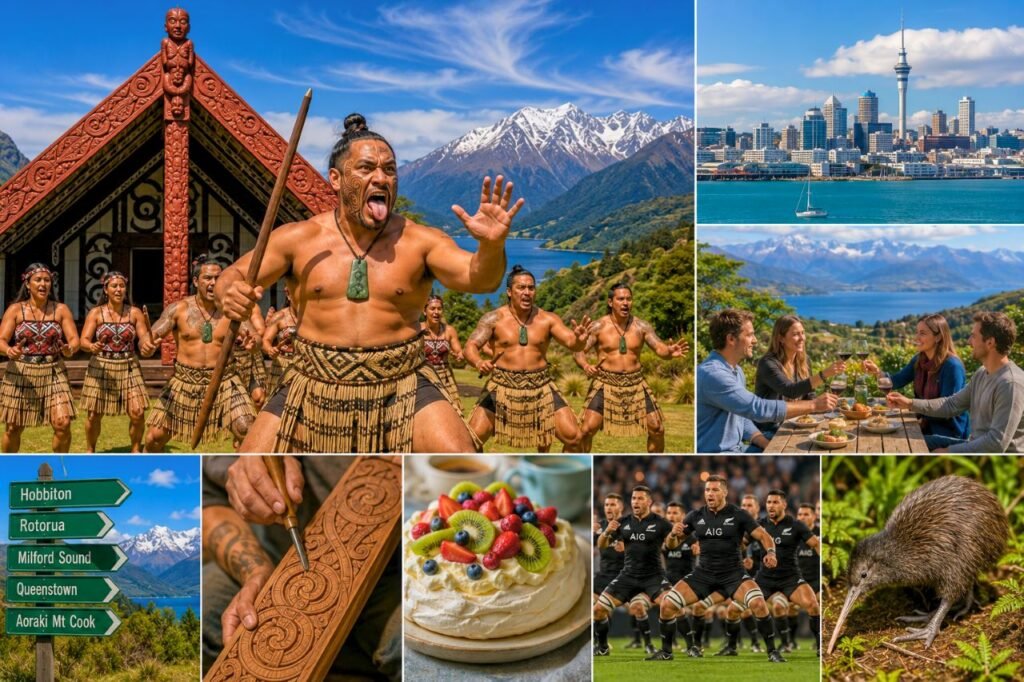
- Traditional Attire: Māori traditional dress includes hand-woven flax cloaks (Korowai) adorned with feathers and tassels, alongside intricate greenstone (Pounamu) pendants and carved bone necklaces (Koru).
- Modern Style: Casual, outdoorsy attire (boots, woolen knitwear, Swanndri jackets) is standard.
- National Symbols:
- Kiwi Bird: A flightless nocturnal bird that serves as the national icon.
- Silver Fern (Ponga): A native fern leaf symbolic of national strength, worn by national sports teams like the All Blacks.
Music, Dance & Art
- Kapa Haka & The Haka: Kapa Haka is traditional Māori performing arts featuring rhythmic chanting, choral singing, and the famous Haka—a powerful posture dance performed before sporting events, weddings, and national ceremonies.
- Tā Moko: Traditional Māori facial and body tattooing using chisels or needles. Unlike decorative tattoos, Tā Moko conveys tribal lineage, status, and personal life accomplishments.
- Visual Arts: Renowned for wood carving (Whakairo), flax weaving (Raranga), contemporary Kiwi landscape painting, and world-class cinema.
Summary
New Zealand culture is a vibrant, respectful partnership between indigenous Polynesian heritage and modern multicultural life. Grounded in a love for nature, community hospitality, and creative innovation, Aotearoa New Zealand stands as a beacon of cultural preservation and unity in Oceania.
At Best Culture Insight, we see culture as the heartbeat of every society – the way people live, connect, and express their identity.