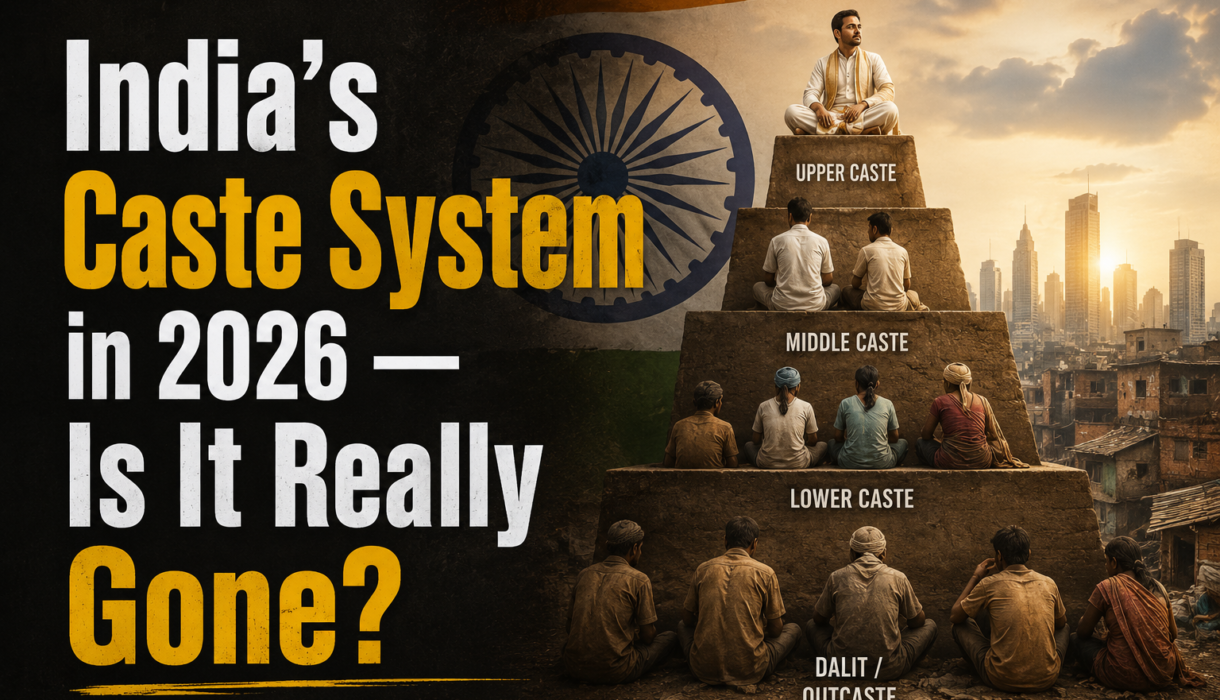

As India positions itself as a dominant global tech hub and economic superpower in 2026, a surface-level glance at its modern skyscrapers and bustling digital economy might suggest that ancient social hierarchies have finally faded into history. Decades of constitutional protections, rapid urbanization, and progressive education have undoubtedly diluted the overt, ritualistic restrictions of the traditional caste system. Yet, behind this modern facade, the underlying structure of caste has not disappeared; rather, it has adapted, transformed, and integrated into the machinery of contemporary Indian politics, society, and technology.
The Political Catalyst: The 2026 Caste Census
Any lingering doubts about the persistent relevance of caste have been thoroughly dispelled by the historic demographic exercises taking place in 2026. India’s newly launched population count marks the first time since the country’s independence that a national census is actively seeking to collect comprehensive caste identification data. Far from being an obsolete relic, caste identity remains the ultimate currency in Indian democracy, dictating political coalitions, state welfare distribution, and the highly debated reservation quotas for government jobs and higher education.
The Urban Illusion and the Marital Divide
While metropolitan areas offer a sense of anonymity that shields individuals from day-to-day discrimination, this “caste-free” urban landscape is largely an illusion. In professional spheres, networking circles and corporate boardrooms still lean heavily on historical privileges and social capital. Most telling of all is the private sphere of marriage; digital matrimony platforms in 2026 still feature highly specific caste filters, proving that endogamy—marrying within one’s own caste group—remains the norm rather than the exception across both rural and wealthy urban communities.
Going Global: A Modern Export
The endurance of this hierarchy is so pronounced that it has now successfully migrated beyond India’s borders into the global diaspora. In recent years, multinational tech companies in Silicon Valley and major Western universities have had to grapple with caste-based discrimination among South Asian expatriates. This global reality has prompted several international cities and states to explicitly ban caste-based discrimination, cementing the fact that this ancient system of social division is no longer just a domestic Indian concern, but a global human rights issue.
Evolution, Not Erasure
Ultimately, the caste system in 2026 is not gone; it has merely evolved. What began thousands of years ago as a ritualistic division of labor has consolidated into a potent mix of political mobilization, digital identity, and social networking. For India to truly dismantle this deeply entrenched hierarchy, it must look beyond superficial economic indicators and address the systemic socio-economic divides that continue to keep caste alive and well in the modern era.