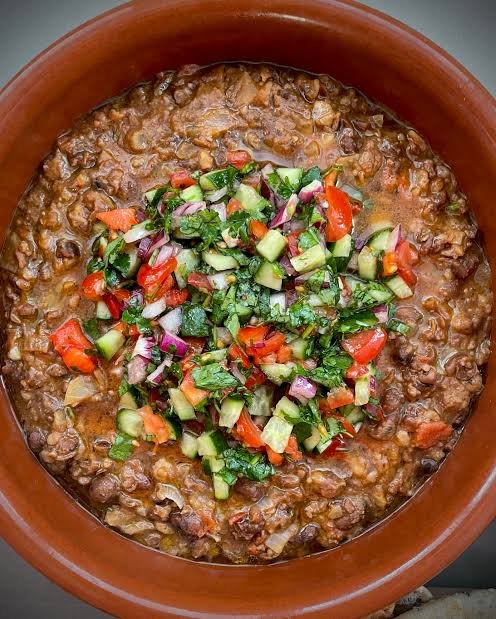

In a world defined by fast culinary trends and fleeting food fads, very few dishes can claim a history measured in millennia. Ful Medames—a warm, hearty stew of slow-cooked fava beans seasoned with cumin, garlic, lemon juice, and olive oil—is one of humanity’s oldest culinary treasures. Originating in the fertile Nile Valley of ancient Egypt, this humble meal has nourished generations of workers, Pharaohs, and families continuously for thousands of years.
From Pharaonic Roots to Ancient Trade Routes
The origins of ful medames stretch back to antiquity. Archaeological digs in Egypt have uncovered caches of preserved fava beans dating back thousands of years, proving that leguminous stews were central to the regional diet long before modern history began. The word medames itself traces its roots back to the Coptic language, where it literally meant “buried”—referring to the traditional cooking method of burying copper pots (idra) deep in hot ashes to simmer the beans overnight.
A Culinary Constant Through Changing Dynasties
What makes ful medames truly remarkable is its astounding durability as a cultural staple. Over centuries of historical shifts—from Pharaonic rule to Persian, Greek, Roman, Arab, and Ottoman eras—the rulers, languages, and religions of the Mediterranean transformed dramatically. Yet, through every political transition, the daily consumption of ful remained completely unchanged. Empires rose to global dominance and faded into history books, but the morning ritual of eating fava beans endured untouched.
The Alchemy of Slow Cooking and Simple Ingredients
The enduring popularity of ful medames relies heavily on its nutritional power and elegant simplicity. Whole dried fava beans are soaked and cooked over low heat for many hours until they soften into a rich, creamy texture. The dish is traditionally seasoned right before serving with ground cumin, minced garlic, fresh lemon juice, and extra virgin olive oil. Scooped up with warm flatbread, it delivers a complete, protein-rich meal that sustains energy throughout long days of physical labor.
A Universal Equalizer Across Social Classes
Food often reflects social divisions, but ful medames has always served as a great social equalizer across the Middle East and North Africa. It is eaten with equal affection in modest street-side stalls, family dining rooms, and high-end hotels. Because fava beans were inexpensive and widely available, the dish ensured that even during economic hardships, populations had access to wholesome, high-quality nutrition. It bridged the gap between common laborers and elite rulers, uniting entire societies around shared breakfast tables.
The Global Spread of a Sacred Breakfast
Today, ful medames is recognized far beyond the borders of Egypt. It has become an essential breakfast staple throughout Sudan, the Levant, the Arabian Peninsula, and parts of the Horn of Africa—with each region adding local twists such as tahini, tomatoes, chili peppers, or hard-boiled eggs. Despite these minor variations, the core identity of the dish remains faithful to its ancient origins, demonstrating how authentic comfort food easily spans across borders and cultures.
A Timeless Legacy on the Modern Plate
In an era of complex food processing and fast-paced dining, ful medames offers a grounding connection to human history. It proves that true culinary greatness does not require expensive ingredients or complicated culinary tools. By linking modern diners directly to the ancient agricultural roots of civilization, this immortal fava bean stew remains a living testament to resilience, flavor, and community.