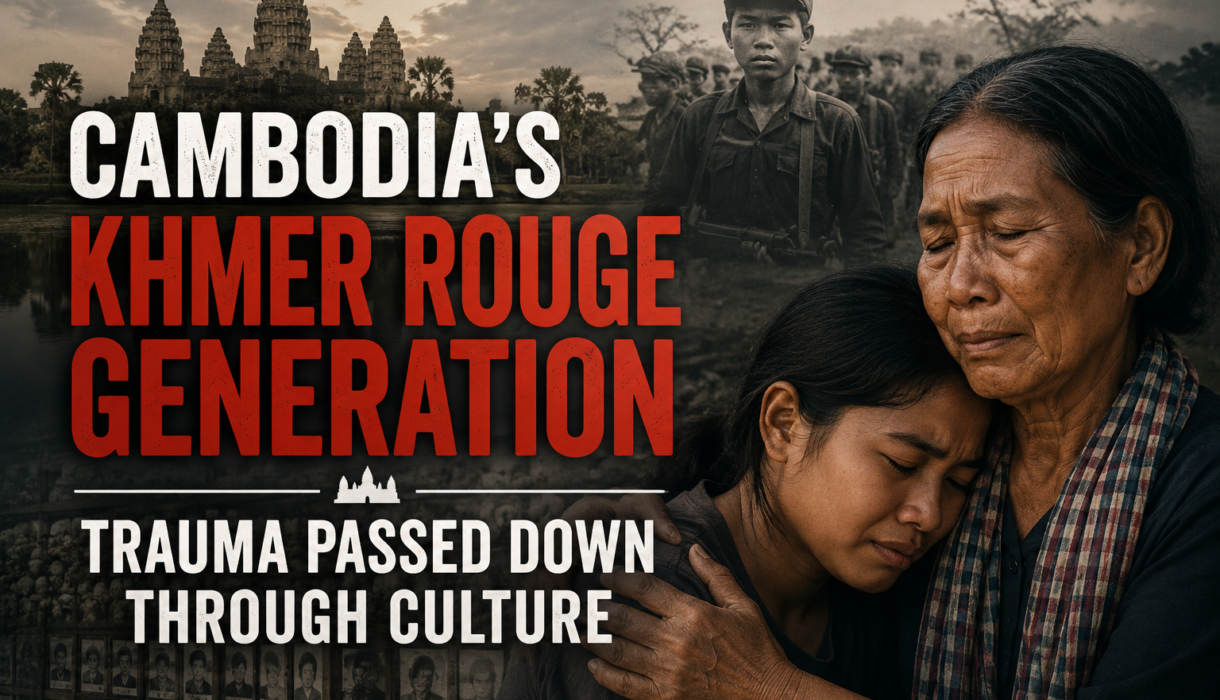

Between 1975 and 1979, Cambodia suffered under the brutal reign of the Khmer Rouge regime, resulting in the deaths of an estimated two million people—nearly a quarter of the nation’s population. While decades have passed since the fall of the regime, the psychological destruction wrought by forced labor, mass executions, and extreme starvation did not end with that generation. Today, Cambodia faces a subtle yet profound crisis: the intergenerational transmission of trauma. The deep emotional scars of the survivors have trickled down to their children and grandchildren, fundamentally shaping family dynamics, parenting styles, and societal norms across the country.
The Unspoken Language of Family Life
In many Cambodian households, the horror of the genocide is rarely discussed openly, yet its presence remains heavy and palpable. Cultural norms that value emotional restraint, combined with severe Post-Traumatic Stress Disorder (PTSD) among elders, often manifest as prolonged silence. Rather than verbalizing their pain, survivor parents frequently pass down psychological burdens through hypervigilance, emotional detachment, or strict disciplinarian behavior driven by lingering fears of instability. Children growing up in these environments naturally absorb their parents’ unspoken anxiety, internalizing a sense of caution, fear of authority, and systemic mistrust.
Epigenetics and Behavioral Inheritance
Modern psychological and genetic research reveals that trauma is transmitted not only through learned behavior but also biologically and developmentally. Prolonged exposure to extreme stress alters stress-response systems, which can affect parenting capabilities and secure attachment bonds with infants. As a result, second- and third-generation Cambodians who never personally experienced the killing fields frequently present high rates of unexplained anxiety, depression, and somatic stress symptoms. This inheritance creates an invisible bridge connecting past atrocities directly to the mental health struggles of modern Cambodian youth.
Cultural Barriers to Healing
Addressing this inherited trauma presents a unique challenge due to cultural perceptions surrounding mental health in Cambodia. Traditional views often attribute psychological distress to spiritual imbalance or karma rather than clinical PTSD, leading many families to avoid seeking professional help. Furthermore, the destruction of Cambodia’s healthcare and educational systems under the Khmer Rouge left a long-standing shortage of trained mental health professionals. Consequently, coping mechanisms are often limited to community support networks or silence, leaving the root causes of generational pain largely unaddressed.
Rebuilding the Narrative for Future Generations
Despite these deep-seated challenges, modern Cambodia is actively forging new paths toward collective recovery and emotional resilience. Grassroots organizations, youth initiatives, and community-based mental health programs are introducing intergenerational dialogue spaces where elders can safely share their stories. By combining traditional Theravada Buddhist practices of mindfulness and compassion with contemporary psychological therapy, the younger generation is learning to process inherited pain. Transforming silence into open dialogue allows Cambodian families to honor their ancestors’ survival while breaking the cycle of historical trauma for future generations.