Why Zulu Men Dance With Shields at Weddings — and Every Move Means Something Different
Posted in :

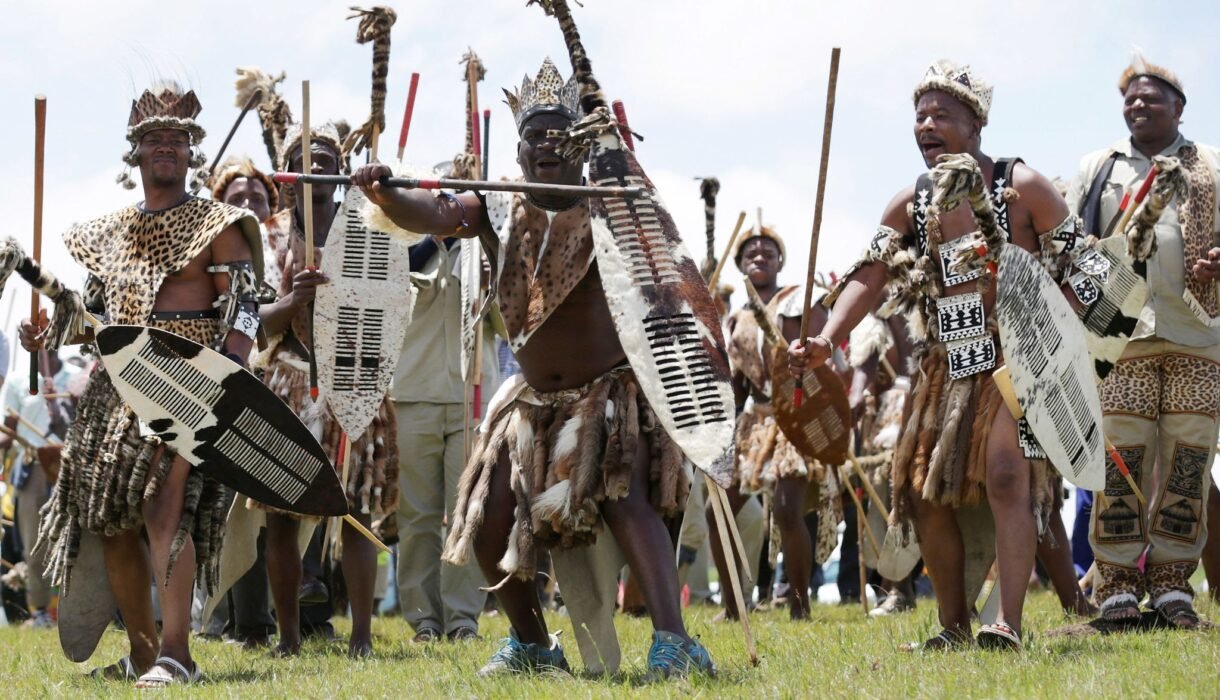
At a traditional Zulu wedding in South Africa, few spectacles match the energy and grandeur of the groom’s party entering the ceremonial grounds. Clad in traditional attire made of animal hides and feathers, rows of men move in rhythmic unison, stamping the earth while raising cowhide shields toward the sky. To an outside observer, this performance—known broadly as part of the Umtsimba wedding festivities—looks like a fierce military display. However, this ancient dance is not a show of aggression; it is a rich non-verbal language where every shield movement communicates love, protection, honor, and family alliance.
The Cultural Roots of the Zulu Shield
To understand the dance, one must first look at the ceremonial shield itself, known as the Ihawu. Historically, under the reign of King Shaka Zulu, large cowhide shields (Isihlangu) were primary weapons of warfare designed for battlefield defense. Over time, as military conflict gave way to peaceful cultural preservation, smaller ceremonial shields were adapted for social gatherings, celebrations, and rites of passage. In modern Zulu wedding customs, carrying a shield is a symbolic declaration that a man is prepared to stand as a guardian over his home, his wife, and his community.
The Symbolic Language of the Wedding Dance
During the traditional wedding ceremony, the groom and his brothers perform the Ingoma—a powerful, high-kicking dance accompanied by rhythmic drumming and chanting. As the men leap and strike the ground with their feet, the position and motion of their shields tell a distinct story. When a dancer holds his shield high above his head, he is publicly acknowledging the authority of the ancestors and seeking their blessing for the union. Swinging the shield low to the ground signifies humility and respect toward the bride’s family, honoring them for raising a worthy daughter.
Decoding the Rhythms of Defense and Devotion
Every physical gesture executed with the shield carries a specific meaning understood by the elders watching from the sidelines. A sharp forward thrust of the shield represents a solemn promise: the groom is demonstrating his commitment to shield his bride from life’s hardships, poverty, and external threats. Conversely, when the dancers bring their shields together in a unified wall, it symbolizes the strength of the groom’s clan, signaling to the bride’s family that she is entering a secure household surrounded by a supportive network.
The Friendly Rivalry Between Two Families
A traditional Zulu wedding is fundamentally a merger of two distinct families, and dance serves as a joyful competition between them. The bride’s family and the groom’s family take turns performing their respected dances, each attempting to outshine the other in rhythm, precision, and energy. The groom’s men use dynamic shield slaps—striking the cowhide with a wooden stick or spear—to punctuate the beat of their chants. This spirited exchange creates a vibrant atmosphere of celebration, replacing potential tension between families with mutual admiration and shared pride.
Passing Down Heritage Across Generations
Beyond its role in matrimonial celebrations, the shield dance serves as a living classroom for young Zulu men. Participation requires months of practice under the guidance of elder men, who teach young boys not only the physical choreography but also the moral values embedded in each movement. Learning to dance with the shield teaches discipline, teamwork, respect for lineage, and cultural pride. It ensures that ancient oral traditions and physical art forms remain vibrant in the contemporary world.
A Triumphant Celebration of Unity and Protection
The Zulu wedding shield dance is a profound blend of history, poetry, and social covenant disguised as dynamic theater. Far from being a simple performance, it uses martial heritage to celebrate the peaceful creation of a new family unit. As the dust settles and the chants fade, the message of the shields remains clear: marriage is a sacred bond supported by strength, guided by respect, and protected by love for generations to come.