The Great Zimbabwe Ruins Were Built Without Cement, Without Cranes and Without Any Help From Aliens
Posted in :

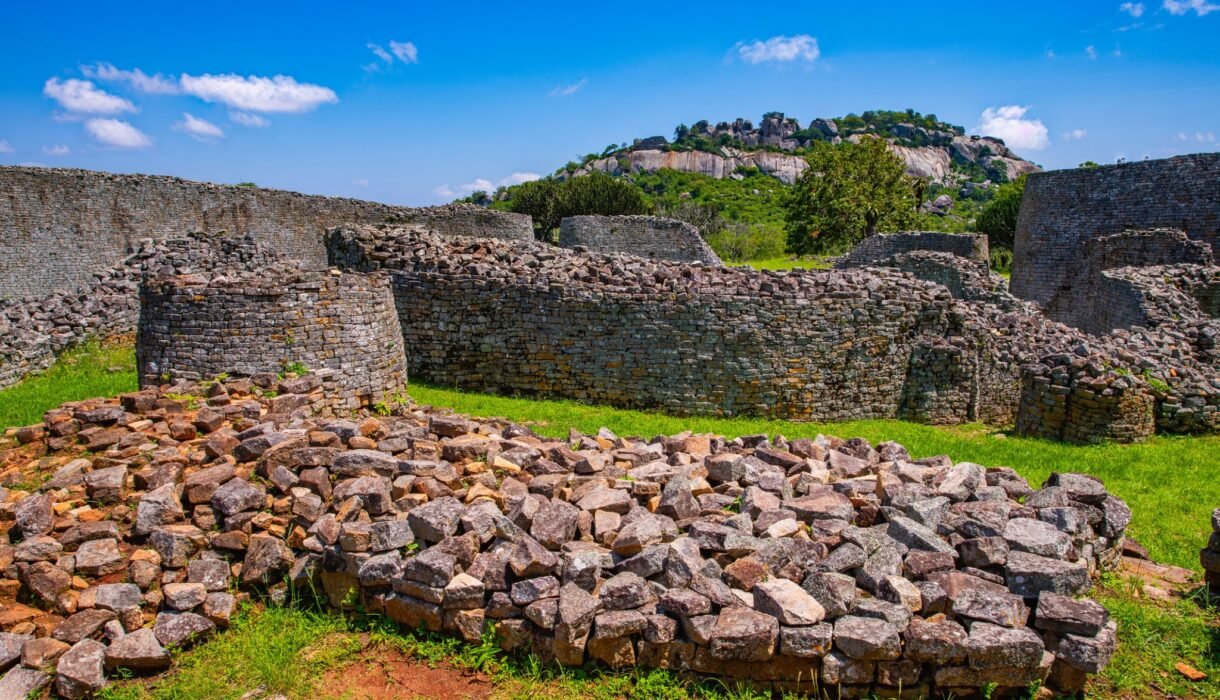
Rising majestically above the hills of southeastern Zimbabwe lie the massive stone walls of Great Zimbabwe, one of the most remarkable architectural achievements in human history. Constructed between the 11th and 15th centuries, this medieval city once served as the bustling capital of a powerful trading empire. Towering up to 36 feet high and stretching across nearly 1,800 acres, its soaring stone structures were erected entirely without mortar, cement, heavy machinery, or external intervention. It stands as a monument to indigenous African engineering and organizational genius.
The Mastery of Drystone Masonry
The most astounding aspect of Great Zimbabwe is its technique: every single structure was built using a method known as “drystone masonry.” Ancient Shona masons placed millions of granite blocks together without a single drop of mortar or cement to bind them. To ensure stability, the builders carefully shaped each stone brick and laid them in slightly battered curves—sloping inward as the walls rose higher. This precise weight distribution prevented collapse, allowing the massive walls to withstand centuries of weathering, earthquakes, and environmental shifts while remaining perfectly intact today.
Harnessing Nature: How the Stones Were Quarryed
Without modern industrial tools, lasers, or cranes, how did medieval builders produce millions of uniform granite blocks? The secret lay in a clever understanding of natural physics. Granite outcroppings surround the region, naturally expanding and contracting with temperature changes. Shona workers accelerated this natural process by lighting large fires along the rock face to heat the granite, then dousing the hot stone with cold water. The sudden temperature shock caused the rock to fracture in clean, straight horizontal sheets, which masons easily split into neat, brick-sized blocks using hand tools.
A Metropolis Built on Human Organization
Lifting heavy granite stones to construct 36-foot-high walls without cranes required immense human collaboration and sophisticated project management. Builders constructed temporary earthen ramps alongside the rising walls, allowing workers to haul stones upward manually using timber rollers, sledges, and rope systems. The sheer scale of construction reflects a highly organized society capable of mobilizing labor, managing resource pipelines, and feeding thousands of craftspeople, stonemasons, and laborers over several generations.
Debunking Colonial Myths and Extraterrestrial Theories
When European explorers first encountered the ruins in the 19th century, systemic biases led them to falsely claim that local African populations could not have built such sophisticated monuments. Early colonial narratives attributed the city to ancient Phoenicians, Romans, or Biblical figures like the Queen of Sheba. In modern times, sensationalist theories occasionally point toward extra-terrestrial visitors. However, extensive modern archaeological excavations, carbon dating, and oral histories have definitively proven that the city was planned, built, and inhabited continuously by the ancestors of the modern Shona people.
The Heart of an International Trade Empire
Great Zimbabwe was far more than a fortress; it was a flourishing cosmopolitan center that connected Southern Africa to global trade routes. Local traders exchanged gold, copper, and ivory for luxury goods arriving across the Indian Ocean. Archaeologists excavating the site have recovered Syrian glassware, Persian pottery, and Ming dynasty porcelain from China—proving that this indigenous African kingdom was a powerful economic player operating at the heart of global medieval commerce.
A Lasting Symbol of Heritage and Pride
The legacy of Great Zimbabwe is so profound that the modern nation of Zimbabwe derived its name directly from the site—originating from the Shona phrase Dzimba-dza-mabwe, meaning “houses of stone.” The iconic soapstone birds recovered from the ruins now adorn the nation’s flag and currency. Beyond its national significance, Great Zimbabwe stands as an enduring global testament to human ingenuity—proving what human dedication, craftsmanship, and community cooperation can accomplish using nothing more than raw stone, fire, and water.