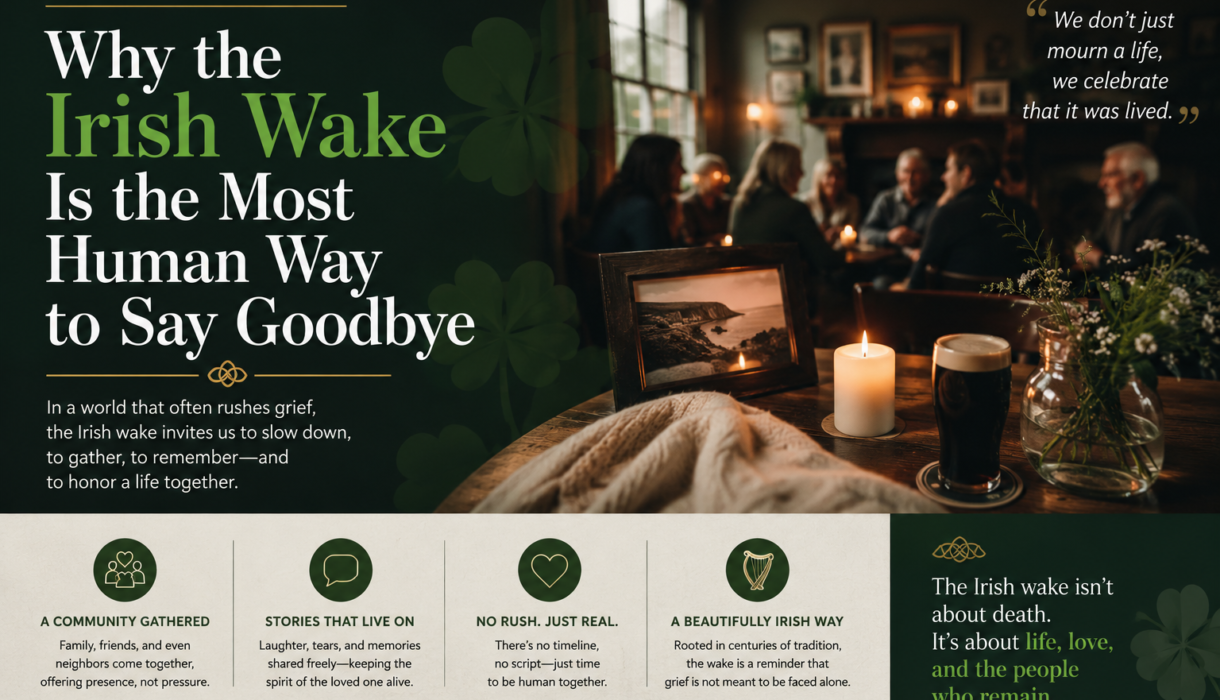

In many modern Western societies, death has become an uncomfortable subject—sanitized, hidden away in funeral homes, and spoken about in hushed, clinical tones. However, the traditional Irish wake stands in stark contrast to this sterile approach, offering a deeply emotional, community-centered farewell that honors both the sorrow of loss and the joy of a life well-lived. Rather than banishing grief behind closed doors, the Irish wake brings mortality directly into the home, transforming mourning into a collective human experience. It is precisely this raw authenticity, emotional balance, and communal support that make the Irish wake widely regarded as one of the most profoundly human ways to say goodbye.
Bringing the Deceased Back Home
At the core of the traditional wake is the practice of keeping the deceased at home among family and friends before burial. The body is laid out in a open room—often the living room—allowing loved ones to visit, pay their respects, and sit vigil through the night. This intimate proximity offers a physical and psychological reality to death that modern sterile parlors often lack. By keeping the deceased surrounded by familiar sounds, laughter, and tears, families are given time to process the transition naturally. This quiet period of togetherness creates a gentle bridge between presence and departure, giving everyone a meaningful space to offer a final, personal farewell.
Balancing Grief with Shared Joy and Laughter
What truly sets the Irish wake apart is its refusal to let death have the final word on a person’s story. While sorrow and tears are fully welcomed, they comfortably coexist with warmth, food, drink, and storytelling. Mourners gather around to recount funny anecdotes, praise the departed’s character, sing traditional songs, and raise a toast to their memory. This blend of mourning and celebration reflects an understanding of human emotion: that grief is best borne when lightened by camaraderie. By celebrating the life that was lived alongside the grief of its ending, the wake provides immediate, uplifting comfort to the immediate family.
A Community Safety Net for the Grieving
A traditional wake is never a solitary event for the immediate family; it is an all-hands effort by the entire village or neighborhood. Community members step in organically to handle logistics—preparing meals, serving tea, directing visitors, and sitting night-long vigils so the family can rest. This shared responsibility ensures that the bereaved are never left alone in their darkest hours. The continuous flow of neighbors entering the home acts as a visible reminder that the burden of loss is distributed across many shoulders. In a world where isolation often accompanies tragedy, this immediate wave of social support provides a vital emotional anchor.
A Healthy Template for Emotional Healing
Ultimately, the Irish wake endures because it satisfies a fundamental psychological need for honest closure. By confronting death openly, sharing memories without filter, and leaning on community ties, participants walk through the grieving process together rather than suppressing it. The ritual demonstrates that while a life has ended, the love, stories, and connections generated by that life remain vibrant and enduring. In reminding us to grieve deeply yet celebrate fiercely, the Irish wake offers a timeless, profoundly compassionate template for how human beings can comfort one another when facing life’s final goodbye.