Fiji Culture: History, Traditions, Arts, and Pacific Heritage
Posted in :

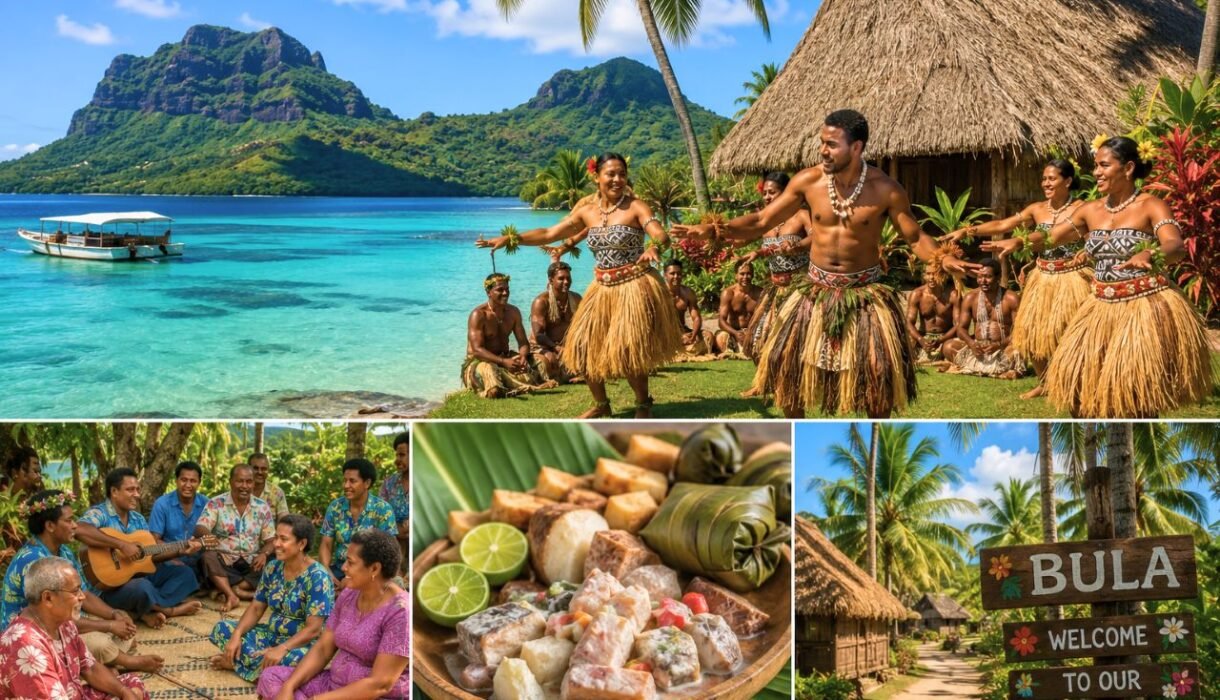
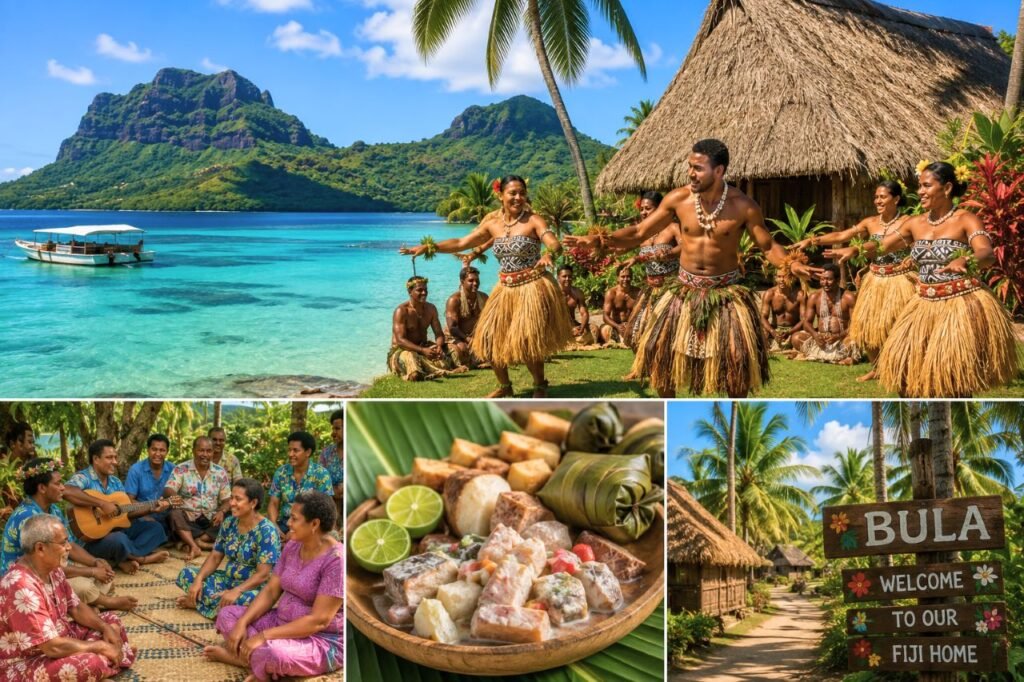
The Culture of Fiji is a vibrant, communal tapestry woven from thousands of years of Indigenous Melanesian and Polynesian traditions, blended with rich Indo-Fijian heritage, British colonial history, and smaller Pacific island influences. Situated in the South Pacific Ocean within Oceania, Fiji is an archipelago of over 330 islands where warm hospitality—famously encapsulated by the universal greeting “Bula!”—is a cornerstone of daily life. Governed by the timeless philosophy of Solevu (communal sharing) and Keracake (mutual respect), Fijian society is world-renowned for its deep-rooted village structures, traditional ceremonial rites, expressive choral music, and harmonious multicultural spirit.
History & Origins
Fiji’s cultural history spans thousands of years of oceanic navigation, tribal craftsmanship, and multicultural integration:
- Lapita Navigators & Indigenous Settlement (circa 1500 BCE): The earliest ancestors of Indigenous Fijians (iTaukei) were seafaring Lapita people who migrated from Island Southeast Asia across the Pacific. Over centuries of inter-island navigation, these settlers developed complex tribal chiefdoms (Matanitu), sophisticated agricultural systems, and distinct pottery and barkcloth traditions.
- Polynesian Interactions & Warfare: Due to its strategic location in the South Pacific, Fiji served as a vital cultural bridge between Melanesia and Polynesia. Extensive trade and intermarriage occurred with neighboring Tonga and Samoa, influencing Fijian canoe-building (Camakau), weapon crafting, and royal ceremonies.
- European Contact & The Deed of Cession (1874): European explorers, traders, and Christian missionaries arrived in the late 18th and early 19th centuries. In 1874, King Seru Epenisa Cakobau and major chiefs ceded Fiji to Queen Victoria, establishing British crown colony rule.
- Indo-Fijian Arrival & Indentured Labor (1879–1916): Under British colonial administration, over 60,000 Indian contract laborers (Girmitiyas) were brought to Fiji to work on sugarcane plantations. Over generations, these workers established vibrant Indo-Fijian communities, introducing Hinduism, Islam, distinct culinary traditions, and new languages into the national landscape.
- Modern Independence (1970–Present): Fiji gained independence from Britain on October 10, 1970, evolving into a resilient Pacific nation that balances traditional chiefdom institutions with modern democratic structures.
Culture, Traditions & Customs
Fijian society is organized around communal village networks where communal responsibility (Veilomani—loving kindness) guides everyday conduct and life transitions.
- Ceremonial Rites & Traditions:
- Yaqona (Kava) Ceremony: The sacred central ritual of Fiji. Yaqona (made from the crushed root of Piper methysticum) is prepared in a carved wooden bowl called a Tanoa and served in a coconut shell cup (Bilo). It is presented to welcome guests, mark official agreements, and honor ancestral spirits.
- Sevusevu (Protocol of Entry): When visiting any traditional iTaukei village, guests must perform a Sevusevu, presenting raw kava roots to the village chief or headman (Turaga ni Koro) to seek formal permission and blessing to enter.
- Rites of Passage:
- Naming & Infant Ceremonies (Vakabogibogi): Celebrating the fourth or tenth night after a child’s birth with village feasts, mat presentations, and infant blessings.
- Marriage Customs (Vakamau): Traditional Fijian weddings involve elaborate gifts of hand-woven pandanus mats (Ibe) and polished whale teeth (Tabua), which represent the highest token of honor, respect, and social alliance.
- Funeral Ceremonies (Reguregu): Funeral gatherings where extended clans present Tabua, barkcloth (Masi), and food to honor the deceased and comfort the grieving family.
- Festivals & National Celebrations:
- Fiji Day (October 10): A national week of festivities celebrating independence with parades, traditional dances, and multicultural events.
- Bula Festival & Hibiscus Festival: Annual urban carnivals in Nadi and Suva featuring music contests, float parades, and Pacific food stalls.
- Diwali & Eid: Widely celebrated national holidays reflecting Fiji’s vibrant Hindu and Muslim Indo-Fijian heritage.
Languages & Communication
Languages Spoken
Fiji is an official multilingual nation with three recognized principal languages:
- Baueran Fijian (iTaukei): The official standard Indigenous Fijian language, based on the Bau dialect. Numerous regional dialects exist across different island provinces.
- Fiji Hindi: A unique language developed by Indian indentured laborers, blending Awadhi, Bhojpuri, and other Hindi dialects with Fijian and English vocabulary.
- English: Widely spoken in government, business, education, and tourism as a unifying national lingua franca.
Greetings, Expressions & Proverbs
- “Bula!” — The primary Fijian greeting meaning “life” or “health,” delivered with genuine warmth and a wide smile.
- “Vinaka” — Expresses “thank you” or “good.”
- “Keracake” — A cultural principle of showing mutual respect and humility toward elders and leaders.
- “Noqu Kalou, Noqu Vanua” — A foundational Fijian proverb translating to “My God, My Land,” expressing the sacred bond between faith, ancestral territory, and identity.
Geography
Fiji is a tropical archipelago located in Melanesia in the South Pacific Ocean, approximately 2,000 kilometers northeast of New Zealand.
- Islands & Volcanic Terrains: Comprises 332 islands (110 permanently inhabited) and over 500 islets. The two major landmasses are Viti Levu (home to the capital, Suva, and Nadi) and Vanua Levu. The terrain features dramatic volcanic peaks, tropical rainforests, and fertile river valleys.
- Marine & Coral Environments: Ringed by expansive barrier reefs, including the Great Sea Reef (Cakaulevu), featuring world-class coral gardens, lagoons, and diverse marine life.
Economy
Fiji possesses one of the most developed island economies in the Pacific region, built upon tourism, agriculture, and international trade.
- Tourism: The leading economic driver, attracting international visitors to world-class eco-resorts, diving sites, and cultural villages.
- Agriculture & Resource Exports: Major exports include high-grade sugar, bottled mineral water (Fiji Water), coconut products (copra), kava, timber, gold, and tuna.
- Handicrafts & Small Enterprise: Local artisan markets produce hand-carved wooden bowls, woven mats, and woven baskets for domestic and export sales.
Politics
Fiji is a parliamentary representative democratic republic with a constitutional governance system.
- Government Framework: The President serves as head of state, while the Prime Minister leads the government in Parliament in Suva.
- Great Council of Chiefs (Bose Levu Vakaturaga): A traditional constitutional body representing Indigenous chiefs, advising the government on Indigenous land rights, cultural preservation, and community welfare.
Ethnic Groups
Fiji’s population of nearly 900,000 people represents a harmonious multi-ethnic society:
- Indigenous Fijians (iTaukei): Comprise roughly 57% of the total population, preserving communal land rights, tribal chiefdoms, and traditional customs.
- Indo-Fijians: Account for approximately 37% of the population, descended from 19th-century Indian immigrants, maintaining rich religious, culinary, and linguistic heritage.
- Other Pacific & Minorities: Includes Rotumans (polynesian islanders from Rotuma), Part-Europeans, Chinese, Samoans, Tongans, and Banabans (from Kiribati).
Beliefs & Values
Spirituality & Religion
- Christianity: The dominant faith among iTaukei Fijians, introduced by Methodist missionaries in the 19th century. Choral singing and Sunday church services play a central role in village life.
- Hinduism & Islam: Practiced by the vast majority of Indo-Fijians, with ornate mandirs (temples) and mosques built throughout major towns.
- Vanua (Land-Spirituality): The traditional Indigenous concept of Vanua encompasses the physical land, marine areas, ancestors, and living community as an inseparable spiritual entity.
Core Values
- Communal Solidarity (Solevu): Prioritizing group needs, hospitality, and shared wealth over individual accumulation.
- Respect for Elders & Chiefs: Deep reverence for hierarchy, ancestral titles, and elder wisdom.
Food & Cuisine
Fijian gastronomy features fresh seafood, root crops, tropical fruits, and aromatic Indian spices cooked in rich coconut milk (Lolo).
- Traditional Cooking Methods (Lovo): An underground earth oven used for feast cooking. Meats, fish, taro, and cassava are wrapped in banana leaves and slow-roasted over hot volcanic stones buried in the soil.
- Iconic Regional Dishes:
- Kokoda: Fiji’s national dish—fresh raw mahi-mahi or walu marinated in citrus juice and tossed with coconut cream, diced tomatoes, chillies, and spring onions.
- Palusami: Taro leaves stuffed with corned beef or fish, thick coconut cream, onions, and garlic, baked in the Lovo.
- Rourou: A savory dish made from boiled taro leaves simmered in seasoned coconut cream.
- Fijian Indian Curry & Roti: Fragrant chicken, duck, goat, or fish curries served with warm homemade flatbreads (Roti) and spicy mango chutneys.
Clothing & Symbols
Traditional & Modern Attire
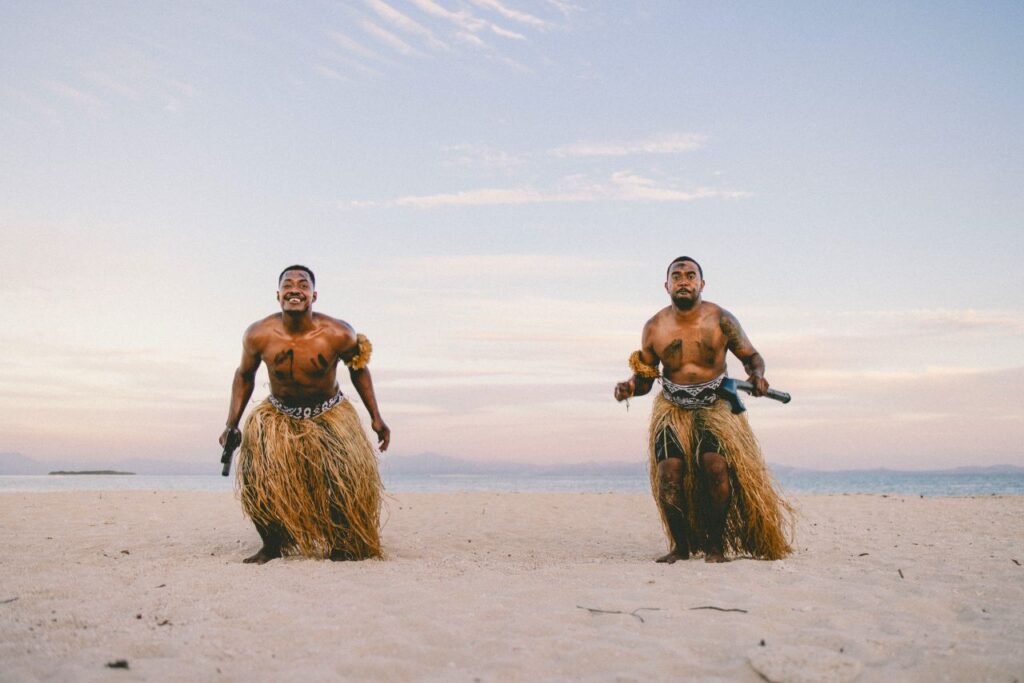
- Sulu: The national garment worn by both men and women. Men wear a tailored wrap-around skirt (Sulu vakataga), often paired with a collared shirt for formal and business occasions.
- Bula Shirt & Muumuu: Vibrant floral print shirts and dresses worn for casual gatherings, work, and festive events.
- Masi (Tapa Cloth): Hand-beaten tree bark cloth decorated with traditional geometric black and rust-red stenciled patterns, worn during high-status ceremonies and royal weddings.
Cultural Symbols
- Tabua: A polished sperm whale tooth attached to a braided cord, representing the ultimate symbol of reverence, reconciliation, and sacred pledge in Fijian culture.
- Tanoa: The hand-carved hardwood bowl used for mixing Yaqona, symbolizing communal unity.
Music, Dance & Art
- Meke (Traditional Storytelling Dance): A dramatic performance combining theater, dance, and song. Men perform energetic spear and club dances (Meke Wesi or Meke I Seavu), while women perform graceful fan and hand dances (Meke Seasea).
- Vocal Polyphony & Choral Singing: Fijians are celebrated for breathtaking four-part vocal harmonies heard in church services, village gatherings, and farewell songs like the famous “Isa Lei”.
- Artisanal Crafts: Includes intricate woodcarving (Tanoa bowls, ceremonial war clubs), hand-woven pandanus floor mats (Ibe), and pottery from the Sigatoka Valley.
Summary
Fiji Culture stands as a radiant beacon of warmth, communal unity, and oceanic heritage in the South Pacific. By balancing ancient Indigenous chiefdom values (Vanua) with rich Indo-Fijian traditions and modern global outlooks, Fiji continues to preserve a vibrant cultural legacy that welcomes the world with an open heart and a resounding “Bula!”
At Best Culture Insight, we see culture as the heartbeat of every society – the way people live, connect, and express their identity.