
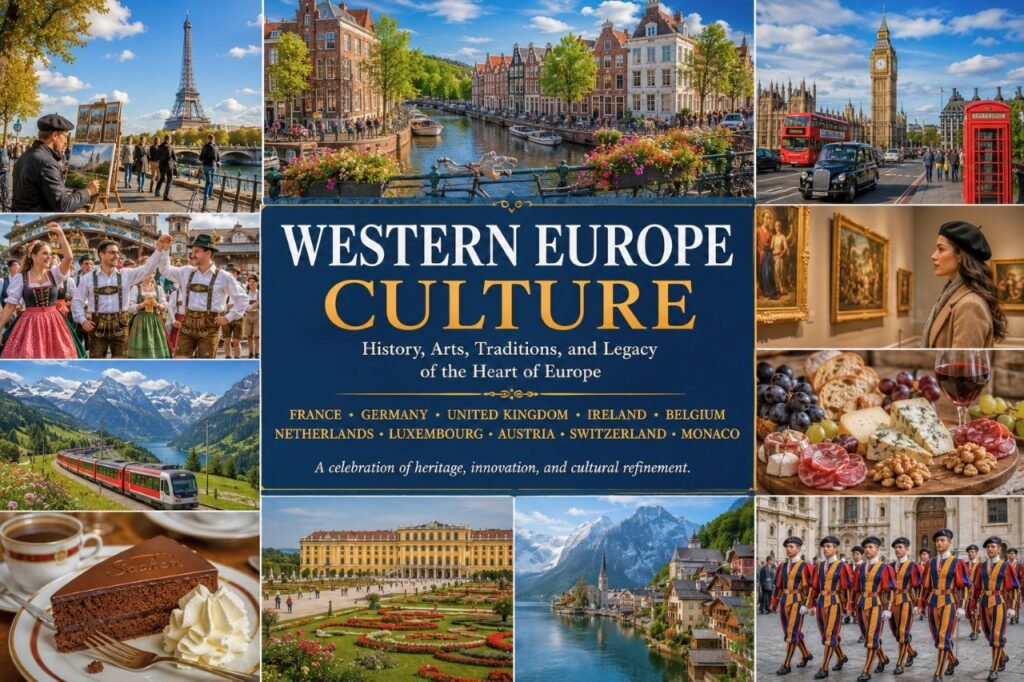
Western Europe Culture: History, Arts, Traditions, and Legacy of the Heart of Europe
The Culture of Western Europe is a dynamic force that has profoundly shaped the modern world through intellectual revolutions, artistic masterpieces, social democracy, and industrial innovation. Encompassing nations such as France, Germany, the United Kingdom, Ireland, Belgium, the Netherlands, Luxembourg, Austria, Switzerland, and Monaco, Western Europe stands as a global focal point where deep-rooted historical traditions coexist with cutting-edge modernity. From the intellectual awakenings of the Enlightenment and the artistic breakthroughs of Impressionism to iconic culinary traditions and sophisticated urban life, Western European society offers an extraordinary celebration of creative ambition, civil liberty, and cultural refinement.
History & Origins
Western Europe’s cultural trajectory is defined by foundational civilizational shifts, philosophical breakthroughs, and institutional developments that transformed global society.
- The Roman Frontier & Celtic/Germanic Roots: Ancient Celtic societies across Britain, Ireland, and Gaul interacted with expanding Roman borders. The Roman Empire established infrastructure, urban planning, legal concepts, and Latin roots across present-day France, Britain, and the Rhineland.
- The Frankish Empire & Carolingian Renaissance: Following the fall of Western Rome, Germanic tribes—notably the Franks under Charlemagne in the 8th and 9th centuries—established unified kingdoms spanning France, Germany, and the Low Countries. This era sparked the Carolingian Renaissance, reviving classical education, art, and scriptural preservation.
- The Enlightenment & Industrial Revolution: In the 17th and 18th centuries, Western European thinkers like Voltaire, Rousseau, John Locke, and Immanuel Kant pioneered the Enlightenment, championing individual liberty, scientific inquiry, separation of church and state, and democratic governance. Concurrently, the Industrial Revolution originated in Great Britain before spreading through Belgium, France, and Germany, reshaping world trade, technology, and urbanization.
- Post-War Integration & European Union: Following the devastation of World Wars I and II, Western European nations spearheaded modern supranational cooperation, giving rise to the European Union (EU) to promote peace, economic solidarity, and open cross-border mobility.
Culture, Traditions & Customs
Western European life blends cherished historical customs with a high quality of life, public social spaces, and seasonal festivities.
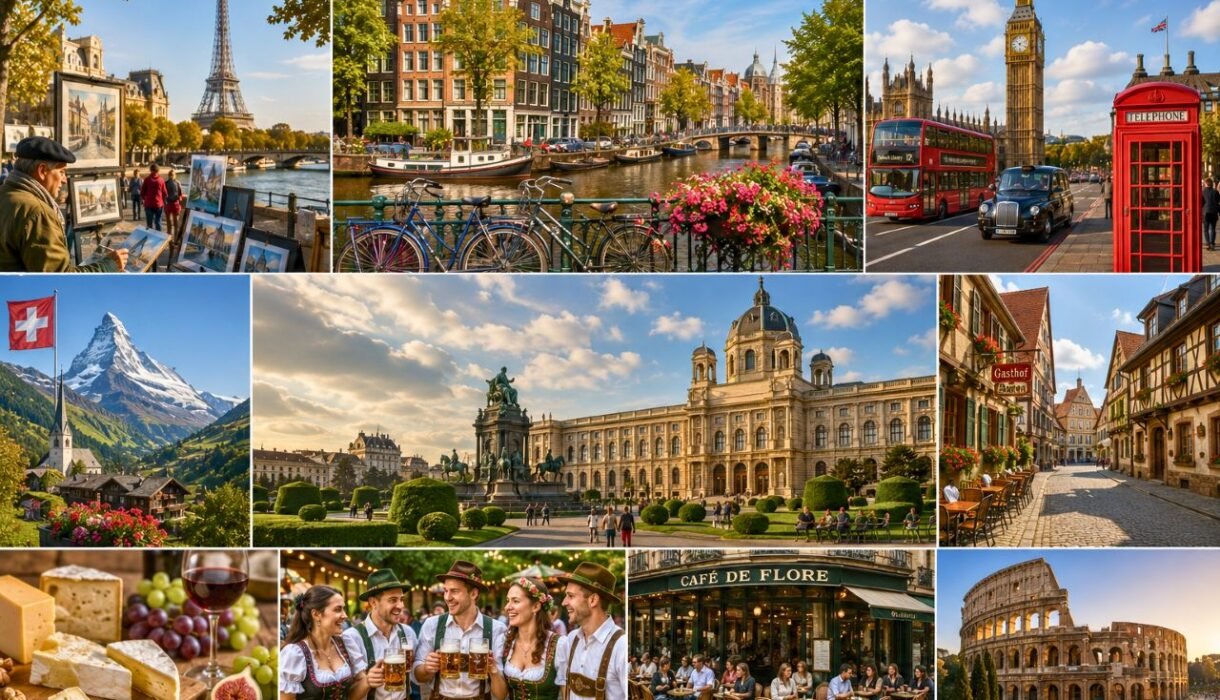
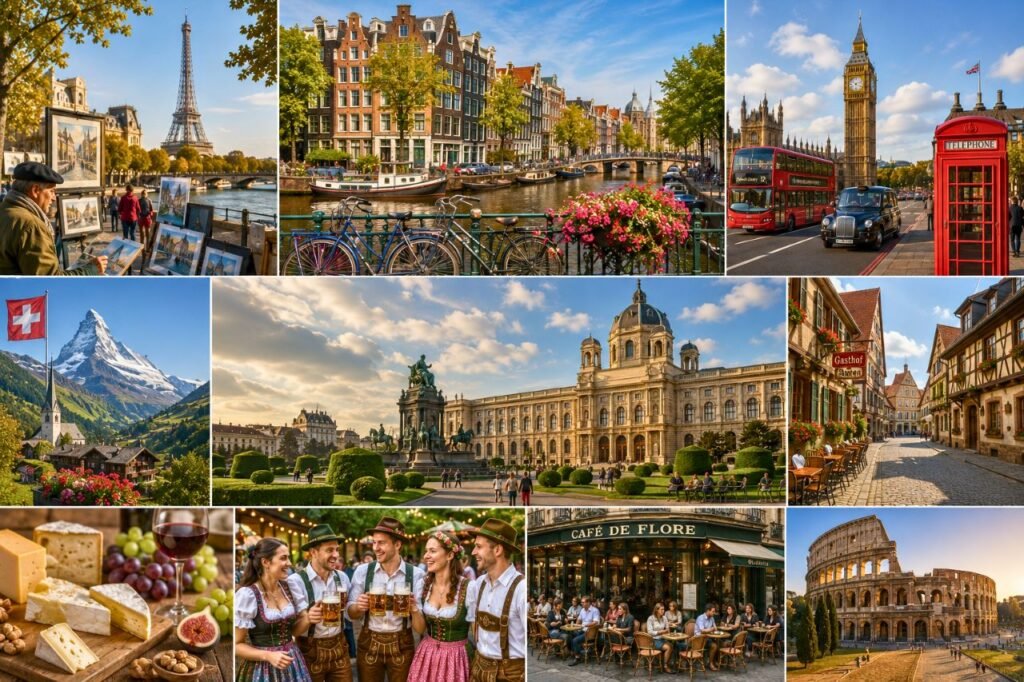
- Café Culture & Public Squares: Across cities like Paris, Vienna, Brussels, and Amsterdam, public life thrives in sidewalk cafés and historic plazas. Taking time to enjoy a quiet espresso, discuss current events, or observe street life is an essential daily ritual.
- Pub Life & Beer Gardens: In the United Kingdom and Ireland, the local public house (“pub”) serves as a warm community anchor for conversation and music. In Germany and Austria, spacious outdoor beer gardens (Biergärten) bring families together under chestnut trees during warmer months.
- Seasonal Celebrations & Festivals:
- Oktoberfest (Germany): The world’s largest folk festival in Munich, celebrating Bavarian heritage, brass music, traditional Lederhosen and Dirndl attire, and regional brewing arts.
- Carnival of Binche (Belgium) & Fastnacht: Pre-Lenten folk celebrations featuring colorful parades, folklore characters (Gilles), and satirical street theater.
- St. Patrick’s Day (Ireland): A global celebration of Irish culture, traditional music, and heritage marked by vibrant street pageantry.
Languages & Communication
Language Families
Western Europe is home to major Indo-European linguistic branches, reflecting centuries of migration and cultural exchange:
- Romance Languages (Latin Origin): French is the primary Romance tongue of the region, spoken across France, Monaco, parts of Belgium, and western Switzerland.
- Germanic Languages: Includes English (UK and Ireland), German (Germany, Austria, Liechtenstein, parts of Switzerland and Luxembourg), and Dutch (Netherlands and Flanders in Belgium).
- Celtic Languages: Living Celtic tongues—such as Irish (Gaeilge), Scottish Gaelic, Welsh (Cymraeg), and Breton in Brittany, France—are actively preserved as vital pillars of regional identity.
Communication Style
Communication across Western Europe tends to be polite, structured, and civic-minded. While communication in Germanic and Anglo-Saxon areas leans direct, punctual, and task-oriented, French and Celtic contexts often blend intellectual debate with witty banter and expressive conversation. Respect for personal boundaries, civic duty, and environmental responsibility are widely shared social values.
Geography
Bounded by the Atlantic Ocean, the North Sea, and the majestic Alpine mountain arc, Western Europe features exceptionally diverse natural landscapes.
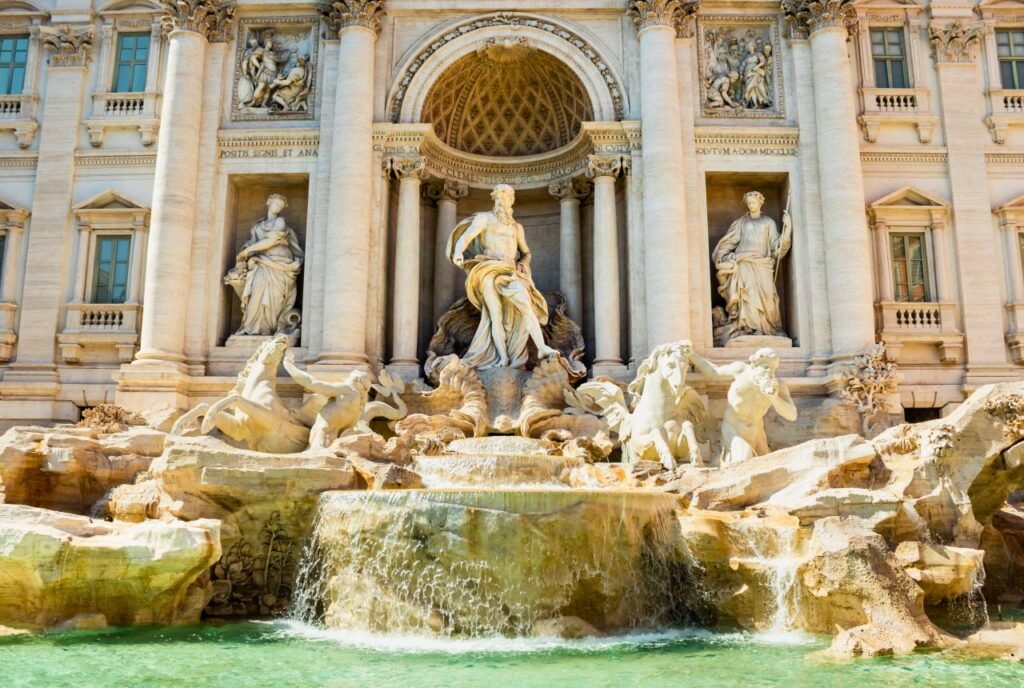
- Mountain Chains & Rivers: The Alps form a spectacular snowy backbone across Switzerland, Austria, France, and Germany, while iconic river arteries like the Rhine, Danube, Seine, and Thames served historically as crucial economic and cultural highways.
- Rolling Plains & Coastlines: The North European Plain offers rich agricultural land across France, Belgium, the Netherlands, and Germany, contrasting with dramatic Atlantic cliff sides in Ireland and Great Britain.
Economy
Western European nations represent some of the world’s most prosperous, industrialized, and innovation-driven economies.
- Key Industries: High-tech manufacturing (automotive engineering in Germany, aerospace in France), luxury goods, pharmaceuticals, renewable energy, and international finance (London, Frankfurt, Zurich).
- Work-Life Balance: Social market economies across Western Europe emphasize robust public infrastructure, universal healthcare, fair worker protections, and generous paid leave to support a balanced lifestyle.
Politics
Western European governance models are internationally regarded as benchmarks for democratic stability, social welfare, and human rights protections.
- Government Frameworks: Includes stable parliamentary republics (such as France, Germany, Austria, and Ireland) alongside constitutional monarchies (such as the United Kingdom, Netherlands, Belgium, and Luxembourg).
- Civil Liberties & Social Welfare: Strong democratic institutions safeguard individual freedoms, gender equality, environmental protection, and public education.
Ethnic Groups
Western Europe has evolved from historically distinct regional populations into vibrant, diverse cosmopolitan societies.
- Core Regional Peoples: French, Germans, English, Irish, Dutch, Austrians, Flemish, Walloons, Swiss, and Scots.
- Distinct Regional Communities: The Bretons of northwestern France, the Welsh, the Alsatians, and the Frisians.
- Global Multiculturalism: Immigration over recent decades from North Africa, South Asia, Sub-Saharan Africa, East Asia, and the Caribbean has enriched major metropolitan centers like London, Paris, Amsterdam, and Berlin into globally diverse hubs.
Beliefs & Values
Secularism & Religious Heritage
While Western Europe’s historic architecture and holidays are rooted in Western Christianity (Roman Catholicism in France, Ireland, Austria, and Belgium; Protestantism in northern Germany, the UK, and the Netherlands), modern society is overwhelmingly secular. Pluralism flourishes, with growing Muslim, Hindu, Jewish, and Buddhist communities.
Core Values
- Individual Autonomy & Democracy: Deep respect for human rights, personal liberty, freedom of expression, and social equity.
- Environmental Stewardship: A strong societal commitment to sustainability, green energy transition, public transit usage, and ecological conservation.
Food & Cuisine
Western European gastronomy is internationally celebrated, spanning sophisticated fine dining to hearty comfort foods crafted from regional produce.
- Haute Cuisine & Artisanal Mastery:
- French Gastronomy: Recognized by UNESCO, focusing on precise culinary techniques, rich sauces (such as Hollandaise and Béchamel), buttery pastries (croissants), and fine wines.
- Cheeses & Charcuterie: Artisanal cheeses like French Brie and Roquefort, Dutch Gouda and Edam, Swiss Gruyère, and English Cheddar paired with cured meats.
- Iconic Regional Dishes:
- Sunday Roast & Fish and Chips (UK & Ireland): Roasted meats with Yorkshire pudding alongside crispy battered fish and chips.
- Schnitzel & Bratwurst (Germany & Austria): Tender breaded cutlets and spiced sausages served with sauerkraut or potato salad.
- Fondue & Raclette (Switzerland & France): Melted cheese dishes shared communally over open flame.
- Belgian Waffles & Chocolates (Belgium): World-famous crisp yeasted waffles and fine praline chocolates.
Clothing & Symbols
Fashion & Architecture
Western Europe is the world’s primary fashion authority, home to global style capitals like Paris and London.
- Architectural Styles: The region displays an unbroken timeline of architectural evolution—from Roman ruins and soaring Gothic cathedrals (like Notre-Dame de Paris) to ornate Baroque palaces (Versailles) and cutting-edge modern sustainable design.
Music, Dance & Art
Western Europe’s artistic heritage has profoundly influenced global culture across centuries.
- Classical Music & Theater: The birthplace of classical giants like Johann Sebastian Bach, Ludwig van Beethoven, Wolfgang Amadeus Mozart, and Claude Debussy, alongside the theatrical genius of William Shakespeare and Molière.
- Visual Arts: From Flemish masters (Rembrandt, Vermeer) and French Impressionists (Monet, Degas) to modern art pioneers (Van Gogh, Picasso), Western Europe houses world-renowned art collections in galleries like the Louvre, the Rijksmuseum, and the Tate Modern.
Summary
Western Europe Culture exemplifies an extraordinary synthesis of classical history, revolutionary ideas, artistic brilliance, and progressive living. By championing creative freedom, preserving historic landmarks, and fostering inclusive democratic values, Western Europe continues to shine as a beacon of human achievement and cultural diversity.
At Best Culture Insight, we see culture as the heartbeat of every society – the way people live, connect, and express their identity.