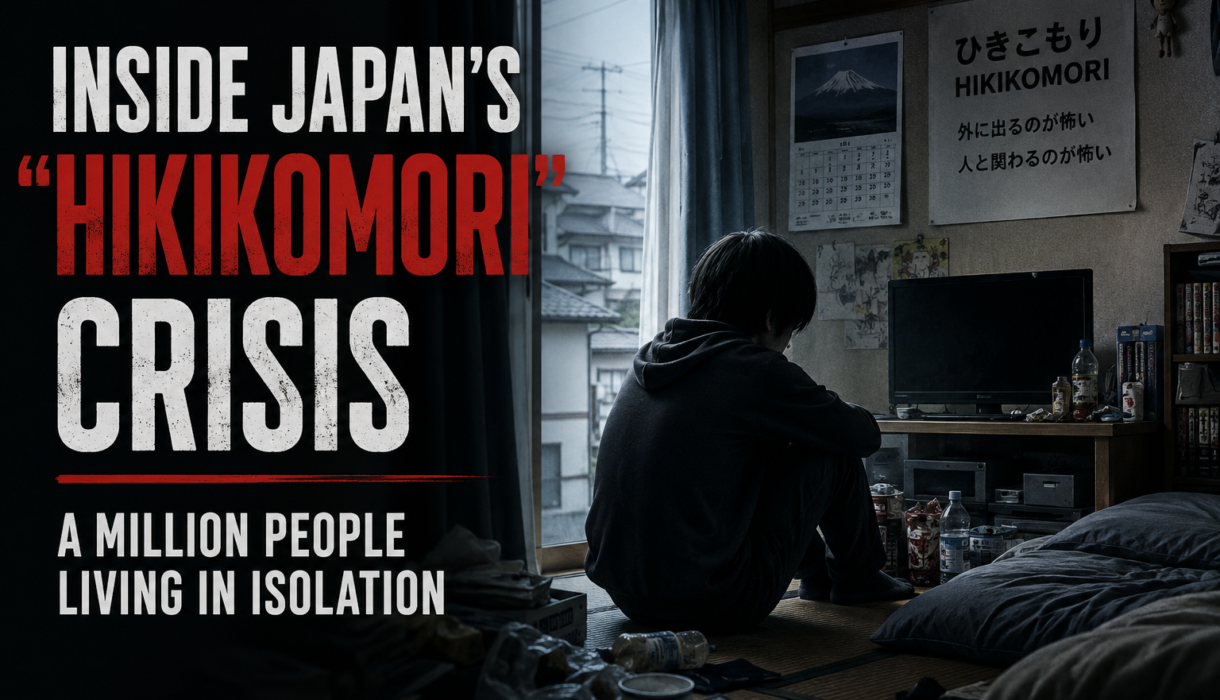

In modern Japan, an estimated one million individuals live in severe, continuous social isolation—a phenomenon known nationally and globally as hikikomori. Derived from the Japanese words meaning “to pull back” and “to sequester oneself,” hikikomori describes people who withdraw completely from society, staying inside their homes or single rooms for six months or longer. Once viewed merely as a brief phase affecting troubled teenagers, government surveys and public health studies confirm that this social crisis spans all age groups, including middle-aged citizens who have spent decades entirely hidden away from the outside world.
The Cultural and Economic Pressures Driving Isolation
The root causes of extreme social withdrawal stem from a heavy mix of cultural expectations, economic stress, and psychological burnout. Traditional Japanese culture places immense value on academic achievement, strict corporate devotion, and societal harmony. Individuals who experience job loss, academic failure, bullying, or workplace fatigue often feel an overwhelming sense of personal shame and inadequacy. Rather than risking further disappointment or failing to meet strict social expectations, many choose self-seclusion as a coping mechanism to shield themselves from public scrutiny.
The “80-50 Problem” and Aging Families
As isolated individuals spend decades away from society, the hikikomori crisis has transformed into a pressing demographic challenge known in Japan as the “80-50 problem”. This term describes a reality where shut-ins in their fifties remain entirely dependent on their elderly parents in their eighties for housing and financial support. Because long-term recluses often lack employment history, professional skills, and social networks, many families suffer in silence behind closed doors. The ongoing aging of these elderly caregivers creates an urgent situation, as many isolated adults face losing their primary source of care with no plan for survival.
Government Initiatives and Community Outreach
Recognizing the scale of this humanitarian challenge, Japanese local governments, non-profit groups, and healthcare providers are implementing targeted support programs. Local councils are creating specialized consultation centers, online peer networks, and community outreach initiatives where trained social workers visit homes to slowly build trust. Rather than pushing for immediate employment, modern interventions prioritize low-pressure social interaction, helping individuals manage social anxiety, restore confidence, and reconnect with their communities at a comfortable pace.
Global Implications for Modern Mental Health
While hikikomori was initially identified as a unique cultural condition in Japan, public health experts note that extreme social isolation is emerging in many urbanized nations worldwide. Increased digital connectivity, remote lifestyle options, and heightened societal competition have made prolonged home isolation an international mental health priority. As countries monitor these trends, Japan’s evolving response serves as a critical blueprint, demonstrating that overcoming long-term isolation requires compassionate care, community flexibility, and structural support.