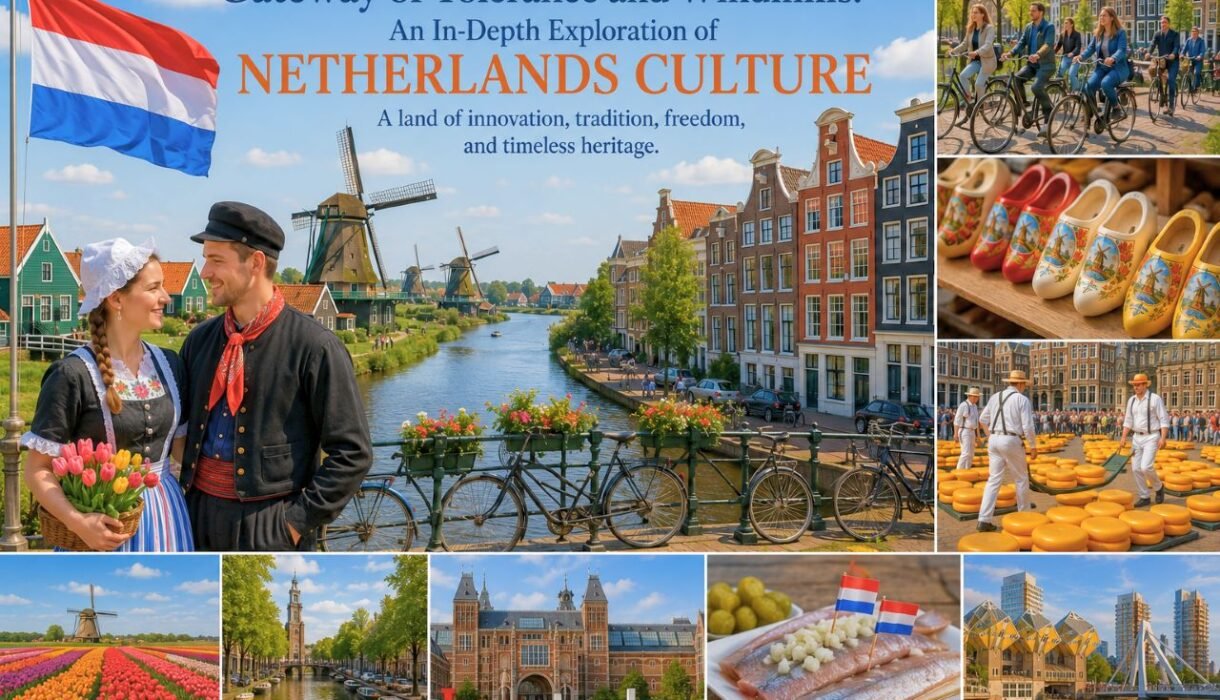
Gateway of Tolerance and Windmills: An In-Depth Exploration of Netherlands Culture
Posted in :

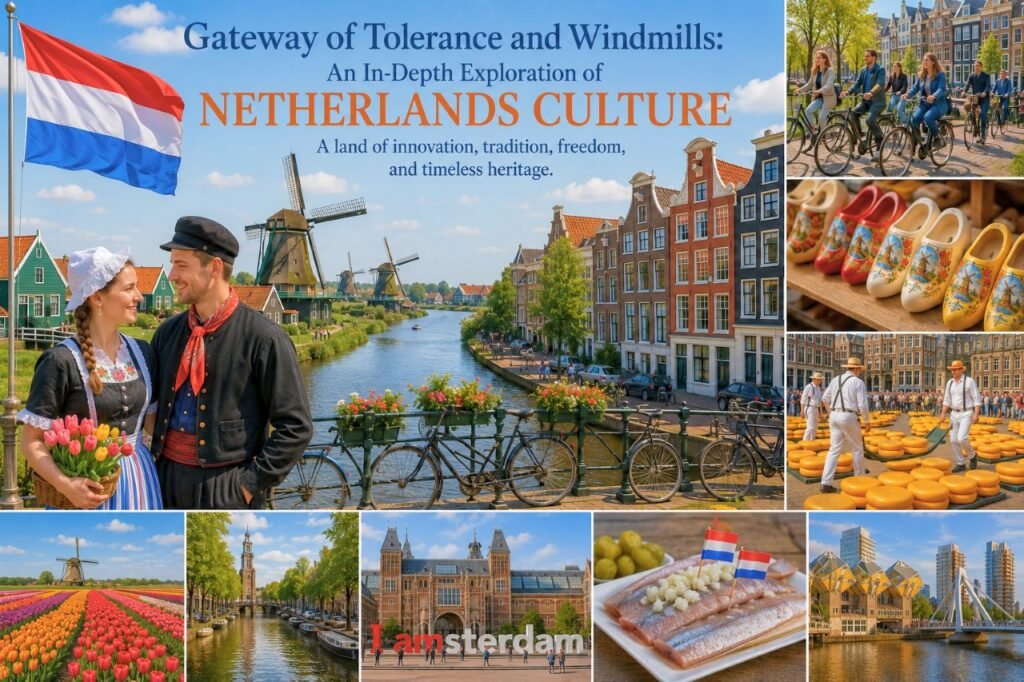
The Netherlands—often colloquially called Holland—is a land defined by its mastery over water and its progressive social fabric. Situated in Northwestern Europe, this low-lying nation has spent centuries literally carving its territory out of the North Sea. The Dutch people are globally recognized for their pragmatism, egalitarianism, and deep-seated philosophy of consensus. – Culture
Dutch culture through history and design
Historically a seafaring global superpower, the Netherlands has evolved into a modern cultural powerhouse. With a population of over 18 million, the country seamlessly blends historic canal-lined cities, cutting-edge architectural designs, and a profound respect for personal liberty. This comprehensive, research-backed, and copyright-free guide explores the traditions, values, and artistic milestones that define the vibrant spirit of the Netherlands.
History & Origins
The historical trajectory of the Netherlands is a story of continuous engineering, maritime dominance, and theological transformation.
- Roman and Germanic Foundations: In antiquity, the Rhine River served as a northern frontier of the Roman Empire. Germanic tribes, including the Batavians and Frisians, inhabited the region, slowly learning to build artificial dwelling mounds (terpen) to escape seasonal floods.
- The Dutch Golden Age (17th Century): After waging a grueling Eighty Years’ War (1568–1648) to secure independence from Spanish Habsburg rule, the newly formed Dutch Republic entered its “Golden Age.” Backed by the economic muscle of the Dutch East India Company (VOC)—the world’s first publicly traded megacorporation—the Netherlands became the center of global trade, science, and fine art.
- Industrialization and World Wars: In the 19th century, the country transitioned into a constitutional monarchy. While maintaining strict neutrality during World War I, the Netherlands was occupied by Nazi Germany during World War II, a dark chapter that deeply influenced its postwar commitment to international law and human rights.
- Postwar Modernity: Following 1945, the Dutch completely rebuilt their infrastructure, pioneered the European Union integration process, and engineered the legendary Delta Works to secure their shores permanently.
Culture, Traditions & Customs
The Polder Model and Social Harmony
At the heart of Dutch decision-making is the Polder Model (poldermodel). Originating in the Middle Ages, when communities of all social classes had to cooperate to keep the rising sea water out of their shared agricultural polders, this system prioritizes consensus, compromise, and collective responsibility over unilateral command.
Key Milestones and Traditions
- Birth Traditions (Beschuit met Muisjes): When a baby is born, it is a custom to serve guests beschuit met muisjes (round, toasted rusks topped with sugar-coated aniseed). If the baby is a boy, the aniseed balls are blue and white; if a girl, they are pink and white.
- Sinterklaas (Saint Nicholas): Celebrated annually on December 5th, Sinterklaas is the most beloved family tradition. Arriving by steamboat from Spain, Sinterklaas and his helpers distribute chocolate letters and spiced cookies (kruidnoten) to children, accompanied by humorous, custom-written poems intended to gently tease the recipient.
- King’s Day (Koningsdag): Celebrated on April 27th (the birthday of King Willem-Alexander), the entire nation turns into a sea of vibrant orange. Millions participate in massive outdoor festivals, boat parades along the canals, and nationwide flea markets (vrijmarkt), where citizens are legally permitted to sell used goods on the streets without a license.
Languages & Communication
The Dutch Language
The official national language is Dutch, a West Germanic language that sits linguistically between German and English.
Additionally, West Frisian is officially recognized as a co-official regional language in the northern province of Friesland. The Dutch are famously multilingual; due to an open economic model and an excellent education system, roughly 90% of the population speaks English fluently.
Sayings and Idioms
Dutch communication is famously direct, honest, and free of superficial pleasantries.
- “Gezellig”
Meaning: A core cultural concept with no direct English translation, denoting a cozy, warm, friendly, or social atmosphere. Spending time with loved ones in a warm room is gezellig.
- “Met de deur in huis vallen”
Meaning: Literally “to fall into the house with the door.” It means getting straight to the point without any small talk.
- “Doe maar gewoon, dan doe je al gek genoeg”
Meaning: “Just act normal, that’s crazy enough.” This proverb perfectly encapsulates the classic Dutch aversion to arrogance, flashiness, or self-promotion.
Geography
The Netherlands is one of the lowest and most densely populated countries on the planet.
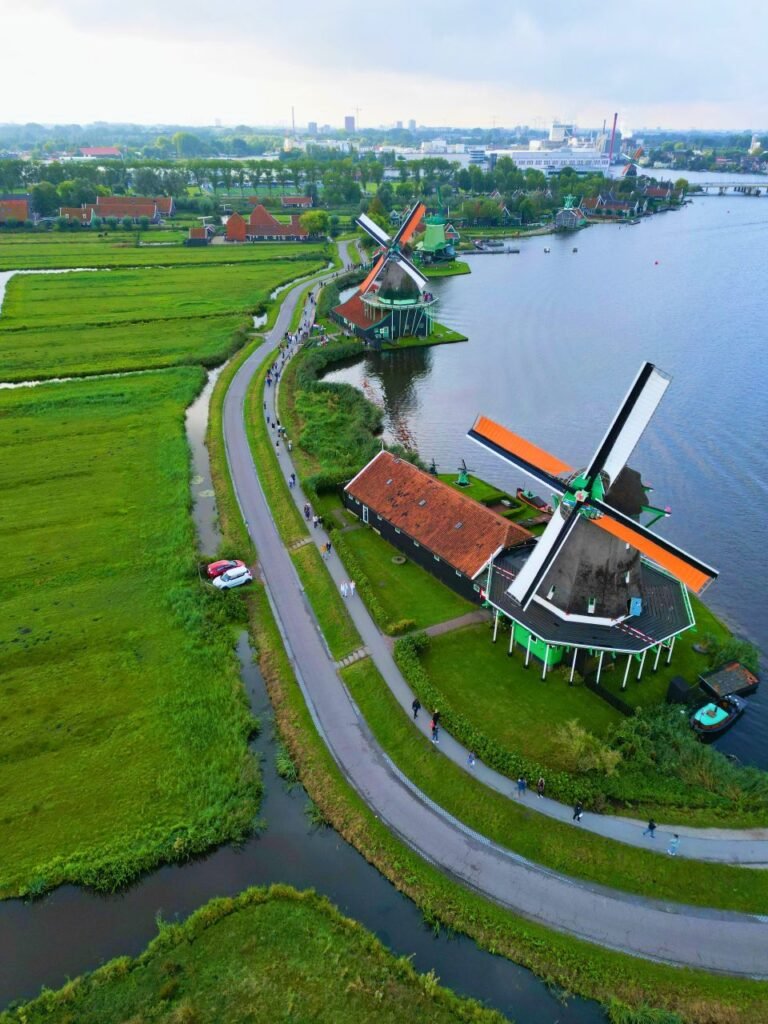
The name itself means “Low Countries,” and this is no exaggeration: approximately 26% of the country lies below sea level, and roughly half of its landmass sits less than one meter above it. The landscape is famously flat, dominated by vast polders (reclaimed land), winding dikes, and a highly complex network of canals, rivers, and estuaries.
The main urban agglomeration is known as the Randstad, a crescent-shaped conurbation linking the country’s four largest cities: Amsterdam (the nominal capital), Rotterdam (Europe’s largest port), The Hague (the seat of government), and Utrecht.
Economy
The Netherlands has a highly developed, prosperous, and export-driven market economy.
Key economic sectors include:
- High-Tech Agriculture: Despite its small land area, the Netherlands is the world’s second-largest exporter of food and agricultural products by value, pioneered by state-of-the-art greenhouse technologies and precision farming.
- Logistics and Maritime Trade: Rotterdam serves as the gateway to Europe, handling massive volumes of international cargo.
- Innovation and Tech: The country is a hub for global tech enterprises, specializing in semiconductor equipment manufacturing (such as ASML), green energy solutions, and digital finance.
Politics
The Netherlands is a constitutional monarchy with a parliamentary system.
The monarch (currently King Willem-Alexander) serves a largely ceremonial role as the head of state. Executive power lies with the Prime Minister and the Cabinet. The parliament (Staten-Generaal) consists of two chambers: the directly elected House of Representatives (Tweede Kamer) and the indirectly elected Senate (Eerste Kamer).
Because of the proportional representation system, no single political party ever wins an outright majority, requiring coalition governments formed through extensive negotiation.
Ethnic Groups
Historically relatively homogeneous, post-World War II migration has shaped the Netherlands into a highly diverse, cosmopolitan society.
| Broad Group | Approximate Share | Historical Context & Communities |
| Dutch (Ethnic) | ~75% | Long-standing population; culturally Germanic-Celtic origins |
| Other European | ~10% | Primarily from neighboring Germany, Poland, and Southern Europe |
| Non-Western Origins | ~15% | Major communities trace roots to former Dutch colonies (Suriname, Indonesia, Curaçao, Aruba) and labor migration waves (Turkey, Morocco) |
Beliefs & Values
Secularization and “Gedoogbeleid”
While historically split between a Calvinist Protestant north and a Roman Catholic south, the modern Netherlands is one of the most secularized societies in Europe, with over 55% of citizens declaring no religious affiliation.
The cornerstone of Dutch worldview is Tolerantie (tolerance) and Gedoogbeleid (the policy of official tolerance or looking the other way). This pragmatic philosophy dictates that if a social vice (like soft drug consumption or sex work) cannot be fully eradicated, it is far better to regulate, tax, and control it rather than drive it underground. This mindset led the Netherlands to become the first country in the world to legalize same-sex marriage in 2001.
Food & Cuisine
Traditional Dutch cuisine is simple, rustic, and highly practical, designed historically to sustain manual laborers and farmers.
- Stamppot: The ultimate Dutch comfort food. It consists of potatoes mashed together with vegetables (such as kale, sauerkraut, or carrots and onions) and served alongside a large smoked sausage (rookworst) and rich gravy.
- Hollandse Nieuwe (Sous-Passed Herring): Raw herring cured in brine and traditionally eaten by holding the fish by its tail, dipping it in raw onions, and lowering it directly into the mouth.
- Bitterballen: Deep-fried, crunchy breadcrumb-coated balls filled with a thick, savory beef ragout, traditionally dipped in mustard and enjoyed alongside cold craft beers.
Clothing & Symbols
Traditional Attire and Wooden Shoes
While modern Dutch citizens dress in contemporary Western fashion, traditional folk costumes (Klederdracht) are still worn during festivals or in historic fishing villages like Volendam and Marken.
- The Volendam Bonnet: The iconic women’s lace cap with high, pointed wings.
- Klompen (Wooden Clogs): Historically carved from willow or poplar, these wooden shoes were worn by farmers and factory workers because they were water-resistant, warm, and protected feet from heavy objects. Today, they remain a beloved national symbol.
The Color Orange
Orange is the national color of the Netherlands. It originates from William of Orange (Willem van Oranje), who led the Dutch revolt against Spanish rule and is regarded as the “Father of the Fatherland.” On national holidays and during major sporting events, the country turns completely orange (Oranjekoorts or “Orange Fever”).
Music, Dance & Art
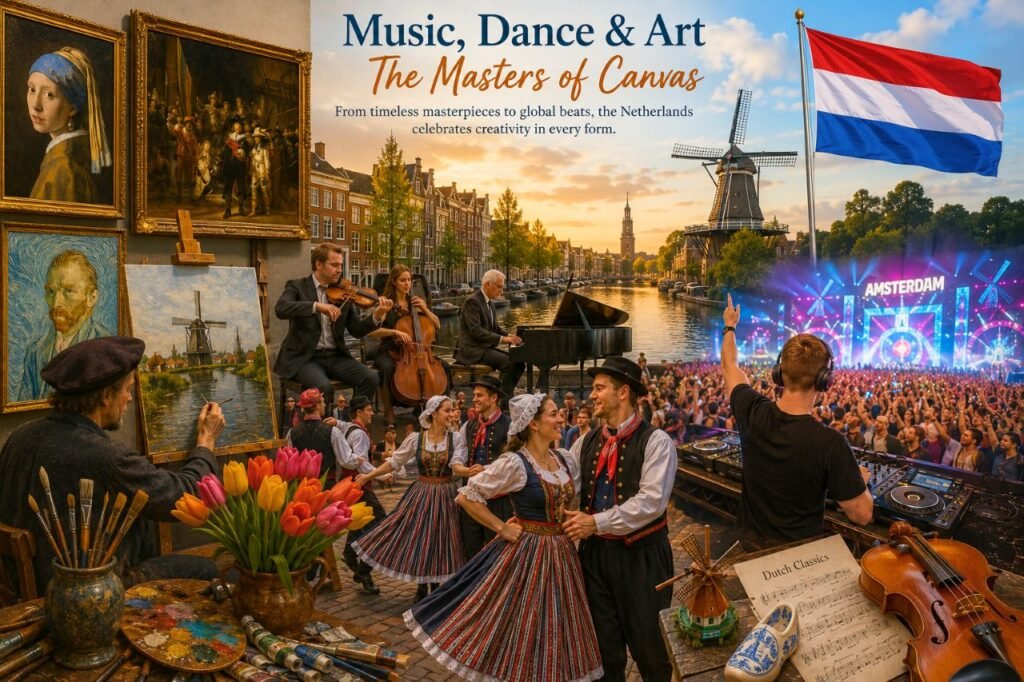
Music, dance, and art of the Netherlands
The Masters of Canvas
The contribution of Dutch artists to global art history is immense. The country has birthed some of the world’s most influential painters across different eras:
- Rembrandt van Rijn: The undisputed master of light and shadow during the Golden Age (famous for The Night Watch).
- Johannes Vermeer: Renowned for his exquisite domestic interior scenes (such as Girl with a Pearl Earring).
- Vincent van Gogh: The pioneer of Post-Impressionism, whose expressive brushwork transformed modern art forever.
Music and Festivities
From classical carillons ringing from historic church towers to the modern global music stage, music is central to Dutch life. Today, the Netherlands is the undisputed epicenter of Electronic Dance Music (EDM), producing legendary international DJs such as Armin van Buuren, Tiësto, and Martin Garrix.
Summary
The culture of the Netherlands is an inspiring testament to human ingenuity and social progress. By mastering the water, embracing diverse perspectives, and maintaining a pragmatic approach to governance and life, the Dutch have built a society that is both highly organized and exceptionally free. Whether it is through their historic art, innovative engineering, or cozy lifestyle, the Netherlands continues to offer valuable lessons in community, tolerance, and resilience to the rest of the world.
At Best Culture Insight, we see culture as the heartbeat of every society – the way people live, connect, and express their identity.