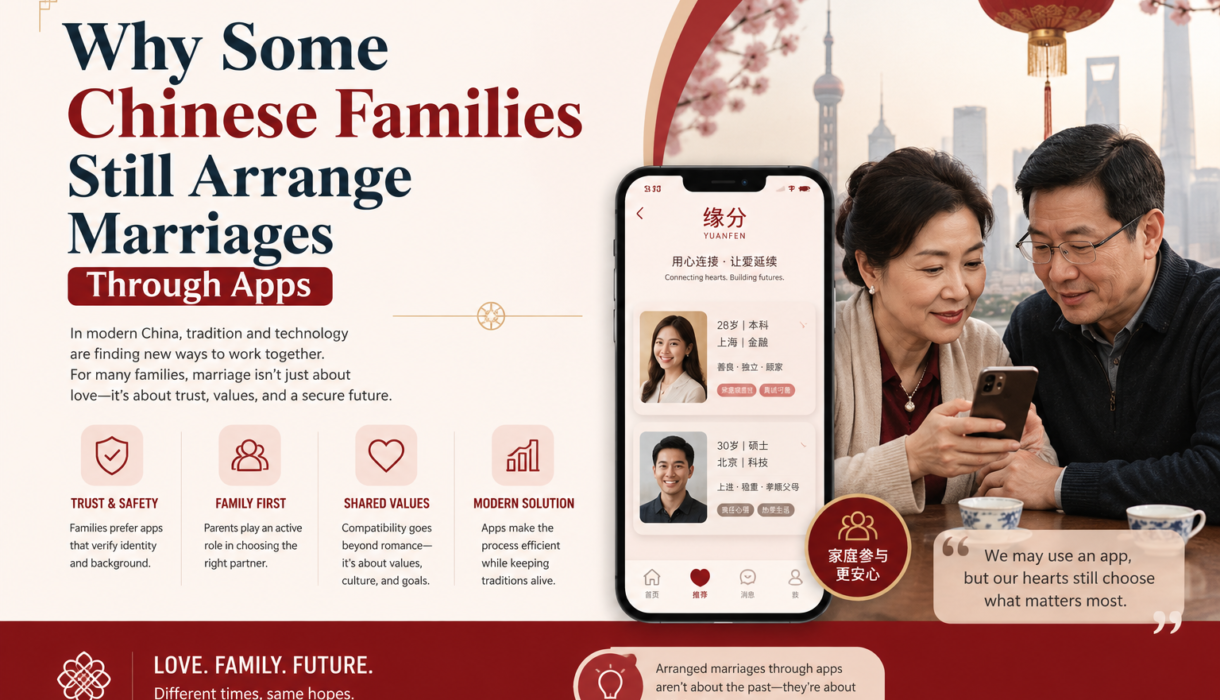

In modern China, the traditional practice of family-led matchmaking has not vanished; instead, it has evolved into a high-tech phenomenon. While young urban professionals frequently rely on standard dating platforms for romantic connections, older generations are turning to specialized parental matchmaking apps to arrange marriages for their adult children. For decades, anxious mothers and fathers gathered in public parks carrying physical resume sheets detailing their children’s ages, degrees, and salaries. Today, smartphone applications have digitized those famous “marriage markets,” allowing parents to search for compatible in-laws across thousands of miles with just a few taps.
Bridging Cultural Duty with Modern Work Pressures
The primary driver behind this digital shift is the immense economic pressure faced by China’s young working class. Long office hours and demanding corporate schedules leave young singles with little time or energy to socialise or date. At the same time, traditional filial expectations dictate that children should marry before reaching a certain age to ensure family continuity. By using parental matchmaking apps, mothers and fathers view themselves as administrative helpers who take on the time-consuming work of vetting candidates, allowing their busy children to focus on their careers while still fulfilling familial obligations.
Data-Driven Vetting Over Romance
Unlike conventional dating apps that prioritize shared hobbies, attractive photos, and personal chemistry, parent-oriented matchmaking platforms focus heavily on practical background metrics. Profiles often highlight financial stability, property ownership, educational credentials, home provinces, and family health histories. In traditional Chinese culture, marriage is viewed not merely as a union between two individuals, but as a long-term economic and social alliance between two entire families. These apps allow parents to filter out incompatible matches early on, ensuring that both households align in socioeconomic status long before the young couple ever meets.
Replacing Park Gatherings with National Reach
Before the rise of specialized mobile apps, parents had to physically attend weekend marriage markets in public parks in major cities like Shanghai or Beijing. These outdoor gatherings were limited by local geography, weather, and physical endurance. Mobile platforms eliminate these physical constraints entirely, giving parents instant access to a vast national network of potential matches. Anxious parents in smaller towns can now effortlessly connect with households in bustling urban centers, dramatically increasing the odds of finding an ideal partner who meets their family’s exact standards.
Compromise in the Digital Era
While automated parental matchmaking might appear restrictive to Western observers, it often functions as a practical middle ground between total parental control and complete romantic independence. Modern apps usually allow parents to conduct the initial background screening, but the ultimate veto power typically remains with the young adults themselves. If both sets of parents agree on a profile match, they arrange a blind date for their children to test their personal chemistry. Through this blend of traditional duty and modern mobile convenience, Chinese families continue to preserve age-old matchmaking traditions in an increasingly digital world.