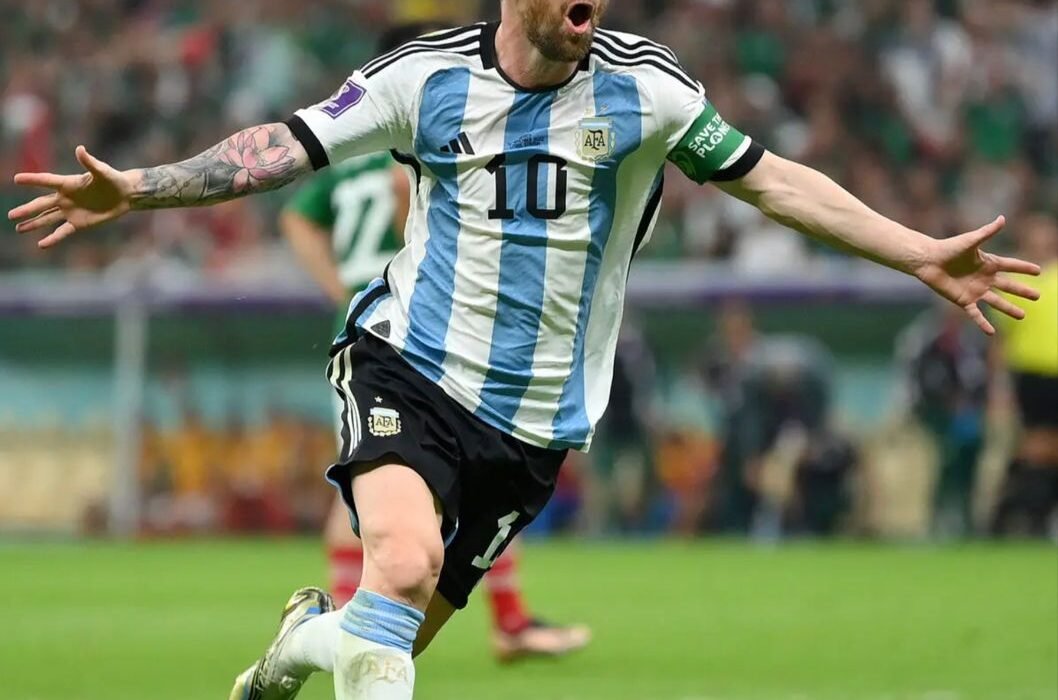

Argentina’s opening match at the 2026 FIFA World Cup delivered an absolute masterclass on the scoreboard, but it also sparked one of the biggest refereeing debates of the tournament. Lionel Messi led his nation to a commanding 3-0 victory over Algeria, netting a historic hat-trick that vaulted him alongside Miroslav Klose as the joint all-time top scorer in World Cup history with 16 goals. Yet, despite the fairytale nature of his performance, the post-match discourse was heavily dominated by a single flashpoint in the first half. Football fans, pundits, and experts worldwide are left asking whether the iconic captain was incredibly fortunate to still be on the pitch to complete his heroics.
The Flashpoint: A Clash with Aissa Mandi
The moment that threatened to derail Argentina’s night occurred in the 31st minute of the first half at Arrowhead Stadium. As Messi was tracking back defensively to press the opposition, he initiated a clumsy challenge from behind on Algerian defender Aissa Mandi. Television replays and still photographs quickly flooded social media, showing Messi’s studs making direct and heavy contact with the back of Mandi’s calf. The Algerian bench and players reacted with furious appeals for a dismissal, signaling that the tackle constituted serious foul play. Surprisingly, match referee Szymon Marciniak didn’t issue a card, and the Video Assistant Referee (VAR) system quickly completed its check without recommending an on-field review.
Pundits Divided Over Star Treatment
The decision to let play continue without a booking immediately drew sharp criticism from prominent football analysts. Speaking on ESPN FC, former professional players Nedum Onuoha and Ale Moreno expressed complete astonishment at the leniency shown to the Argentina captain. Moreno labeled the incident a “100 percent red card” and openly questioned whether the sport’s biggest icons are held to a completely different set of officiating standards on the grandest stage. Pundits argued that had any lesser-known player executed the exact same tackle, they would have been swiftly sent to the locker room, suggesting that a desire to keep the tournament’s biggest draw on the field influenced the decision.
The Case for the Defense: Intent and Context
Conversely, a significant portion of the football community has defended the refereeing team, pointing out that context and intent are vital when reviewing such fast-moving plays. Football legend Thierry Henry publicly weighed in on the controversy, urging analysts not to judge the tackle solely on a frozen, slowed-down frame. Henry highlighted that Messi was entirely focused on competing for the ball rather than maliciously intending to harm his opponent. Furthermore, immediately following the collision, Messi checked on a visibly uncomfortable Mandi and showed genuine concern, a behavioral detail that often sways an official’s interpretation regarding the severity and malice of a foul.
An Unforgettable Legacy with a Hint of Drama
Ultimately, the lack of disciplinary action allowed Messi to orchestrate a stunning second-half performance, scoring in the 17th, 60th, and 76th minutes to secure a vital three points for the South American giants. While the debate regarding “preferential superstar treatment” will undoubtedly persist throughout the group stages, the official match record stands. Lionel Messi avoided disaster by the narrowest of margins, turning what could have been a tournament-defining catastrophe into another historic night of footballing magic.