The Pure Life: A Deep Journey Into Costa Rica Culture
Posted in :

Situated on the narrow, sun-drenched isthmus of Central America in the southern reaches of North America, Costa Rica is a global symbol of peace, biodiversity, and communal well-being. To cross into this lush land is to discover a nation that has deliberately traded the paths of militarism for investments in green ecology, public health, and education. – Costa Rica Culture
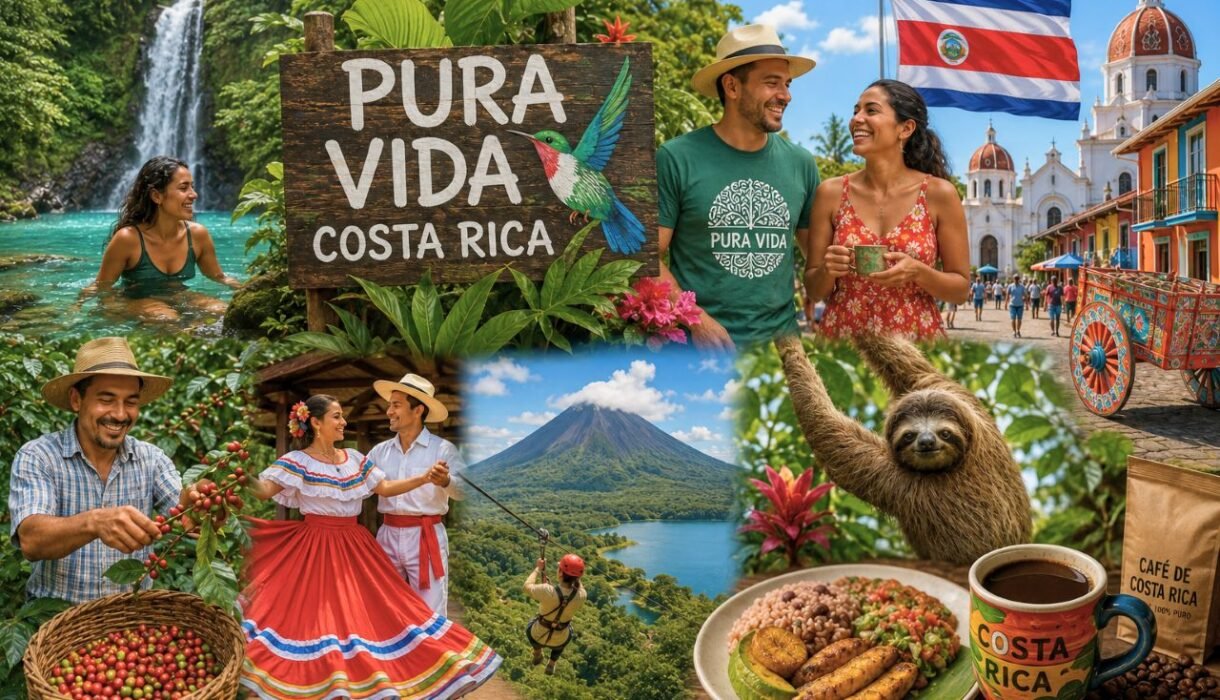
The people, known affectionately all over the world as Ticos (men) and Ticas (women), have built a remarkably distinct lifestyle centered around a singular, defining national philosophy: Pura Vida (The Pure Life). Far more than a catchy slogan designed for international tourists, Pura Vida is the emotional, psychological, and spiritual heartbeat of Costa Rica. It represents an everyday commitment to gratitude, family solidarity, community peace, and an unhurried appreciation for the natural world.
History & Origins
The historic evolution of Costa Rica is highly distinct from the turbulent paths taken by many of its regional neighbors. Before European contact, the territory served as a peaceful cultural meeting point where the Mesoamerican traditions of the north blended with the Chibcha cultures of South America. Indigenous groups like the Boruca, Bribri, and Cabécar lived in harmony with the rich local ecosystems.
In 1502, Christopher Columbus arrived on the Caribbean coastline during his final voyage to the New World. Observing the intricate gold ornaments worn by the local inhabitants, he optimistically named the region Costa Rica (“Rich Coast”). However, the name proved ironic; the region lacked the massive gold reserves or centralized empires found in Mexico or Peru. As a result, Costa Rica became the isolated, mostly ignored southern province of the Spanish Captaincy General of Guatemala.
- The Equalizer of Isolation: Because the colonial elite largely ignored the area, early Spanish settlers had to work the land themselves alongside local families. This isolation prevented the formation of massive, oppressive feudal estates, laying the foundation for an egalitarian, rural, and cooperative society.
- The Turning Point of Independence: Costa Rica achieved independence from Spain in 1821. Rather than falling into a cycle of civil wars, the country focused early on building public schools and expanding its prosperous coffee export trade.
- The Absolute Choice of Peace: Following a brief civil conflict in 1948, visionary leader José Figueres Ferrer made a bold decision that defined the modern identity of the nation: he completely abolished the Costa Rican military. The national defense budget was permanently redirected into public university systems, state-of-the-art medical networks, and environmental preservation, paving the way for a highly progressive, stable society.
Culture, Traditions & Customs
Bazaars, Community Milestones, and Family Ties
Family forms the absolute social anchor of daily life across all regions of Costa Rica. Traditional life-cycle milestones—such as infant baptisms, Roman Catholic church weddings, and community-wide wakes—are deeply respected social affairs.
An essential weekend tradition in almost every Bico town is the Feria del Agricultor (The Farmer’s Market). Here, extended families gather not just to purchase fresh tropical produce, but to socialize, catch up on regional news, and preserve the generational ties that bind rural networks together.
[ The Festive Calendar of Costa Rica ] ┌─────────────────────────┬─────────────────────────┬─────────────────────────┐ │ Fiestas de Palmares │ Semana Santa │ Día de la Juan │ │ Two weeks of January │ Holy Week processions │ Santamaría (April 11) │ │ featuring folk horse │ that blend solemn faith │ Honors the national hero│ │ parades and concerts. │ with deep family feasts.│ who fought for liberty. │ └─────────────────────────┴─────────────────────────┴─────────────────────────┘Major National Festivals
- Fiestas de Zapote: Held during the final week of December in San José, this massive festival features amusement rides, traditional food stalls, and Toros a la Tica—a unique form of Costa Rican bullfighting where the bull is never harmed, and hundreds of young improvised daredevils (improvisados) enter the ring for comedic chases.
- The Pilgrimage to Cartago: Every August 2nd, over a million Costa Ricans take part in the Romería. They walk from all corners of the country to the Basilica of Our Lady of the Angels in Cartago to show devotion to La Negrita (the Black Madonna), the beloved patron saint of the nation, blending Catholic faith with ancestral identity.
Languages & Communication
Spanish is the official and universal language of Costa Rica. However, Costa Rican Spanish is globally famous for its exceptionally soft, polite, and clear delivery. Ticos frequently use the formal pronoun usted even among close friends and family members as a sign of mutual respect.
On the vibrant Caribbean coast (specifically in the province of Limón), a substantial portion of the population speaks Limonese Creole (Mekatelyu), an English-based creole language brought by Jamaican maritime workers in the 19th century.
Popular Costa Rican Sayings and Idioms:
- “Pura Vida!” – Used universally as a greeting, a farewell, an expression of thanks, or a way to say “Everything is great!”
- “Tuanis” – A very popular casual slang word meaning “cool,” “excellent,” or “relaxed.”
- “Mae” – The universal colloquial word for “dude,” “guy,” or “friend.”
- “Al que a buen árbol se arrima, buena sombra le cobija” – He who leans against a good tree is sheltered by a good shade (Surrounding yourself with wise, virtuous people will bring security and blessings to your life).
Geography
Costa Rica is a geographic masterpiece, packing roughly 5% of the planet’s total biodiversity into a landmass that accounts for just 0.03% of the Earth’s surface. The interior of the country is split by towering volcanic mountain ranges, including the Central and Talamanca Cordilleras, which feature active giants like Arenal, Poás, and Irazú.
[ The Geographic Zones of Costa Rica ] ┌─────────────────────────┬─────────────────────────┬─────────────────────────┐ │ The Pacific Coast │ The Central Valley │ The Caribbean Coast │ │ Dramatic cliffs, dry │ The temperate basin │ Lush, rain-soaked wild │ │ tropical forests, and │ housing San José; the │ wetlands, channels, and │ │ world-class surf breaks.│ economic heartland. │ Afro-Caribbean culture. │ └─────────────────────────┴─────────────────────────┴─────────────────────────┘The country’s commitment to preservation is legendary: over 25% of its total land area is protected within an intricate network of national parks, biological reserves, and wildlife corridors, making it a pristine global model for environmental sustainability.
Economy
The economic engine of Costa Rica has successfully shifted away from a purely agrarian model. While the country remains a premier exporter of high-quality Arabica coffee, pineapples, and bananas, its modern economy is driven by high-tech industries.
Today, Costa Rica is a major regional hub for the manufacturing of medical devices, software development, and international corporate services. This industrial base is supported by eco-tourism, as millions of green travelers arrive annually to explore its protected rainforests, cloud forests, and marine parks, fueling a prosperous domestic economy.
Politics
Costa Rica is one of the oldest, most stable constitutional democracies in Latin America. The nation features a robust multi-party system with a President serving as both head of state and head of government, elected to a four-year term. Legislative authority is held by the unicameral Legislative Assembly.
The political culture is deeply pacifist, characterized by institutional transparency, strong free-press protections, and a commitment to human rights. Costa Rica proudly hosts the Inter-American Court of Human Rights, solidifying its international reputation as a sanctuary of civil peace and democratic stability.
Ethnic Groups
Centuries of maritime migrations, colonial mixing, and regional labor movements have left a harmonious demographic footprint across the country:
| Ethnic Group | Regional Focus | Historical & Cultural Legacy |
| Mestizo & White | Central Valley, Guanacaste, Ports | Forms roughly 83.6% of the population; a blend of Spanish colonial lineages with indigenous heritages. |
| Mulatto / Mixed | Urban centers, coastlines | Accounts for ~6.7%; representing generations of diverse integration across the Central American basin. |
| Afro-Costa Rican | Limón (Caribbean Coast) | Makes up ~1.1%; descendants of Jamaican workers who introduced cricket, reggae, and flavorful Caribbean cuisine. |
| Indigenous Peoples | Southern Reserves & Talamanca | Around 2.4%; includes eight distinct groups who preserve ancestral languages, crafts, and spiritual worldviews. |
Beliefs & Values
Costa Rica is a deeply faithful society where the national constitution establishes Roman Catholicism as the official state religion, though it guarantees full freedom of worship. Around 47% of citizens identify as Catholic, while Protestant and Evangelical denominations have seen substantial growth, accounting for roughly 27% of the population.
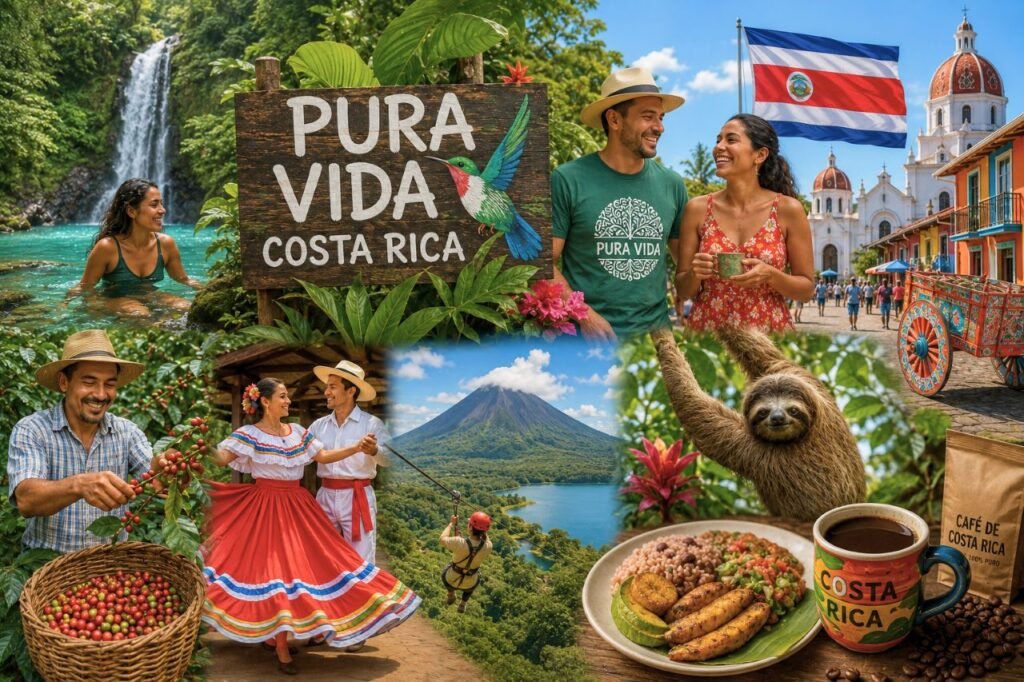
Pura vida, the essence of Costa Rica Culture
The core value system of Costa Rica is deeply egalitarian. Because of their history of rural cooperation and the early decision to abolish the military, Ticos place an immense moral value on avoiding confrontation.
Social interactions are guided by an active preference for courtesy, compromise, and a relaxed perspective on time known colloquially as Hora Tica (Tico time), prioritizing human relationships and personal well-being over rigid schedules.
Food & Cuisine
Costa Rican cuisine is wholesome, comforting, and focused on fresh, natural ingredients. It relies on a balanced combination of rice, black beans, fresh vegetables, and mild local spices like cilantro and sweet peppers.
The National Culinary Soul: Gallo Pinto
The undisputed king of the Costa Rican kitchen is Gallo Pinto (literally “Spotted Rooster”), the beloved national dish eaten almost daily, primarily for breakfast.
- The Preparation: Day-old white rice and pre-cooked black beans are sauteed together with finely chopped onions, sweet bell peppers, and fresh cilantro.
- The Secret Ingredient: The mixture is brought together with a generous splash of Salsa Lizano, a sweet, savory, and slightly tangy light brown national sauce with a unique blend of vegetables and mild spices. It is traditionally served alongside sweet fried plantains, sour cream (natilla), fried eggs, and warm corn tortillas.
Other Local Staples
- El Casado: The standard, ubiquitous national lunch plate. The word means “married man,” referencing how a traditional wife would pack a complete meal for her husband working in the fields. It features separate portions of white rice, black beans, a choice of meat (beef, chicken, or fish), a fresh cabbage salad, and fried sweet plantains.
- Olla de Carne: A rich, slow-simmered beef stew packed with large chunks of local root vegetables, including cassava (yuca), taro (ñampí), plantains, and sweet corn, served piping hot on rainy afternoons.
Clothing & Symbols
The Colors of Folk Heritage
While everyday clothing in Costa Rica is modern and Western, traditional attire takes center stage during civic holidays and folkloric dance performances. Traditional women’s attire features a sleeveless white blouse accented with colorful ruffles, paired with a long, flowing, multi-tiered satin skirt. The skirt is traditionally a brilliant solid color—frequently red, blue, or yellow—which the dancer swings gracefully like a moving canvas.
Men wear clean white cotton shirts paired with long light-colored trousers, a bright red sash tied around the waist, and a knotted red handkerchief (pañuelo) around the neck, topped with a traditional straw hat.
[ The Architecture of the Tico Flag ] ┌─────────────────────────────────────────────────────────────────────────┐ │ Blue Stripe - Represents the sky, cosmic hope, and opportunities. │ ├─────────────────────────────────────────────────────────────────────────┤ │ White Stripe - Symbolizes national peace, clear thinking, & liberty.│ ├─────────────────────────────────────────────────────────────────────────┤ │ Double Red Band - Represents the warmth, vital energy, & blood shed │ │ by heroes in defense of the sovereign republic. │ ├─────────────────────────────────────────────────────────────────────────┤ │ White Stripe - Symbolizes national peace, clear thinking, & liberty.│ ├─────────────────────────────────────────────────────────────────────────┤ │ Blue Stripe - Represents the sky, cosmic hope, and opportunities. │ └─────────────────────────────────────────────────────────────────────────┘The Painted Oxcart: A Masterpiece of Labor
The primary national cultural symbol of Costa Rica is La Carreta (The Traditional Oxcart). Historically used during the 19th century to transport coffee beans from the Central Valley over rugged mountains to the Pacific port of Puntarenas, these wooden carts became moving canvases.
Artisans in towns like Sarchí began painting the wheels and bodies of the oxcarts with incredibly intricate geometric shapes, bright starburst patterns, and elegant floral designs. Today, this tradition is recognized by UNESCO as a masterpiece of intangible cultural heritage, celebrating the dignity of early agricultural labor.
Music, Dance & Art
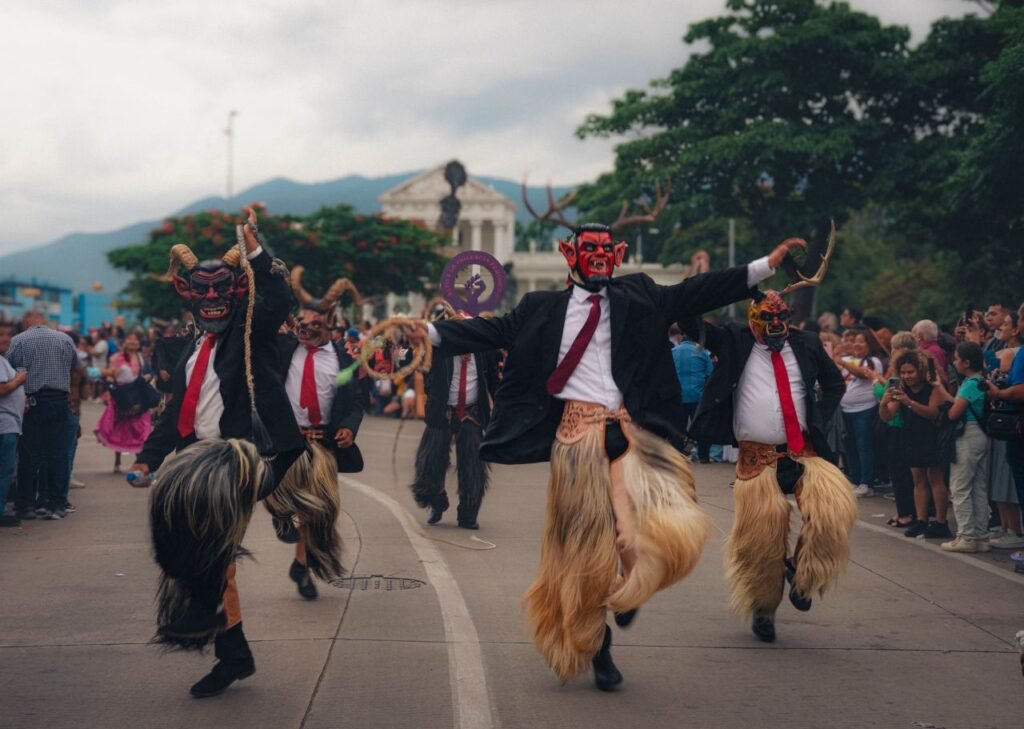
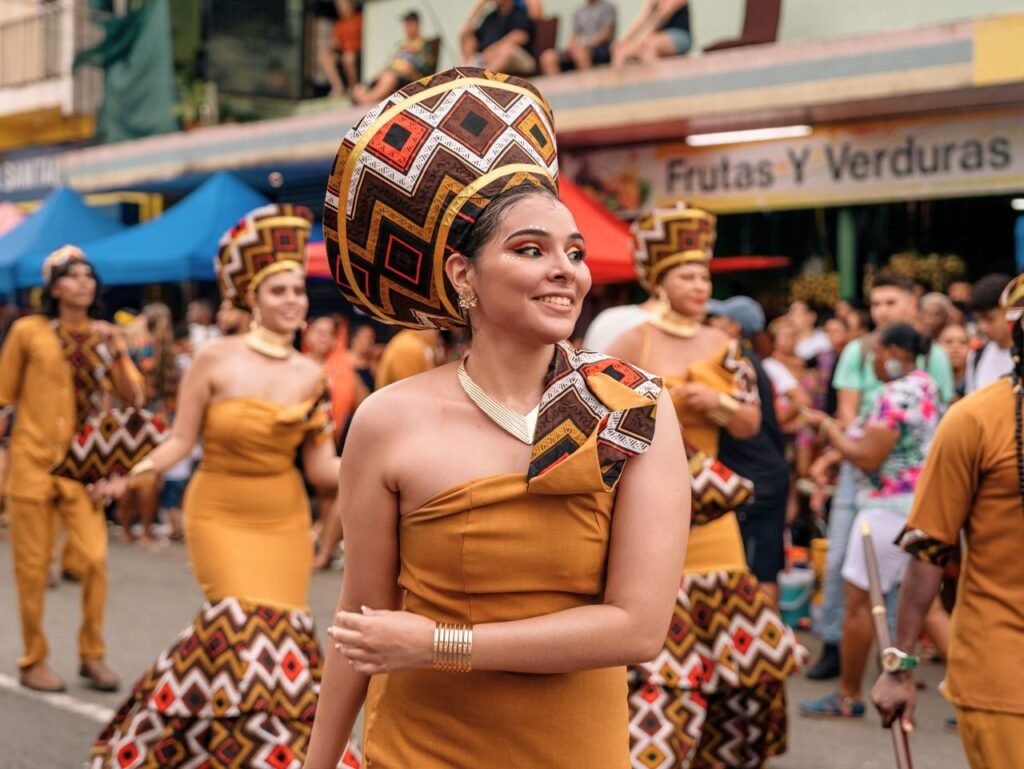
Masked performers dance in a vibrant street festival with cultural costumes – San José, Costa Rica
The Rhythms of Marimba and Guanacaste Folk
The musical identity of Costa Rica features a beautiful regional division. In the northern province of Guanacaste, the cultural soundtrack is led by the Marimba (a traditional wooden xylophone with African and indigenous roots).
The marimba drives iconic folkloric dances like the Punto Guanacasteco, characterized by lively heel-tapping steps, spinning partner maneuvers, and loud, comedic interjections called bombas—rhyming, romantic, or humorous verses shouted out by the dancers to entertain the crowd.
[ The Cultural Soundscape of Limón ] ┌─────────────────────────┬─────────────────────────┬─────────────────────────┐ │ Calypso Music │ The Quijongo │ The National Symphony│ │ Driving acoustic string │ An ancestral single- │ One of the most advanced│ │ ensembles highlighting │ string bow instrument │ orchestral ensembles │ │ Afro-Caribbean folklore.│ preserving old legends. │ in Central America. │ └─────────────────────────┴─────────────────────────┴─────────────────────────┘Visual Arts and Contemporary Crafts
In the fine arts, Costa Rican creators use the country’s abundance of rich natural clays and sustainably harvested hardwoods to craft stunning visual works. Indigenous artisans from the Boruca community continue to pass down the craft of carving diablito masks—vibrant, hand-painted balsa wood masks depicting fierce jungle spirits, historically used during the Fiesta de los Diablitos to celebrate their ancestors’ successful resistance against Spanish colonization.
Summary
The culture of Costa Rica stands as an extraordinary global testament to the beauty that emerges when a country prioritizes peace, environmental preservation, and human relationships over military power. By successfully honoring its agrarian roots through the preservation of the painted oxcart, protecting its immense natural ecosystems, and maintaining a social fabric grounded in the spirit of Pura Vida, this Central American republic has carved out an incredibly inspiring identity. From the shared joy of a morning plate of gallo pinto to the communal pride of a village farmer’s market, Costa Rica continues to shine—proudly celebrating its rich cultural diversity and sharing its peaceful soul with the world.
At Best Culture Insight, we see culture as the heartbeat of every society – the way people live, connect, and express their identity.