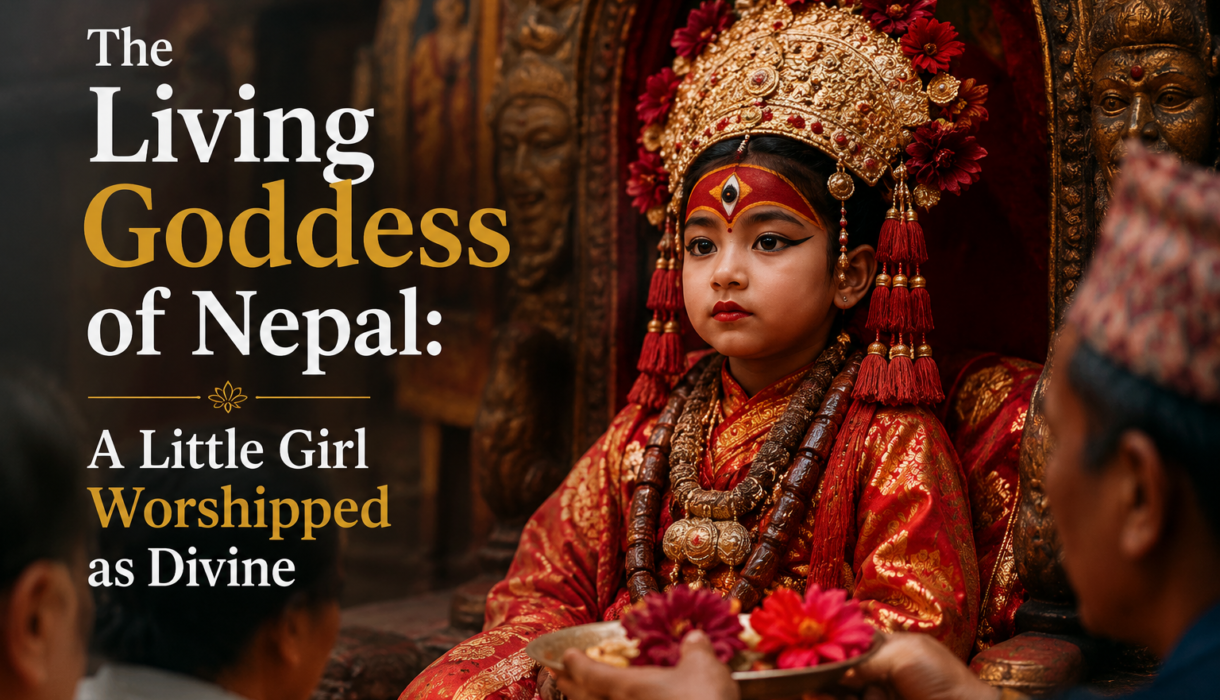

In the historic heart of the Kathmandu Valley, an extraordinary centuries-old tradition merges human existence with the divine. Known as the Kumari—a Sanskrit word meaning “young girl” or “virgin”—a prepubescent girl from the local Newar community is revered as a living deity. She is believed to be the earthly vessel of Taleju Bhawani, a manifestation of the powerful Hindu goddess Durga. Uniquely bridging two major religions, the Kumari is chosen exclusively from a Buddhist family clan, yet worshipped by both Hindus and Buddhists alike as a supreme symbol of cosmic, feminine energy.
The Rigorous Selection of a Living Deity
Becoming a Kumari is an exceptionally rare honor governed by ancient, meticulous rituals. Young candidates—often between three and five years old—must meet a set of strict physical, astrological, and psychological criteria. Beyond having pristine health and flawless skin, a prospective child must possess specific symbolic physical features, such as eyes like a cow and a voice as clear as a duck. The final stages test the child’s composure, requiring her to demonstrate unyielding bravery during intimidating night-time rituals inside temples. Once divine approval is confirmed by priests, the chosen child leaves her normal life behind to embody the goddess.
Life Inside the Sacred Palace
Upon her selection, the child moves into the Kumari Ghar, a majestic, intricately carved wooden palace situated in Kathmandu’s Durbar Square. Her daily routine transforms entirely into one of royal worship and spiritual duties. Considered holy from head to toe, her feet are forbidden from touching the ground outside her palace to preserve her purity, meaning she is carried in palanquins or by attendants whenever she travels. She receives private tutors for her education, while thousands of pilgrims gather daily beneath her palace window hoping for a fleeting glimpse—a darshan—which is believed to bring good fortune and protection.
The Return to Ordinary Life
The divine spirit does not remain in the girl forever. According to tradition, the goddess departs from the child’s body at the onset of puberty, or if she suffers a minor injury that causes her to bleed. The moment blood is lost, the girl’s divine status ends, and she officially retires. A grand farewell ceremony takes place, and search committees immediately begin the sacred process of selecting a new young successor. The former deity transitions back into a regular citizen, receiving a state pension to assist her integration back into society.
Modern Adaptations and Cultural Continuity
While the tradition remains deeply cherished, modern Nepal has adapted the custom to better support the long-term well-being of these young girls. Former concerns about isolation and lack of social skills have led to progressive updates, ensuring living goddesses now receive comprehensive schooling inside the palace, access to technology, and structured play sessions. During major festivals like Indra Jatra, where the nation’s highest leaders still bow before her in respect, the Kumari remains a vibrant symbol of national identity. She stands as a breathtaking reminder of a world where ancient mythology and living human reality gracefully walk hand in hand.