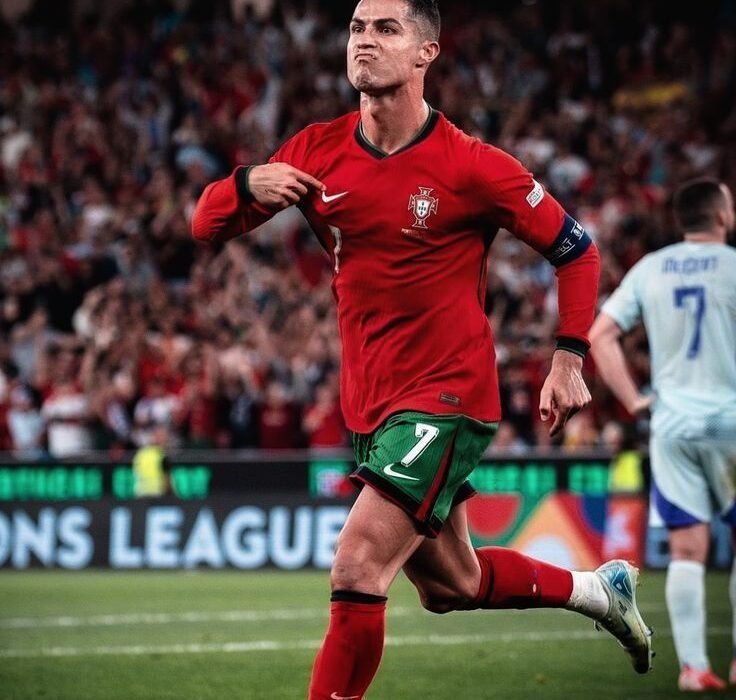
The Last Dance: How Ronaldo Is Handling His Final World Cup
Posted in :

The 2026 FIFA World Cup marks the definitive final chapter of Cristiano Ronaldo’s legendary international career. At 41 years old, the Portuguese icon is navigating his sixth tournament under an unprecedented global microscope. No longer the explosive winger of his youth, Ronaldo has transitioned into a highly disciplined, position-oriented target man. While his physical role on the pitch has evolved, his presence remains the emotional and tactical anchor of Roberto Martínez’s squad, commanding defensive attention and opening crucial spaces for Portugal’s generation of creative midfielders.
Milestone Achievements Amid Group Stage Friction
Portugal’s group stage campaign in the United States showcased both the brilliance and the burdens of Ronaldo’s final run. After delivering a vintage, decisive brace against Uzbekistan, the superstar captain drew level with German legend Lothar Matthäus for the second-most appearances in World Cup history (25 matches). However, a subsequent goalless draw against a disciplined Colombian side in Miami forced Portugal into a second-place finish in Group K. Despite heavy scrutiny regarding his chemistry with younger wingers like João Félix and Pedro Neto, Ronaldo played every single minute of the group stage, proving that his mental resilience and physical conditioning remain world-class.
Navigating the Modern Media Storm
Managing “The Last Dance” requires a mastery of narrative control as much as tactical execution. Ronaldo’s campaign has faced relentless media speculation and viral social media debates, with pundits openly questioning whether his starting role hinders Portugal’s fluidity. Following an intense draw against DR Congo, online rumors of squad divisions quickly escalated into headlines. Despite the outside noise, manager Roberto Martínez has fiercely defended his captain, dismissing calls to bench the veteran as “childish” and emphasizing that Ronaldo’s unparalleled experience and intelligent movement are irreplaceable assets for a deep tournament run.
The Knockout Blueprint and Tactical Adaptations
As Portugal prepares for a highly anticipated Round of 32 clash against Luka Modrić and Croatia, Ronaldo’s role is shifting toward efficiency over volume. Opposing defenses routinely double-team the forward, which has restricted his total touches but created space for teammates like Bruno Fernandes. To successfully navigate a challenging side of the bracket—which potentially features European champions Spain—Portugal must transition from a slow tempo to a more cohesive, creative attacking unit. Ronaldo’s success in the knockout rounds will be measured not just by his personal goal tally, but by his ability to elevate the players around him.
A Legacy Cemented in Real Time
Ultimately, Ronaldo is treating his final World Cup as a masterclass in professional longevity and dedication. Regardless of how the tournament concludes, his ability to compete at the absolute pinnacle of football at age 41 sets a standard that may never be replicated. He is no longer fighting to establish his legacy; he is simply fine-tuning it. For global soccer fans, watching Ronaldo spearhead Portugal’s attack in 2026 is a historic privilege—a vivid reminder that greatness does not fade quietly, but fights intelligently until the final whistle blows.