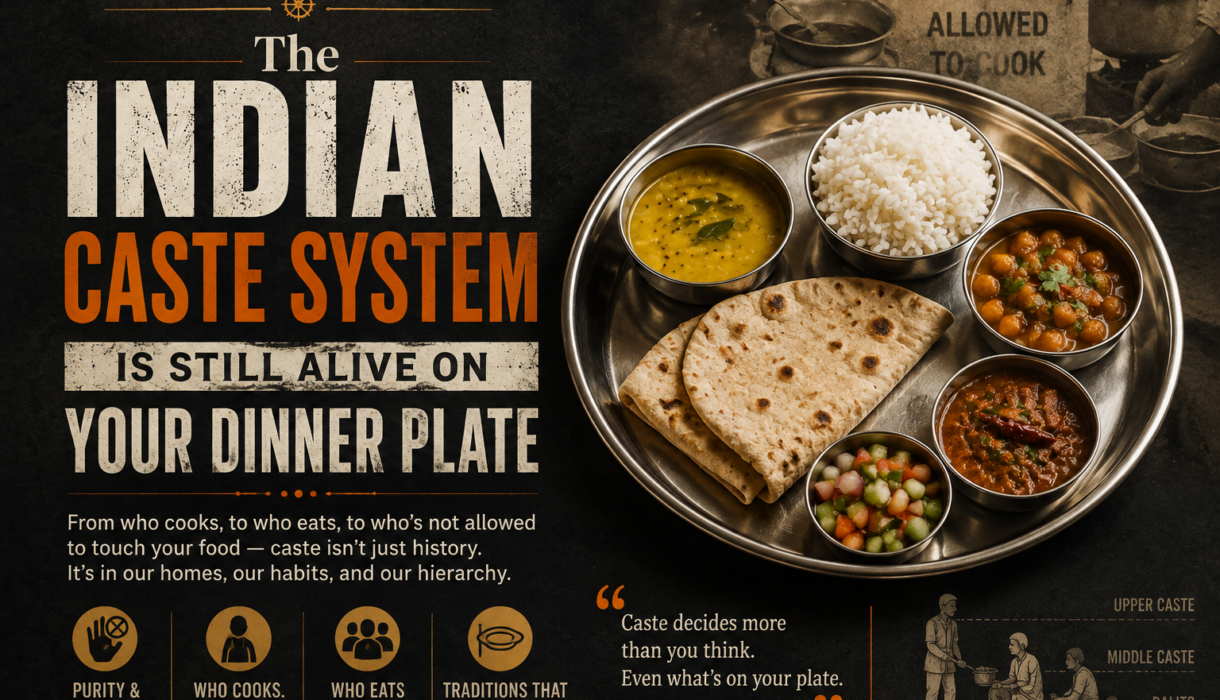

While modern India has legally abolished discrimination and embraced globalized economic progress, its ancient social hierarchy remains quietly entrenched in the most intimate space of daily life: the kitchen. The Indian caste system, historically structured around notions of spiritual purity and social standing, continues to govern what people eat, who prepares their meals, and with whom they share a table. Though urban life appears progressive on the surface, everyday dietary choices—from strict vegetarianism to the refusal of certain meats—act as subtle indicators of caste identity. Food in India is rarely just about nutrition; it is a lived social language that dictates status, inclusion, and belonging.
The Concept of Ritual Purity and Food Hierarchy
At the core of caste-based dining lies the ancient doctrine of purity and pollution, which ranks ingredients according to a strict social scale. Dominant castes historically adopted plant-based diets to maintain spiritual purity, placing vegetarianism at the top of the cultural hierarchy. Conversely, communities performing manual labor were often restricted to meat, poultry, or offal, which upper castes classified as “impure.” This legacy persists today, as vegetarianism in India is frequently equated with higher moral character, refinement, and social superiority, while meat consumption—particularly beef and pork—carries significant social stigma and prejudice.
The Invisible Lines of Kitchen Separation
The boundaries of caste extend beyond the ingredients themselves to encompass who is permitted to handle and cook the food. Traditional practices dictated that food prepared by lower-caste individuals could “pollute” members of higher castes, leading to separate utensils, dedicated dining spaces, and segregated cooking staff. In modern households, apartment complexes, and workplace cafeterias, these boundaries endure through subtle demands for “pure veg” cooks or separate kitchenware. Even food delivery apps and catering services have faced scrutiny for introducing segregated delivery fleets to cater to caste-aligned demands for untouched, vegetarian meals.
Economic Privilege and the “Pure Veg” Narrative
Global perceptions often mistake India for a predominantly vegetarian nation, but national surveys reveal that nearly 70% of the population regularly consumes meat. The myth of a universally vegetarian India persists because dominant castes control mainstream media, hospitality industries, and corporate leadership, shaping the national narrative around their own dietary habits. Labeling neighborhoods, restaurants, or housing societies as “pure veg” serves as a socio-economic filter, effectively excluding lower-caste groups and religious minorities from shared community spaces under the guise of dietary preference.
Redefining Culinary Identity for a Modern Era
As awareness grows among younger generations and marginalized communities, India’s culinary landscape is undergoing a crucial transformation. Dalit writers, chefs, and activists are increasingly celebrating historically marginalized food traditions—such as rich pork curries, organ meats, and sun-dried game—reclaiming them as symbols of resilience and cultural heritage rather than embarrassment. By bringing these diverse culinary traditions into high-end restaurants and public discussions, a new movement is challenging the historic food hierarchy. Transforming India’s relationship with food requires recognizing that true equality must eventually extend all the way to the dinner plate.