The Dogon People of Mali Built Astronomical Maps of Stars They Had No Telescope to See
Posted in :

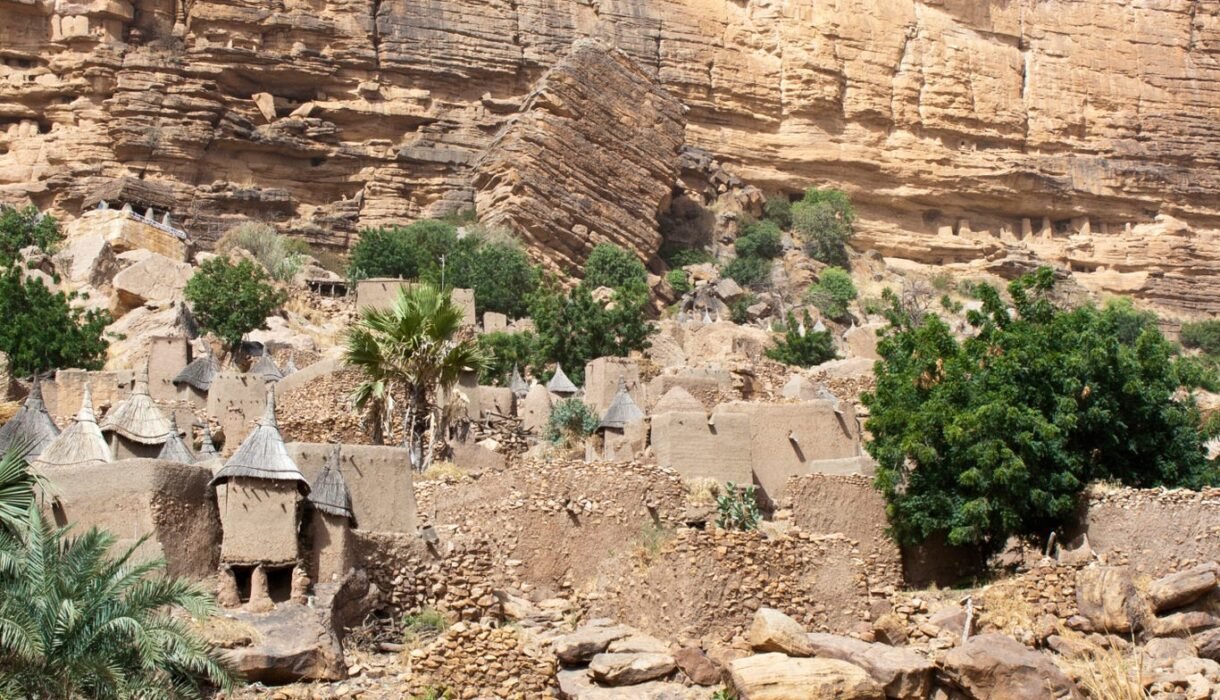
Deep in the central plateau of Mali, West Africa, lives the Dogon people, an ethnic group renowned for their rich oral traditions, distinct architecture, and intricate wooden carvings. Yet beyond their artistic heritage lies one of the most intriguing mysteries in cultural anthropology and archaeoastronomy. For generations, Dogon priests held detailed knowledge about distant celestial bodies—most notably the Sirius star system—long before modern Western science possessed the telescopes required to observe them.
The Secret Knowledge of Sirius B
At the center of the mystery is Sirius, the brightest star visible from Earth. While Sirius A can easily be seen with the naked eye on a clear night, it is actually part of a binary system. Orbiting close beside it is a tiny, super-dense white dwarf star known as Sirius B. Because Sirius B is so faint and overpowered by the glare of Sirius A, it is completely invisible to the human eye. Western astronomers only confirmed its physical existence in the mid-19th century using advanced optical instruments, yet Dogon oral history described it centuries prior.
An Uncanny Mapping of the Cosmos
The Dogon referred to Sirius B as Po Tolo, naming it after a tiny indigenous seed to signify its small size. Despite its invisibility, Dogon astronomical accounts accurately detailed three crucial scientific facts: that Po Tolo is extraordinarily heavy, that it is white, and that it completes a complex elliptical orbit around Sirius A roughly every 50 years. Modern astrophysics has verified all three points. Furthermore, Dogon cosmology demonstrated awareness of Saturn’s rings and the four major moons of Jupiter, celestial features impossible to resolve without magnification.
The Mystery Discovered by Western Researchers
This extraordinary astronomical knowledge first came to global attention in the 1930s through French anthropologists Marcel Griaule and Germaine Dieterlen. Spending decades living alongside Dogon elders, the researchers documented complex rituals, sand drawings, and sacred wooden artifacts that encoded these cosmic maps. The findings stunned the international scientific community, sparking intense debate over how an isolated African culture without modern technology could possess such precise data about deep space.
Theories, Debates, and Cultural Exchange
To explain the anomaly, scholars and researchers have offered several competing theories over the decades. Skeptics suggest cultural contamination, proposing that the Dogon acquired this knowledge through contact with European visitors, astronomers, or missionaries in the late 19th or early 20th century before passing it into their oral history. Others argue that the Dogon developed sophisticated observational methods or inherited ancient astronomical traditions passed down from earlier North African or Egyptian civilizations that studied the skies for navigation and agriculture.
The Cultural Meaning Beyond Scientific Debate
While scientists and historians continue to debate the origins of the data, focusing solely on the controversy misses the broader significance of the Dogon worldview. For the Dogon, astronomy was not an isolated academic pursuit, but a foundational pillar of their spirituality, agricultural calendar, and social structure. Cosmic cycles dictated major religious festivals, such as the Sigui ceremony held every 60 years to mark the orbital renewal of the stars, reinforcing communal unity and sacred traditions across generations.
A Powerful Legacy of Human Curiosity
Ultimately, the astronomical maps of the Dogon serve as a compelling reminder of humanity’s timeless obsession with the night sky. Long before satellite imagery, space observatories, and giant terrestrial telescopes, ancient cultures across the globe developed profound ways to understand the universe around them. Whether through lost observational techniques, ancient cross-cultural trade, or sophisticated symbolic systems, the Dogon story highlights the deep capacity of indigenous traditions to store complex knowledge about the cosmos.