The Senufo People’s “Poro” Secret Society — Africa’s Most Powerful Initiation Brotherhood
Posted in :

Membership in Poro is not automatically granted at birth; it is earned through a rigorous, multi-year initiation system. The center of this process is the Sinzanga, a designated sacred forest located on the outskirts of Senufo villages. Off-limits to women, children, and uninitiated outsiders, this dense woodland serves as an outdoor university and sanctuary. Within its sheltered canopy, young boys are removed from the comforts of home to undergo intense physical conditioning, learn sacred herbal remedies, master agricultural techniques, and memorize the secret language and oral histories of their ancestors.
The Three Seven-Year Cycles of Growth
The path to full Poro membership is divided into three distinct stages, each lasting seven years and totaling a 21-year commitment. The first stage, known as Kuufo, introduces young boys to basic discipline, teamwork, and community service. The second phase, Tchagba, challenges young men with deeper spiritual teachings, endurance tests, and specialized technical skills. The final stage, Kafoo, marks entry into the inner circle of elders. Only upon completing all three cycles does a man gain full voting power in village decisions and access to the deepest spiritual secrets of the society.
Ritual Masks and Art as Spiritual Instruments
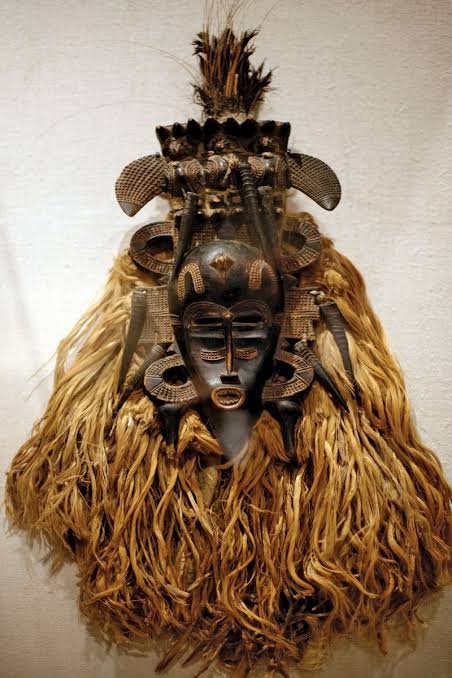
Art within the Senufo culture is far more than decoration; it is an active tool used by Poro members to communicate with spiritual realms. During secret ceremonies and funeral rites, initiates wear elaborate wooden masks such as the Kpelie—a delicate face mask featuring horn-like projections—or the fierce Firespitter mask (Wanyugo), which combines attributes of wild animals to ward off negative spirits. These sacred objects are believed to embody ancestral spirits, enforcing social harmony and reminding community members of the higher moral order governed by the brotherhood.
The Backbone of Governance and Social Order
Because the Senufo traditionally operated without centralized kings or centralized state governments, Poro naturally evolved into the primary governing authority. Elders of the Poro society serve as judges in land disputes, enforce trade regulations, organize communal farming labor, and maintain peace between families. The secrecy surrounding Poro decisions gives its decrees incredible authority—when the elders reach a consensus under the cover of the sacred forest, the decision is respected as absolute law across the entire community.
Preserving Identity in the Modern Era
In an age of rapid urbanization, modern education, and global connectivity, the Poro society continues to play a vital role in Senufo identity. While the strictness of the 21-year timeline has adapted in some regions to accommodate formal schooling, the core values of respect, communal responsibility, and moral integrity remain deeply ingrained. Poro ensures that young Senufo men do not lose connection to their ancestral heritage, proving that this ancient initiation brotherhood remains a living, breathing foundation of West African society.