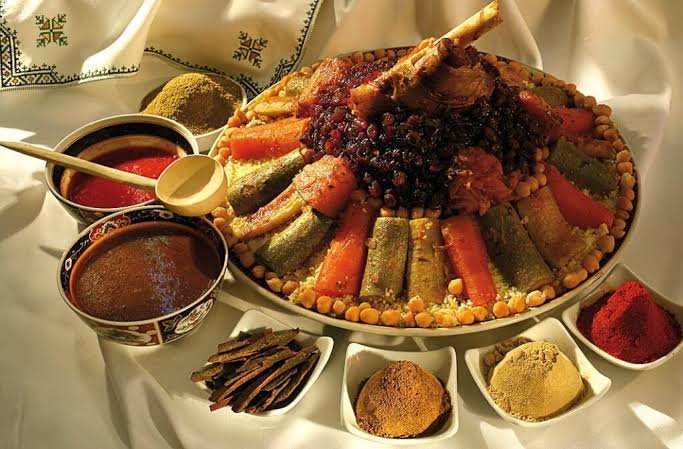

Across North Africa, food is far more than mere nourishment for the body; it serves as a central pillar of cultural identity, family bonding, and spiritual life. At the heart of this rich culinary tradition sits couscous—steamed semolina grains served with a rich stew of vegetables, meats, and aromatic spices. Transcending its role as a regional staple, couscous represents a living heritage across Algeria, Mauritania, Morocco, and Tunisia. In fact, UNESCO officially inscribed the knowledge, know-how, and practices relating to the production and consumption of couscous onto the Representative List of the Intangible Cultural Heritage of Humanity, acknowledging its deep social footprint.
The Art of Hand-Rolling: A Tradition of Shared Effort
The significance of couscous begins long before it ever reaches the dinner table. Traditionally, preparing couscous is an intricate, hand-crafted process passed down through generations of women. Whole-wheat semolina flour is sprinkled with water and salt, then painstakingly rolled by hand into tiny, uniform granules before being dusted with fine flour to keep them separate. This labor-intensive task, often performed in multi-generational groups of mothers, grandmothers, and daughters, serves as an informal gathering space where stories are shared, wisdom is imparted, and communal bonds are strengthened.
A Symbol of Hospitality and Unity Around the Table
In North African society, couscous is fundamentally designed for sharing. Rather than being plated in individual portions, it is traditionally served in a large, communal ceramic bowl called a gsa’a. Diners sit closely around the dish, eating from the side directly in front of them using their right hand or wooden spoons. This physical arrangement eliminates social barriers and fosters equality among those sharing the meal. Offering a bowl of couscous to guests is the ultimate gesture of welcome and generosity, signaling that a visitor is treated like family.
The Emotional and Healing Power of Comfort Food
Beyond its communal nature, couscous holds a profound psychological and emotional place in everyday life. The warm, fragrant steam rising from a freshly cooked pot carrying the scents of saffron, cumin, coriander, and cinnamon invokes a feeling of safety, nostalgia, and home. In times of stress, illness, or personal grief, families prepare couscous as a comforting tonic to soothe the soul. The slow, rhythmic ritual of gathering to prepare and eat the dish creates a therapeutic environment where individuals feel supported by their community.
Couscous as a Pillar of Life Milestones and Sacred Events
Couscous is inextricably linked to life’s key transitions and sacred calendar dates. It is the central dish at weddings, birth celebrations (aqiqah), housewarmings, and religious holidays like Eid and Friday family gatherings after communal prayers. Crucially, it also plays a healing role during times of mourning. Following a funeral, neighbors and relatives prepare large quantities of couscous to feed the grieving family and visitors, ensuring that those in sorrow are sustained without having to worry about daily domestic chores.
Bridging Generational and Geographic Divides
As North African diaspora communities have established roots around the globe, couscous has traveled with them, becoming a universal ambassador of Maghrebi culture. In countries like France, Italy, and Spain, couscous has been enthusiastically adopted into mainstream dining, celebrated for its versatility and wholesome nutrition. For diaspora families living far from their homelands, gathering around a steaming platter of couscous serves as a vital anchor—reconnecting younger generations to their ancestral heritage through taste, memory, and ritual.
A Timeless Legacy of Nourishment and Connection
Ultimately, the story of couscous is a testament to how simple ingredients—durum wheat, water, and heat—can be transformed into a powerful emblem of human connection. In a fast-paced modern world where meals are frequently eaten quickly and in isolation, couscous culture reminds us of the value of slowing down, sharing labor, and coming together around a single table. It remains not just a centerpiece of African cuisine, but a enduring ritual of unity, healing, and shared humanity.