
In 1994, the nation of Rwanda endured one of the darkest chapters in human history. Over the course of approximately 100 days, an estimated 800,000 people lost their lives in a devastating genocide. When the violence finally ceased, the country faced an unprecedented crisis: the formal judicial system was completely overwhelmed. With over 100,000 suspects detained and conventional courts decimated, experts estimated that processing every case through standard legal channels would take over a century. Faced with an impossible backlog, Rwanda turned away from Western-style legal procedures and revived an ancient traditional practice called Gacaca.
Justice Built on the Village Grass
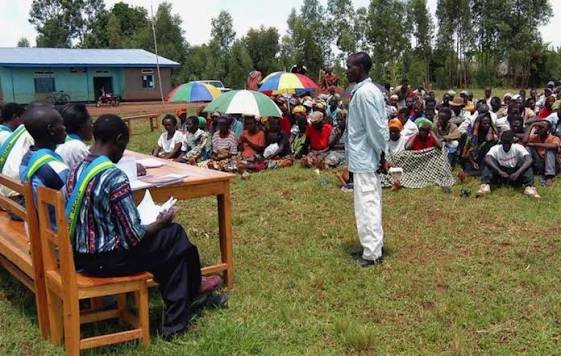
Literally translating to “justice on the grass” in Kinyarwanda, Gacaca originally existed as a informal dispute-resolution method led by village elders. Re-imagined in 2001 as a modern transitional justice system, Gacaca shifted the entire legal apparatus out of formal courtrooms and directly into open-air public spaces. Instead of professional lawyers, judges, and prosecutors, hearings were conducted in front of entire local communities. Neighbors sat together on grassy hillsides to hear testimony, present evidence, and determine the truth of what transpired during the conflict.
Truth-Telling as a Path to Redemption
Unlike adversarial legal systems focused primarily on punitive incarceration, the core objective of Gacaca was restorative justice. Suspects were encouraged to step forward, confess their actions, express genuine remorse, and reveal where victims were buried so families could grant them a proper burial. In exchange for full and truthful confessions, perpetrators were offered significantly reduced prison sentences or community service mandates. This structure prioritized uncovering the complete truth over strictly locking people away, allowing victims to finally receive answers and closure.
Community-Elected Judges with Local Integrity
Central to the credibility of the Gacaca courts was the selection of judges. Known as Inyangamugayo, which translates to “persons of integrity,” these community leaders were elected directly by their peers based on their honesty, fairness, and wisdom. They were not formal legal scholars, but respected figures within the neighborhood who understood local dynamics, family histories, and community relationships. Over 160,000 trusted citizens were trained to preside over more than 12,000 local Gacaca jurisdictions across the nation.
Rebuilding Relationships in Shared Neighborhoods
The fundamental philosophical difference between Gacaca and traditional courts was its long-term focus on communal survival. Because survivors and perpetrators had to return to living side-by-side as neighbors, isolating offenders behind prison walls indefinitely would not repair the social fabric. By bringing both sides together in transparent public dialogue, Gacaca fostered mutual understanding and gradual reconciliation. Offenders paid back their debts through physical labor that directly rebuilt the infrastructure of the communities they had helped destroy.
Remarkable Speed and Massive Historical Scale
By the time the official Gacaca program concluded in 2012, the community-led system had tried approximately 1.9 million cases. What would have taken standard courtrooms multiple generations to process was accomplished in roughly a decade, at a fraction of the financial cost of international tribunals. While human rights observers noted procedural limitations—such as the absence of formal legal defense counsel—the consensus remains that Gacaca successfully achieved a monumental task that conventional law could never accomplish.
A Lasting Legacy for Restorative Justice
The story of Gacaca serves as a powerful global blueprint for post-conflict healing and peacebuilding. It proved that true justice does not always require cold courtrooms, technical legal jargon, or punitive isolation. By placing trust in ordinary citizens and prioritizing reconciliation over retribution, Rwanda demonstrated how custom, community engagement, and shared humanity can heal even the deepest societal wounds.