Inside the Secret Fermented Foods Keeping Koreans Alive Longer
Posted in :

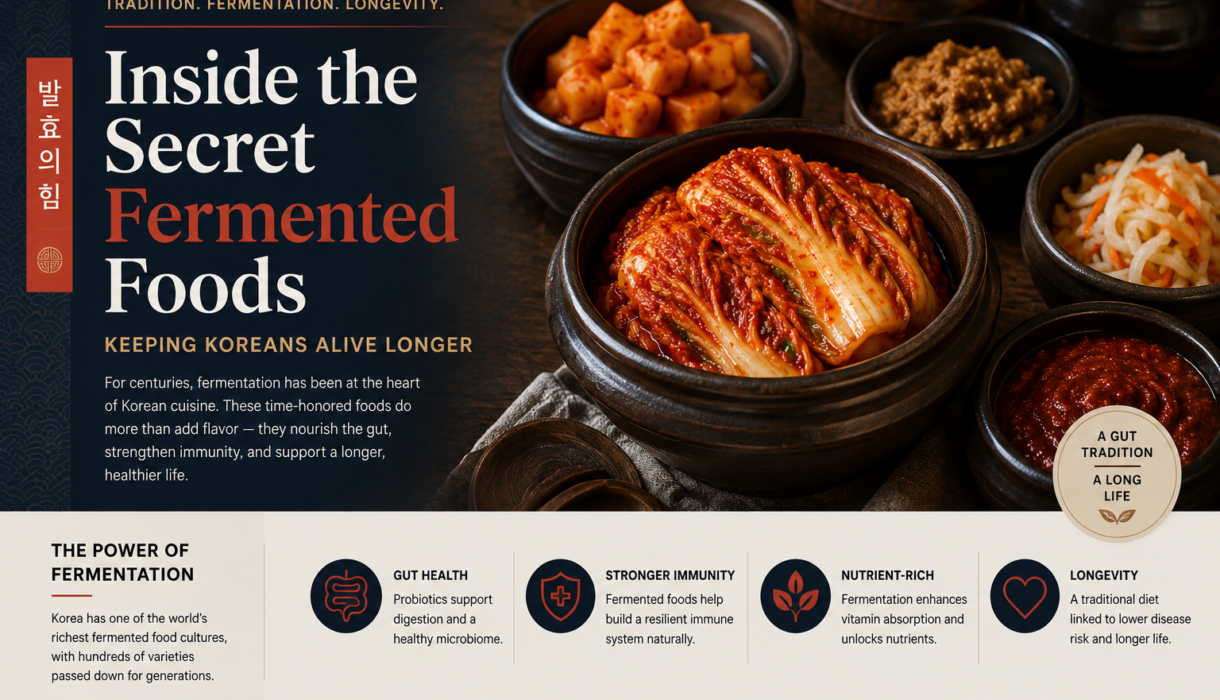
South Korea consistently ranks among the global leaders in life expectancy, with researchers projecting that its citizens may soon boast the longest lifespans on earth. While world-class healthcare and active lifestyles play a vital role, nutritional scientists point directly to the Korean dinner table as the true source of youth. Centered on centuries-old biological preservation methods, the traditional diet relies on a diverse array of fermented foods that nurture the gut, combat cellular aging, and protect the cardiovascular system. These superfoods are not mere side dishes; they represent a sophisticated living medicine integrated into every single meal.
The Probiotic Powerhouse on Every Plate
At the center of Korea’s longevity secret is kimchi, a tangy staple made by fermenting salted Napa cabbage or radishes with garlic, ginger, and chili powder. During the aging process, beneficial microorganisms—particularly lactic acid bacteria like Lactobacillus—multiply by the billions. Eating kimchi daily populates the human digestive tract with healthy bacteria, reinforcing the gut microbiome which houses over 70% of the body’s immune system. Scientific studies show that regular kimchi consumption lowers systemic inflammation, improves metabolic health, and aids in healthy weight management, forming a powerful baseline against chronic disease.
Jang: The Umami Pastes Fighting Cardiovascular Disease
Beyond kimchi lies an indispensable group of fermented soybean pastes collectively known as jang, which include doenjang (soybean paste) and gochujang (red chili paste). Created by aging cooked soybeans in porous clay earthenware jars called onggi for months or years, these pastes undergo complex biological transformations. The fermentation process breaks down soy proteins into easily absorbable amino acids, bioactive peptides, and plant compounds called isoflavones. Research links these active compounds to reduced blood pressure, lower cholesterol levels, and improved arterial flexibility, directly protecting Koreans from heart disease—the world’s primary killer.
Cheonggukjang: The Fast-Fermented Vessel for Brain and Blood Health
Perhaps the most potent member of Korea’s fermented arsenal is cheonggukjang, a rich, fast-fermented soybean paste made with the help of Bacillus subtilis bacteria. Unlike long-term aged pastes, cheonggukjang ferments in just two to three days, producing a thick, viscous texture rich in natural enzymes like nattokinase. This specific enzyme is renowned for its ability to break down blood clots, improve blood circulation, and reduce the risk of strokes. Additionally, the unique peptide density in cheonggukjang supports cognitive function and insulin sensitivity, shielding the brain and body from age-related degradation.
A Daily Commitment to Living Microbes
Ultimately, the longevity secret of Korean cuisine lies in its unwavering consistency. By incorporating live, fermented foods into breakfast, lunch, and dinner, Koreans maintain a continuous influx of beneficial microbes and antioxidant compounds that keep internal biological systems youthful. In a modern world saturated with ultra-processed convenience items, Korea’s commitment to slow-fermented, living food serves as a masterclass in culinary medicine. It proves that living a longer, healthier life does not require expensive treatments—it simply starts with the microscopic life on our plates