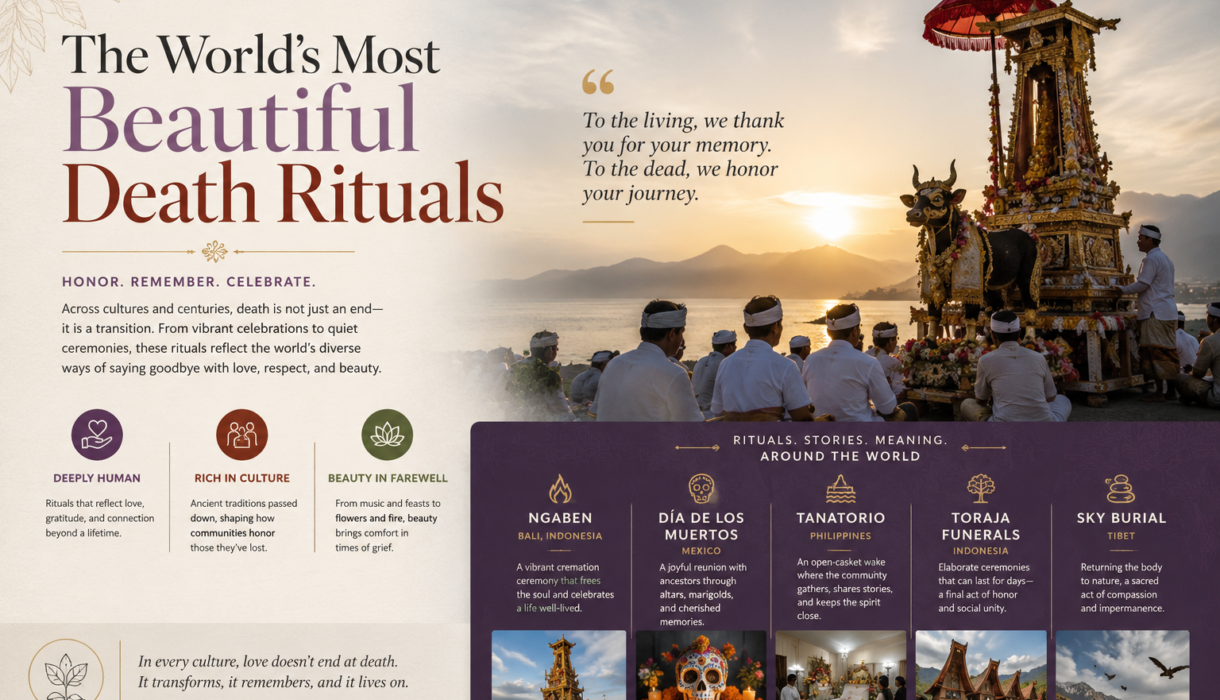

Across the globe, human societies have crafted profound traditions to honor the end of mortal life. While Western perspectives often view death with quiet grief and hushed solemnity, many cultures embrace mortality with vibrant celebrations, deep spiritual reverence, and artistic expression. These rituals remind us that passing away is not merely an ending, but a meaningful transition that bridges the physical world with the ancestral realm. By looking at how different traditions mark this final threshold, we gain a fascinating window into global philosophies on love, legacy, and human connection.
Mexico’s Día de los Muertos: Welcoming the Departed Home
In Mexico, the annual Día de los Muertos (Day of the Dead) transforms grief into a joyful family reunion. Rooted in indigenous Aztec beliefs blended with Catholic traditions, this festival holds that the gates of the underworld open so deceased souls can return to visit their living relatives. Families construct elaborate altars (ofrendas) decorated with vibrant orange marigolds, sugar skulls, and the favorite foods and drinks of their departed loved ones. Rather than dwelling on loss, streets fill with music, traditional face paint, and candlelight, creating a powerful testimony that love and memory endure far beyond the grave.
Madagascar’s Famadihana: Dancing with the Ancestors
High in the island nation of Madagascar, the Malagasy people practice Famadihana, also known as “the turning of the bones”. Every few years, extended families gather to unearth the remains of their ancestors from subterranean family crypts. The deceased are tenderly rewrapped in fresh, high-grade silk shrouds while relatives update them on family news, share stories, and play festive live music. Family members then lift the wrapped bodies onto their shoulders and dance around the tombs in a spirit of profound gratitude and kinship, reinforcing the belief that ancestors remain active, cherished parts of the family.
Indonesia’s Torajan Rites: Life After the Last Breath
For the Torajan people in the highlands of South Sulawesi, Indonesia, a physical death is viewed as a slow, gradual illness rather than a sudden end. The deceased often remain inside the family home for months or even years, cared for daily as if they were merely resting, while the family saves money for a proper send-off. When the grand funeral finally takes place, it becomes a multi-day cultural event filled with traditional music, community feasts, and ritual sacrifices intended to guide the soul safely to the afterlife (Puya). The deceased are eventually placed in high cliffside tombs accompanied by carved wooden effigies (tau tau), watching over their descendants for generations.
Ghana’s Fantasy Coffins: Celebrating a Unique Legacy
In Ghana, particularly among the Ga people of the Greater Accra region, funerals offer a vivid reflection of a person’s unique individuality and lifelong passions. Local artisans craft custom “fantasy coffins” (abebuu adekai) shaped into extraordinary objects that represent the deceased’s trade or aspirations—ranging from colorful fish and luxury cars to giant cocoa pods and airplanes. These hand-carved works of art ensure that the final journey to the ancestral realm is marked by personal pride, artistic flair, and a joyful celebration of a life well lived. Ultimately, these global rituals reveal that honoring the dead is universal, showing how human love transforms farewells into lasting beauty.


