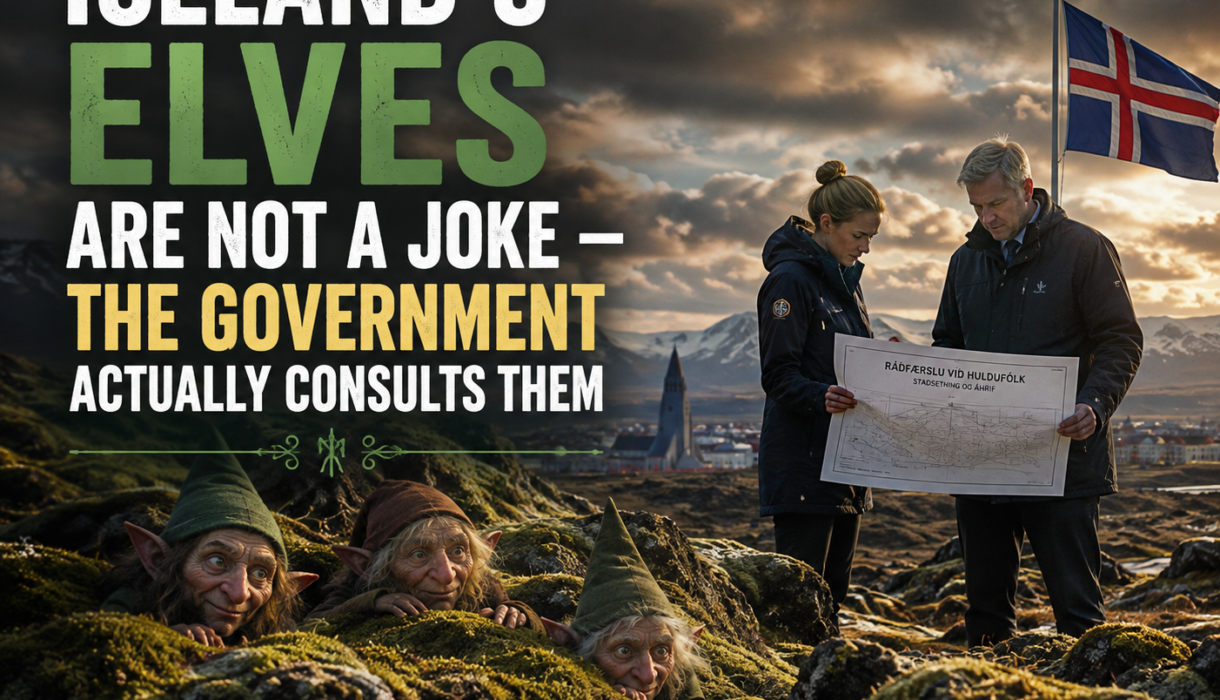

In the dramatic, volcanic landscapes of Iceland, belief in folklore is far more than mere storytelling or tourist entertainment. Known locally as Huldufólk (or “hidden people”), elves are considered quiet co-habitants of the island’s lava fields, rocky hills, and coastal cliffs. Surveys over the decades consistently reveal that a significant portion of the Icelandic population either firmly believes in these unseen beings or refuses to rule out their existence. Far from dismissing these cultural traditions, the Icelandic government and public institutions treat them with genuine diplomatic respect, incorporating them directly into modern civil planning.
Rerouting Roads and Delaying Construction
When major infrastructure projects conflict with sites believed to be elf habitats, the Icelandic Road and Coastal Administration (Vegagerðin) routinely intervenes. Over the decades, bulldozers have broken down unexpectedly, equipment has malfunctioned, and unexplained mishaps have occurred whenever workers attempted to level specific boulders or hillsides believed to house the Huldufólk. Rather than forcing construction forward, authorities often choose to alter highway routes around notable rock formations, narrow roads to avoid disruption, or pause development entirely until the hidden residents have been properly accommodated.
Official Mediators and Seers in Action
To resolve stalemates between urban development and elven habitats, government officials and private developers frequently turn to accredited local seers, clairvoyants, or völvas. These cultural mediators act as negotiators between humans and the unseen realm. In several high-profile cases—such as the relocation of a massive 70-ton rock known as an “elf church” during a highway construction project—mediators successfully negotiated a peaceful truce. The road administration delayed work to allow time for the Huldufólk to relocate, ensuring both project completion and cultural harmony.
Environmental Protection Through Sacred Tradition
Beyond spiritual reverence, the practice of consulting the hidden people serves as a powerful mechanism for environmental conservation. Protecting “elf rocks” and ancient lava fields effectively halts aggressive industrial expansion, preserving sensitive ecosystems from being bulldozed. In 2013, when environmental activists teamed up with elf advocates to protect the Gálgahraun lava field, the case reached the Supreme Court of Iceland, successfully highlighting the cultural and ecological significance of the pristine landscape.
A Model for Coexistence Between Progress and Heritage
Ultimately, Iceland’s official policy toward the Huldufólk reflects a deep-seated societal commitment to humility and environmental harmony. By listening to community concerns, respecting ancestral heritage, and accommodating the land’s unseen guardians, the Icelandic government demonstrates that modern progress does not have to come at the expense of cultural identity. Whether one views the hidden people as actual entities or as symbolic caretakers of the earth, this extraordinary practice proves that tradition and modern development can peacefully coexist.