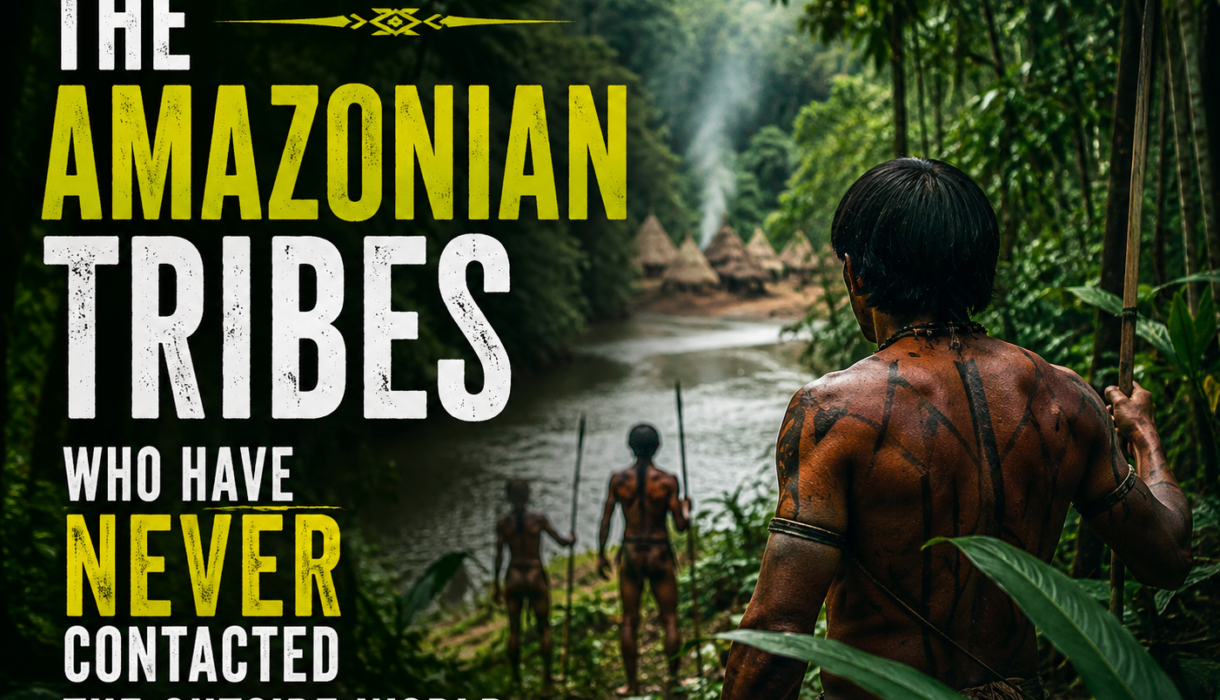
The Amazonian Tribes Who Have Never Contacted the Outside World
Posted in :

Deep within the dense, uncharted reaches of the Amazon rainforest live the world’s last remaining uncontacted tribes—indigenous communities that exist entirely outside the sphere of modern civilization. Often referred to as isolated peoples, these groups choose to live without smartphones, modern medicine, or global commerce. Most reside in remote border regions across Brazil, Peru, Colombia, and Bolivia. Far from being primitive remnants of the past, these societies represent fully functioning, highly self-sufficient cultures that have mastered sustainable living in one of the most challenging environments on Earth.
Why Isolation Is a deliberate Choice for Survival
A common misconception is that uncontacted tribes are simply unaware of the modern world. In reality, historical evidence shows that their isolation is often a conscious strategy for self-preservation. Many of these groups are descendants of survivors who fled into the deepest parts of the jungle to escape enslavement and violence during the brutal South American rubber boom of the 19th and 20th centuries. Brief, accidental encounters today—such as arrows fired at overflying survey planes—send a unmistakable message: these communities actively choose to stay secluded to protect their freedom, territory, and ancestral way of life.
Extreme Biological Vulnerability to Modern Diseases
The single greatest danger facing uncontacted Amazonian tribes is immunologic vulnerability. Because they have lived in geographical isolation for generations, their immune systems lack antibodies against common global illnesses such as influenza, measles, and common colds. A single brief encounter with an outsider carrying a mild virus can trigger catastrophic epidemics that wipe out entire communities within weeks. This extreme biological sensitivity is the primary reason international human rights organizations and indigenous agencies enforce strict non-contact protocols.
The Growing Threat of Environmental Encroachment
Despite legal protections, the natural sanctuaries where these isolated groups live are under severe threat from human expansion. Illegal logging, gold mining, cattle ranching, and drug trafficking networks steadily shrink the borders of their ancestral territories. Deforestation pushes modern machinery deeper into once-untouched jungle, destroying native hunting grounds and forcing uncontacted groups into territorial conflicts with neighboring tribes. When their natural environment is degraded, their access to clean water, wild game, and natural resources disappears, threatening their very existence.
International Protection and the Policy of Non-Contact
To safeguard these vulnerable populations, indigenous protection agencies like Brazil’s FUNAI (National Indian Foundation) maintain a strict “no-contact” policy. Instead of forcing contact or attempting to integrate them into modern society, governments monitor their territories from afar using satellite technology and aerial overflights. The international consensus emphasizes that these tribes possess an absolute right to self-determination. Protecting their lands from encroachment is not just an act of environmental conservation—it is an essential humanitarian duty to preserve human diversity and respect their fundamental right to live in peace.