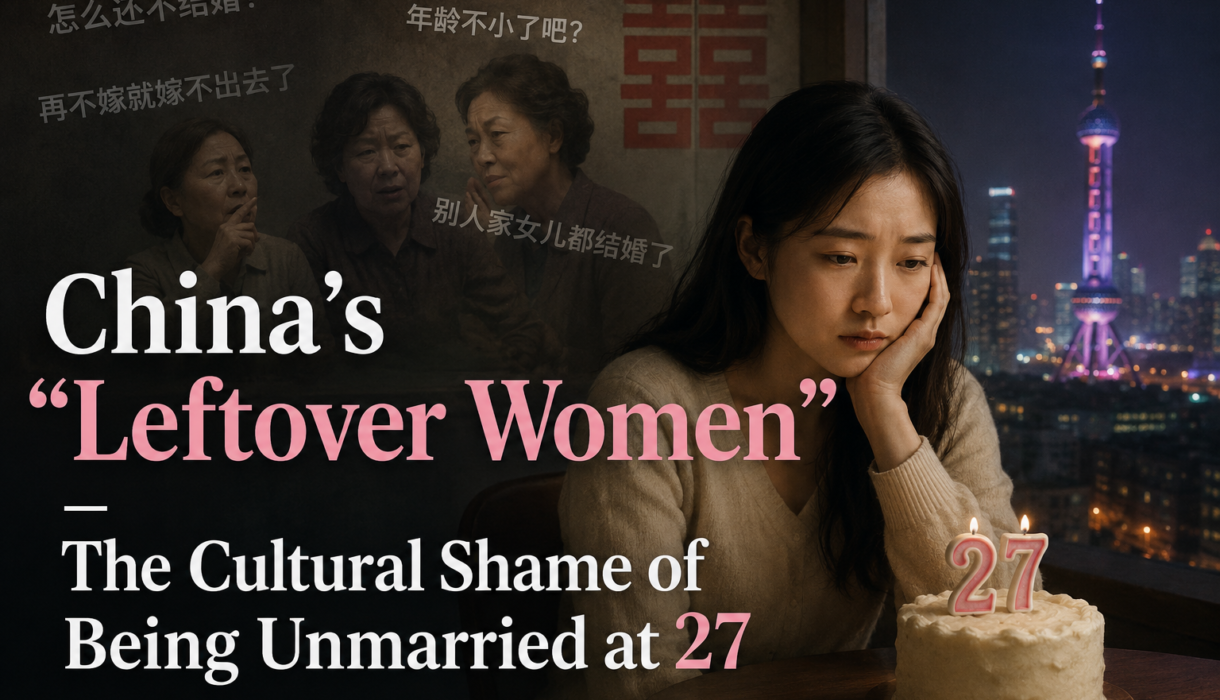

In rapidly modernizing urban China, reaching one’s late twenties without a marriage license can come with unexpected social friction. The term “Sheng Nu” (剩女), which translates directly to “leftover women,” gained wide public visibility after being recognized by China’s Ministry of Education. The label is applied primarily to educated, financially independent, urban women who remain unmarried past the age of 27. While this age limit might sound young by modern global standards, it carries heavy social weight in a culture shaped by centuries of Confucian family values, where marriage is historically viewed as an essential duty rather than a personal preference.
The Root of the Stigma: Social Norms and Demographic Irony
The irony of the “leftover” label lies within China’s actual population numbers. Decades of the One-Child Policy created a significant gender imbalance, resulting in tens of millions more men than women nationwide. Demographically, women are in high demand, yet a traditional marriage dynamic creates a unique social mismatch. Historically, Chinese men are culturally expected to “marry down” in age, income, and education, while women are encouraged to “marry up”. As a result, highly successful, high-earning women at the top of their careers often find that their advanced degrees and financial success make them intimidating to traditional suitors, leaving them labeled as overly selective.
Family Expectations and the “Marriage Market”
For many single women in China, the emotional toll of this label is felt most intensely at home. Filial piety—the deep cultural obligation to honor one’s parents—means that a daughter’s unmarried status can be seen as a source of public shame or anxiety for her family. This dynamic is visibly showcased in public parks across major cities like Shanghai and Beijing, where frantic parents gather at famous “marriage markets”. Holding laminated resumes detailing their daughters’ height, job title, income, and real estate assets, parents attempt to arrange blind dates, treating marriage almost like a necessary business transaction to secure their family’s social standing.
A Shift Toward Economic Independence and Self-Worth
Despite the social and family pressures, many modern Chinese women are actively redefining what success looks like. Driven by expanded access to higher education and booming professional careers, a growing number of women are choosing to prioritize personal fulfillment, financial autonomy, and true compatibility over a rushed marriage. This shift has turned the “leftover” demographic into a powerful economic engine. Unmarried career women drive substantial consumer spending in urban markets, using their disposable income to purchase homes, travel, and invest in themselves—proving that a fulfilling life does not depend on a wedding ring.
Reclaiming the Narrative for Future Generations
The narrative around Sheng Nu is gradually evolving from an insulting label into a badge of independence. While societal expectations do not change overnight, media campaigns, corporate support, and vocal young professionals are dismantling the idea that a woman’s value expires at 27. Rather than settling for incompatible partnerships just to satisfy traditional age milestones, modern Chinese women are demanding equal respect for their individual choices. In doing so, they are not only challenging outdated cultural norms, but also reshaping the future of gender equity, career growth, and relationships across China.