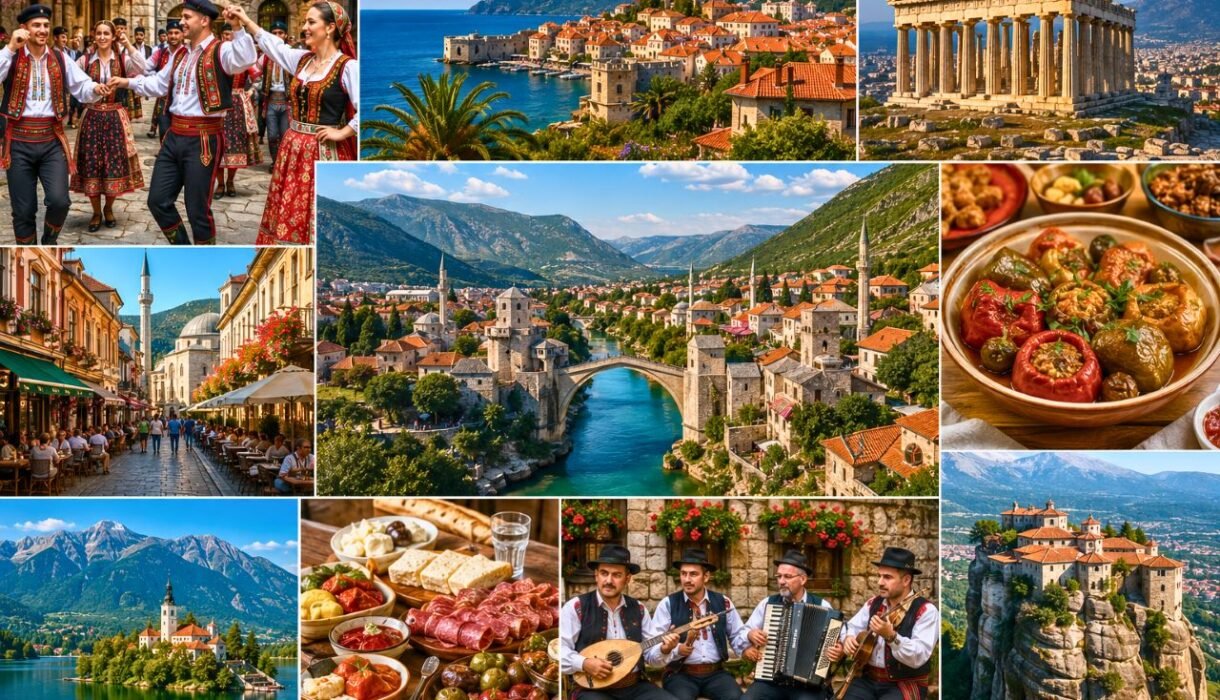

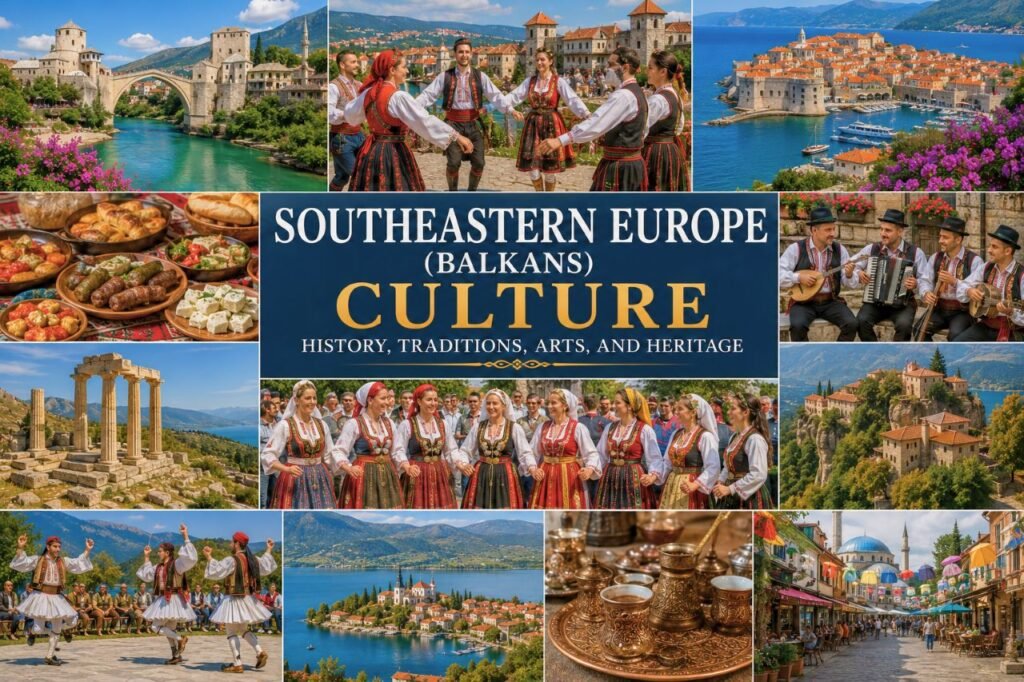
Southeastern Europe (Balkans) Culture: History, Traditions, Arts, and Heritage.
The Culture of Southeastern Europe—frequently known as the Balkans—is a captivating tapestry woven from the convergence of ancient Illyrian, Thracian, Greek, Roman, Byzantine, Slavic, and Ottoman civilizations. Encompassing nations such as Greece, Albania, Bulgaria, Romania, Serbia, Croatia, Bosnia and Herzegovina, Montenegro, North Macedonia, Slovenia, and Kosovo, this geographic crossroads connects Central Europe with the Mediterranean and the Near East. Characterized by unmatched hospitality, polyphonic music traditions, vibrant folk festivals, and a rich culinary heritage, Southeastern European society embodies an enduring spirit of resilience, community warmth, and deep historic pride.
History & Origins
Southeastern Europe’s past is defined by pivotal imperial encounters, trade route intersections, and rich ancestral roots.
- Ancient Foundations & Classical Antiquity: Ancient Greek city-states, along with Thracian and Illyrian tribes, laid early intellectual, artistic, and trade foundations across the region. The Roman Empire later integrated the entire peninsula, building historic roads (like the Via Egnatia) and coastal ports.
- Slavic Migrations & Byzantine Influence: In the 6th and 7th centuries, Slavic tribes settled across the Balkans, interacting with the Byzantine Empire. Byzantium introduced Eastern Orthodox Christianity, monastic art, and liturgical traditions that profoundly shaped local spirituality and architecture.
- The Ottoman Era & Syncretism: From the 14th to the 19th centuries, the Ottoman Empire governed much of the Balkan peninsula. This five-century period introduced Islamic traditions, Ottoman architectural styles (such as stone bridges and domed baths), Turkish coffee culture, and distinct oriental culinary influences, blending seamlessly with local folk customs.
- Modern Statehood & Resilience: The 19th and 20th centuries brought national awakenings, independence movements, and political transformations. Despite navigating complex historic conflicts, the peoples of Southeastern Europe preserved their unique regional dialects, folk dances, and sacred heritage.
Culture, Traditions & Customs
Social life in Southeastern Europe revolves around generous hospitality, extended family networks, and lively community gatherings.
- Coffee Culture (Kafa / Kahve / Kafe): Sipping finely ground, unfiltered coffee brewed in small copper pots (džezva) is an iconic daily ritual. Coffee time is an invitation to pause, socialize, and engage in unhurried conversation for hours.
- Slava & Patron Saint Festivities: Unique to Serbian Orthodox culture, the Slava is an intangible cultural heritage tradition where families honor their specific patron saint with symbolic bread (Slavski kolač), cooked wheat (Žito), candle lighting, and a feast shared with guests.
- Martenitsa / Mărțișor (March 1st): To celebrate the arrival of spring, people across Bulgaria, Romania, Moldova, and North Macedonia exchange red-and-white woven threads (Martenitsa or Mărțișor) worn on clothing until the first budding trees or migratory birds are spotted.
- Kurentovanje & Kukeri Festivals: Ancient pre-Christian spring-welcoming carnivals in Slovenia (Kurenti) and Bulgaria (Kukeri), where villagers wear elaborate wooden masks and heavy sheepskin costumes, ringing cowbells to ward off winter and evil spirits.
Languages & Communication
Language Families
The linguistic spectrum of Southeastern Europe includes three distinct Indo-European branches:
- South Slavic Languages: Divided into Western South Slavic (Slovenian, Croatian, Bosnian, Serbian, Montenegrin) and Eastern South Slavic (Bulgarian, Macedonian). Serbian, Bosnian, and Montenegrin use both Cyrillic and Latin alphabets.
- Hellenic Branch: Modern Greek, carrying an unbroken literary tradition stretching back thousands of years.
- Albanian Branch: An independent branch of the Indo-European language family with ancient Illyrian origins, written in the Latin alphabet.
- Romance Branch: Romanian, derived from Vulgar Latin spoken in the ancient Roman province of Dacia, enriched with Slavic vocabulary.
Communication Style
Balkan communication is expressive, passionate, and open. Emotional warmth, directness, and humor are central to social interactions. Guests entering a home are treated with highest honor, usually welcomed instantly with homemade spirits, coffee, and regional sweets.
Geography
Southeastern Europe is characterized by rugged mountain ranges, pristine coastlines, and major river valleys.
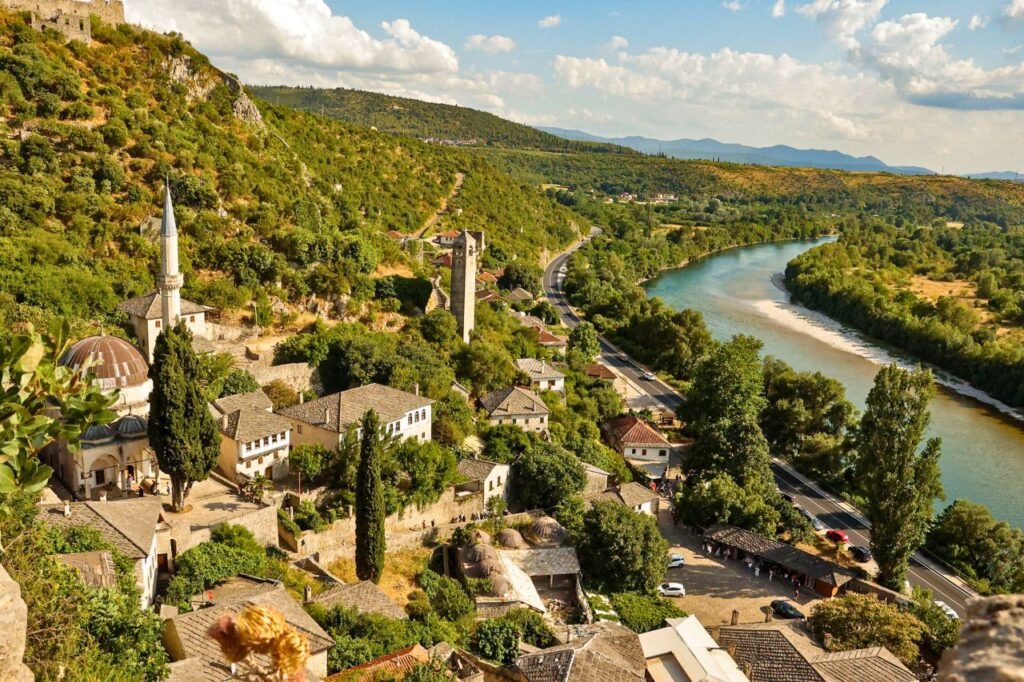
- Mountain Chains: The Balkan Mountains (Stara Planina), the Dinaric Alps, the Rila and Pirin ranges, and the Pindus Mountains form a dramatic topography of alpine lakes, deep river canyons, and ancient pine forests.
- Coastlines & Waterways: Features the stunning turquoise coastlines of the Adriatic, Ionian, Aegean, and Black Seas, alongside major river corridors like the Danube, Sava, and Vardar.
Economy
The Balkan region combines traditional agricultural excellence with expanding tourism, renewable energy, and digital technology hubs.
- Agriculture & Viticulture: Renowned for olive oil production, winemaking (featuring ancient grape varieties like Plavac Mali, Mavrud, and Vranac), organic honey, rose oil (Bulgaria’s Valley of the Roses), and livestock farming.
- Eco-Tourism & Coastlines: Pristine coastal beaches, historical UNESCO towns (Ohrid, Kotor, Mostar, Dubrovnik), and mountain ski resorts attract millions of global travelers annually.
Politics
Southeastern European nations function as democratic parliamentary or semi-presidential republics, actively integrating into wider European structures.
- European Integration: Several Balkan states are full European Union members (Greece, Bulgaria, Romania, Croatia, Slovenia), while others are active candidate nations engaged in regional economic cooperation.
- Regional Alliances: Collaborative initiatives focus on cross-border infrastructure, environmental conservation, and cultural heritage preservation.
Ethnic Groups
Southeastern Europe is celebrated for its dynamic demographic diversity:
- Core Regional Peoples: Greeks, Albanians, Romanians, Bulgarians, Serbs, Croats, Bosniaks, Slovenians, Macedonians, and Montenegrins.
- Ethnic Minorities: Includes significant Roma communities, Turks, Aromanians (Vlachs), and Torbeshi, each contributing unique musical, culinary, and linguistic elements to the regional mosaic.
Beliefs & Values
Religious Pluralism
Southeastern Europe is a historic meeting ground of major world faiths coexisting in shared urban spaces:
- Eastern Orthodoxy: Mainstream faith across Greece, Bulgaria, Romania, Serbia, Montenegro, and North Macedonia, reflected in historic monasteries with golden frescoes.
- Islam: Practiced widely in Albania, Bosnia and Herzegovina, Kosovo, and parts of Bulgaria, featuring elegant Ottoman mosques and Sufi lodges (Tekkes).
- Roman Catholicism: Deeply rooted in Croatia and Slovenia.
Core Values
- Family & Neighborhood Solidarity (Komšiluk): Neighborly connection (Komšiluk) represents a sacred duty of mutual aid, daily social visits, and shared celebrations.
- Resilience & Passion for Life (Meraq / Sevdah): A cultural philosophy emphasizing deep emotional expression, enjoying the present moment, and overcoming adversity through song, humor, and community.
Food & Cuisine
Balkan cuisine is a delicious fusion of Mediterranean freshness and hearty Ottoman-style grilling.
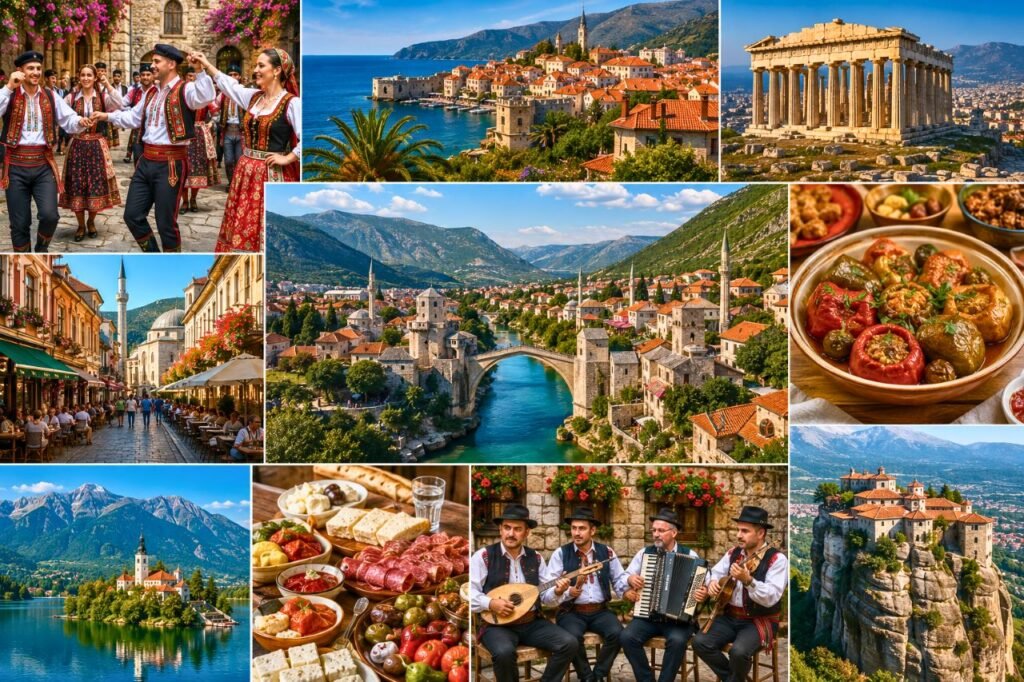
- Iconic Regional Staples:
- Ćevapi / Ćevapčići: Grilled minced meat sausages served inside flatbread (Somun) with diced onions and Ajvar (roasted red pepper and eggplant spread).
- Burek / Byrek: Flaky, golden phyllo pastry filled with minced meat, farmer’s cheese, spinach, or potatoes.
- Sarma: Vine or sauerkraut leaves stuffed with spiced rice and minced meat, slow-cooked in earthenware pots.
- Greek Moussaka & Gyros: Layers of eggplant, spiced meat, and creamy Béchamel, alongside pita wrapped with flame-roasted meats and tzatziki.
- Traditional Beverages: Rakija (or Tsipouro / Raki), a potent fruit brandy distilled from plums, grapes, or quinces, served as a gesture of welcome.
Clothing & Symbols
Traditional Attire
Balkan folk attire (Narodna Nošnja) exhibits exquisite textile artistry, silver filigree jewelry, and distinct regional embroidery patterns.
- Embroidery & Leatherwork: Features dark felt vests (Jelek), embroidered linen shirts, woven wool aprons, and turned-up leather footwear (Opanci).
- Cultural Symbols: The Doubled-Headed Eagle, intricate filigree metalwork, and geometric woven kilim motifs (Pirot and Chiprovtsi rugs).
Music, Dance & Art
- Polyphonic Singing & Folk Instruments:
- Balkan Polyphony: UNESCO-recognized ancient multi-part vocal harmonies, such as the Bistritsa Babi in Bulgaria and Albanian Iso-Polyphony.
- Traditional Instruments: The Guzla (single-stringed fiddle), Gaida (bagpipe), Kaval (flute), and lively brass bands (Trubači).
- Traditional Circle Dance (Kolo / Horo): A fast-paced, rhythmic circle dance where community members hold hands or belts, performing intricate footwork at weddings, harvests, and national holidays.
- Architectural Heritage: Famed for Ottoman stone bridges (like Mostar’s Stari Most), Byzantine monastic frescoes, and coastal Venetian stone architecture.
Summary
Southeastern Europe (Balkans) Culture stands as an extraordinary celebration of human resilience, culinary mastery, musical innovation, and rich historical synthesis. By holding fast to family hospitality, preserving folk arts, and honoring its diverse spiritual heritage, the Balkan peninsula offers a profound lesson in cultural richness and enduring community bonds.
At Best Culture Insight, we see culture as the heartbeat of every society – the way people live, connect, and express their identity.