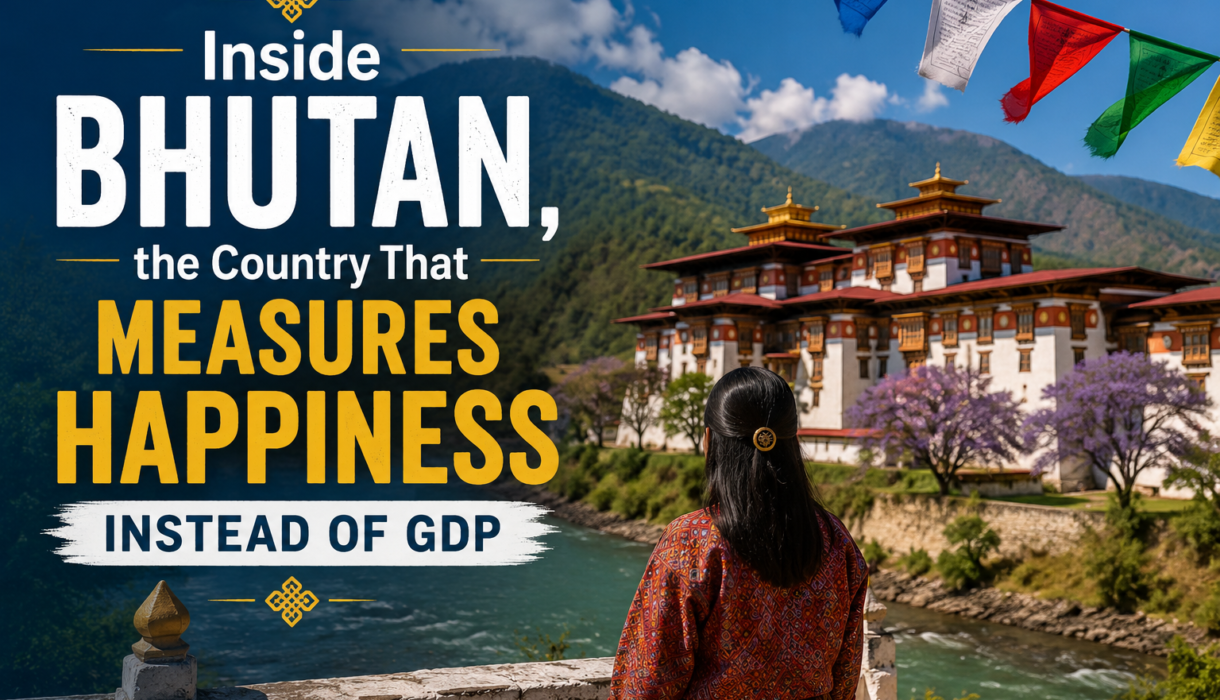

Tucked away in the eastern Himalayas, the Kingdom of Bhutan has long captivated the world by charting an entirely unique course toward national progress. In 1972, the fourth King of Bhutan famously declared that “Gross National Happiness is more important than Gross Domestic Product”. While most of the modern world evaluates national success strictly through financial metrics, economic growth, and industrial output, Bhutan operates on a philosophy where human well-being, environmental health, and cultural preservation take center stage. This holistic vision has turned the small, landlocked nation into a global beacon for sustainable development and mindful governance.
The Four Pillars of Gross National Happiness
Bhutan’s development strategy is far more than a idealistic motto; it is a structured, policy-driven framework known as Gross National Happiness (GNH). The entire philosophy rests upon four core pillars: sustainable socio-economic development, cultural preservation, environmental conservation, and good governance. Under these pillars, the government ensures that economic projects do not compromise traditional arts, community bonds, or spiritual life. By evaluating national initiatives through these lenses, Bhutan balances modern conveniences like healthcare and education with the non-material needs of its citizens.
A Green Haven of Environmental Conservation
Environmental stewardship is perhaps the most visible output of Bhutan’s happiness framework. The country’s constitution mandates that a minimum of 60 percent of its total land area must remain forested for all future generations—a target it currently exceeds with over 70 percent forest cover. Thanks to its vast, untouched forests and commitment to clean hydropower, Bhutan holds the extraordinary distinction of being one of the world’s few carbon-negative nations. This deep-seated respect for nature ensures that economic endeavors, such as regulated tourism and infrastructure, never come at the expense of ecological balance.
How Happiness Is Actually Measured
Measuring collective happiness might sound subjective, but Bhutan accomplishes this through a rigorous, scientific survey system. The Centre for Bhutan and GNH Studies regularly surveys citizens across nine key domains, including psychological well-being, health, time use, community vitality, and living standards. The gathered data shapes national policy, determining where government funding should be directed to improve citizen lives. If a proposed law or business venture threatens community balance or ecological health, it is rejected by the GNH Commission regardless of its potential financial payout.
Lessons for the Modern World
While Bhutan still navigates modern challenges such as youth employment and global economic shifts, its core model offers a powerful lesson to a hyper-capitalist world. It proves that economic growth and societal well-being do not have to be mutually exclusive. By prioritizing harmony over continuous expansion and human fulfillment over material accumulation, Bhutan presents a compelling blueprint for how nations can flourish sustainably without losing their soul.