
Situated at the geographic center of Eastern Europe, Belarus possesses a deeply evocative, resilient, and distinct culture. The Belarusian people (Belarusy), historically referred to as White Rus’ or White Russians, have preserved a rich ethnic identity despite centuries of geopolitical turbulence.
Belarusian culture is a fascinating blend of ancient Slavic pagan roots, grand medieval European heritage, Soviet architectural industrialism, and a modern, quiet endurance. Anchored by a deep connection to their massive, primeval forests and wetlands, the Belarusian people have maintained a gentle, hospitable, and deeply reflective worldview centered on community and folklore.
History & Origins
The historical journey of Belarus is defined by its strategic position as a bridge between the East and the West.
[East Slavic Krivichy Tribes]➔[Kievan Rus & Polotsk Principalities]➔[Grand Duchy of Lithuania]➔[Russian Empire & Soviet Union]➔[Independent Sovereign Nation]
- Ancient Slavic Cradle: The ethnogenesis of the Belarusian people trace back to East Slavic tribes—the Krivichy, Radimichy, and Dregovichi—who populated the region in the first millennium. The Principality of Polotsk emerged as an early center of power and literacy by the 10th century.
- The Golden Medieval Age: From the 13th to the 18th centuries, the Belarusian lands formed the cultural and demographic core of the Grand Duchy of Lithuania. Old Belarusian was the official chancellery language of the state. It was during this era that Francysk Skaryna, a native of Polotsk, translated and printed the Bible into an early form of Belarusian in 1517, making it one of the earliest printed books in Eastern Europe.
- Imperial Absorption and the Soviet Era: Following the partitions of the Polish-Lithuanian Commonwealth, Belarus was absorbed into the Russian Empire. It suffered catastrophic human and material loss during World War I and World War II, losing approximately one-third of its population under Nazi occupation. As a founding republic of the Soviet Union (BSSR), it transformed into an industrial and technological powerhouse before achieving full independence in 1991 following the collapse of the USSR.
Culture, Traditions & Customs
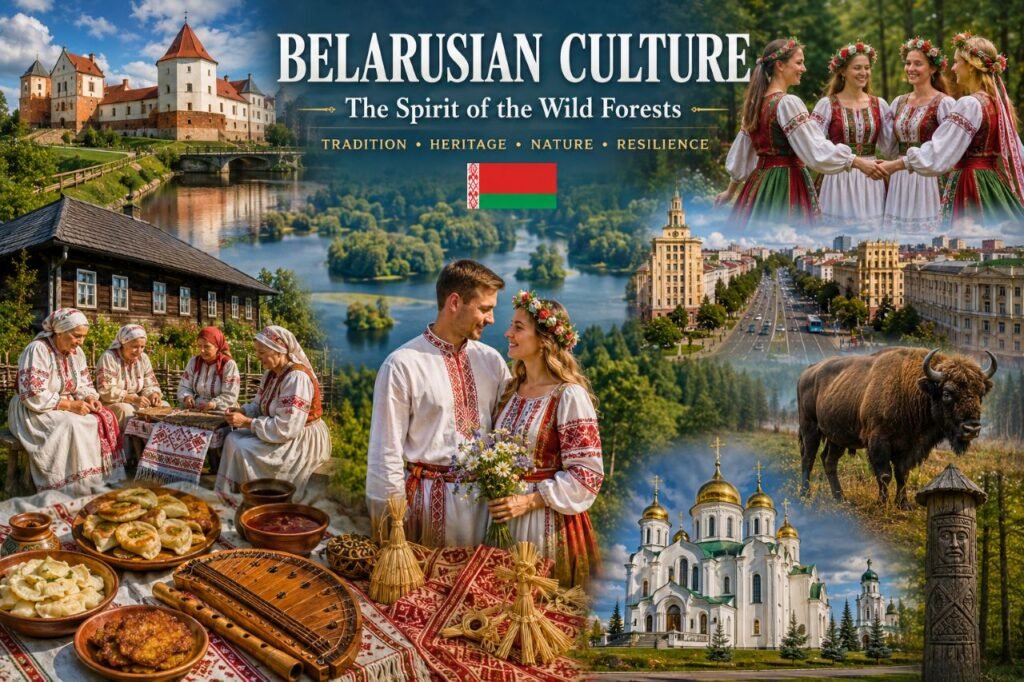
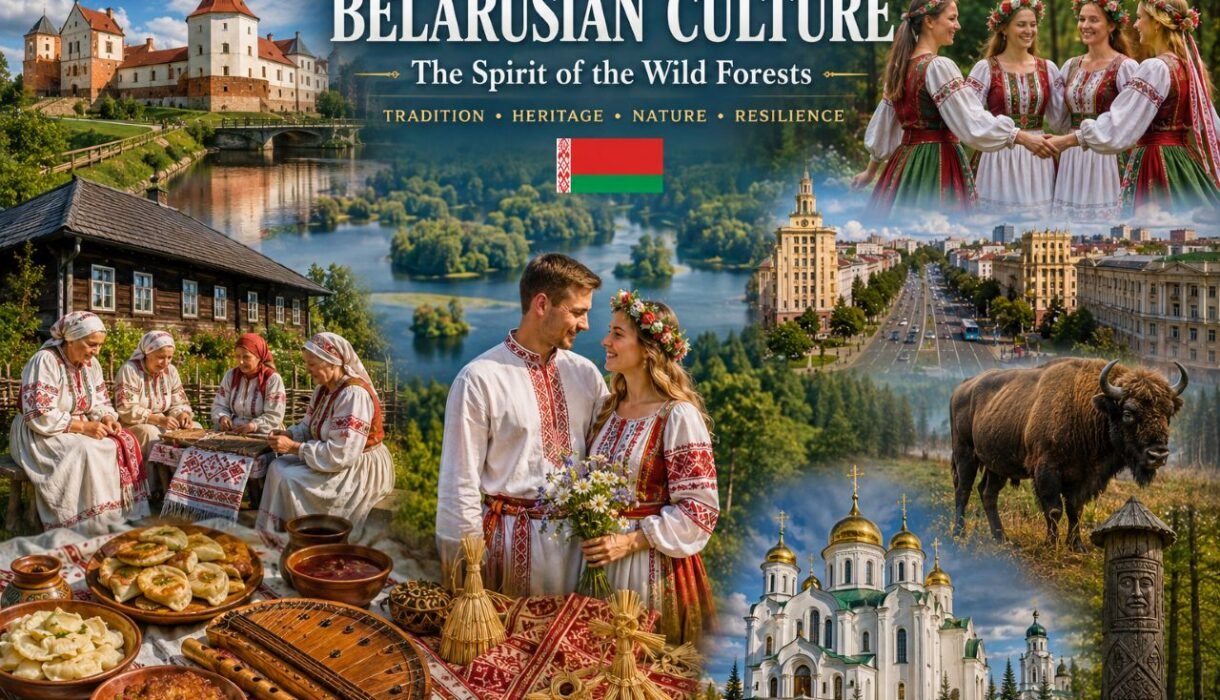
Belarusian culture, traditions and landscapes
Marriage & Rites of Passage
Traditional Belarusian weddings (viasilla) are highly symbolic, theatrical rituals deeply tied to ancestral blessings. Before the ceremony, the groom must complete the vykup niavysty (bride price), performing humorous tasks set by the bride’s friends to win entry into her house. The ultimate rite of passage involves standing on a rushnyk—a traditional hand-woven embroidered towel. The first partner to step on the towel is traditionally expected to be the head of the household.
Festivals & Seasonal Customs
- Kupalle (Kupala Night): Celebrated on the night of July 6–7, this ancient, mystical midsummer festival blends pagan fertility rites with the feast of St. John the Baptist. Young women weave floral wreaths and float them down rivers to divine their romantic fortunes, while brave youths leap over large bonfires to cleanse themselves of evil spirits and search the deep forests for the mythical glowing fern flower (paparac-kvietka), which promises true wisdom.
- Kaliady: The traditional winter solstice festival, later integrated into Christmas. Groups of carolers dressed as folkloric animals (such as goats, bears, and storks) go from house to house singing kaliadki, bringing blessings of prosperity in exchange for treats.
Languages & Communication
Belarus is officially a bilingual nation, recognizing both Belarusian (Bielaruskaja mova) and Russian (Russkiy yazyk).
Linguistic Dynamics
Belarusian belongs to the East Slavic linguistic branch, closely sharing roots with Ukrainian and Russian, though it utilizes a distinct phonetic structure characterized by dzekannie and cekannie (softening of ‘d’ and ‘t’ sounds). While Russian is widely spoken in daily urban life and commerce due to Soviet-era Russification, Belarusian remains a vital symbol of national identity, literature, and cultural heritage. Many rural communities speak Trasianka, a unique mixed linguistic form blending Belarusian grammar with Russian vocabulary.
Proverbs & Expressions
- “Хто не працуе, той не есць.”
Translation: “He who does not work, does not eat.” This classic proverb reflects the core agrarian value of dilligence and shared communal labor.
- “Чалавек чалавеку брат.”
Translation: “Man is a brother to man,” highlighting the deep-seated cultural preference for peace and mutual understanding.
Geography
Often called the “Green Lungs of Europe,” Belarus is a completely landlocked country characterized by flat plains and low hills. Roughly 40% of its territory is blanketed by dense, rich forests. The country boasts over 10,000 lakes and vast networks of winding rivers, including the Dnieper, Pripyat, and Western Dvina.
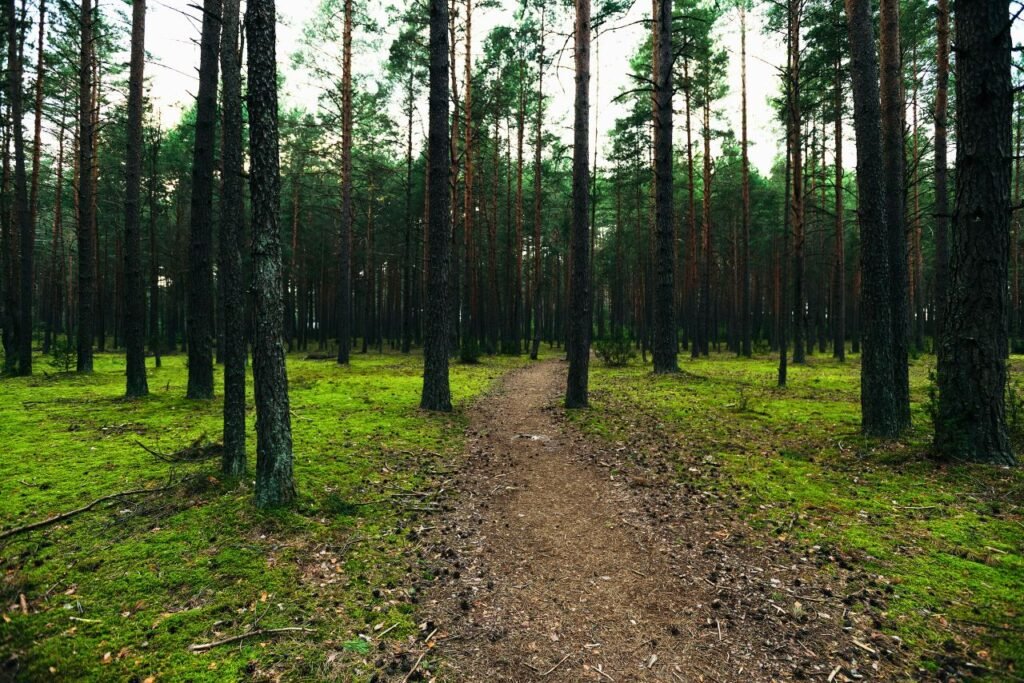
Crucially, it is home to the Białowieża Forest (Belavezhskaya Pushcha), a shared UNESCO World Heritage site with Poland that preserves Europe’s last remaining primeval lowland forest. This ancient ecosystem is the sanctuary of the European bison (zubr), the proud animal symbol of the nation.
Economy
Historically an agrarian society focused on flax, grain, and timber, Belarus developed a powerful manufacturing base during the 20th century. Today, its economy remains distinct in Europe for its high level of state management.
Core economic drivers include heavy industrial machinery (manufacturing massive BelAZ mining trucks and Belarus tractors), large-scale chemical and fertilizer production, and agricultural exports. Additionally, the country cultivated a highly sophisticated information technology sector centered around the Belarus High Tech Park in Minsk, which birthed globally recognized digital brands.
Politics
Belarus is a presidential republic with a highly centralized authority structure. Since 1994, the nation has been governed under the leadership of President Alexander Lukashenko. The political system features a bicameral parliament—the National Assembly—composed of the House of Representatives and the Council of the Republic. Geopolitically, Belarus maintains exceptionally close economic, military, and cultural ties with the Russian Federation through a unique supranational entity known as the Union State.
Ethnic Groups
The population exhibits a high degree of ethnic cohesion. Approximately 84% of the population identifies as ethnically Belarusian.
Due to historical border shifts and migrations, the country hosts notable historic minority communities, including Russians (around 8%), Poles (3%, predominantly settled in the western regions of Hrodna and Brest), and Ukrainians (1.7%). Historically, Belarus was also a major hub of European Jewish culture, though this population was drastically reduced during the Holocaust.
Beliefs & Values
Religious Landscape
The religious worldview of Belarus is anchored by Eastern Orthodox Christianity, which encompasses roughly 70–80% of believers. Due to its historical ties to the Grand Duchy of Lithuania and Poland, the western regions harbor a vibrant and influential Roman Catholic minority (around 10–15%). Pockets of Protestants, Muslims (Lipka Tatars), and Jews add to the spiritual mix.
Core Worldview
The defining moral values of Belarusian culture are peace-loving humility (pamyrnasc), endurance (ciarplivasc), and a profound respect for nature. Living at the crossroads of devastating historical invasions, the Belarusian people developed a collective mindset focused on survival, preservation, and a rejection of conflict, often summarized in the common cultural phrase: “Aby nie bylo vajny” (“As long as there is no war”).
Food & Cuisine
Belarusian cuisine (Bielaruskaja kuchnia) is a hearty, earthy culinary tradition built entirely around local cold-weather ingredients: potatoes, mushrooms, pork, rye flour, sour cream, and forest berries.
The Spud Standard: The potato is so universally loved and central to the diet that Belarusians are affectionately nicknamed Bulbašy (“potato people”).
- Draniki: The undisputed king of the Belarusian table. These are shallow-fried potato pancakes made from finely grated raw potatoes, onions, and eggs, fried until golden-crispy on the edges and soft in the middle. They are traditionally served hot with thick dollops of sour cream (smiatana) or a rich pork gravy called machanka.
- Kalduny: Small, delicate potato or flour dumplings stuffed with seasoned minced meat or wild forest mushrooms.
- Kvas & Krambambula: Traditional beverages include Kvas (a fermented drink made from rye bread) and Krambambula, a historic spiced honey liqueur dating back to the grand nobility days of the Grand Duchy.
Clothing & Symbols
The Rushnyk and Traditional Attire
Traditional Belarusian clothing features durable white linen shirts and tunics embellished with complex geometric red embroidery.
The cornerstone of material culture is the rushnyk—a long, hand-woven linen towel decorated with red symbols. These towels are not merely decorative; they serve as protective amulets used during births, weddings, and funerals to protect the home from negative spiritual energies.
Symbology of the National Flag
The national flag consists of a broad red horizontal stripe over a green horizontal stripe. Running along the hoist side is a vertical white band displaying a traditional Belarusian red ornamental pattern, designed in 1917 by local weaver Matrona Markevich. The red represents the blood of the nation’s defenders, green symbolizes the endless forests and fields, and the pattern represents ancestral continuity, labor, and spiritual fortune.
Music, Dance & Art
Folk Music and Sacred Chants
Belarusian musical heritage features unique choral traditions, including polyphonic spring calls (hukanne viasny) and archaic Orthodox liturgical chants. Traditional instruments include:
- Duda: A unique Belarusian bagpipe made of animal hide, historically used in pagan rituals and folk celebrations.
- Cymbaly: A hammered dulcimer played with small wooden mallets, providing a bright, rhythmic cascade of sound for community dances.
The Art of Straw Weaving
Belarusian straw weaving (Salomaplacenne) is recognized on the UNESCO Intangible Cultural Heritage list. Artisans transform humble grain straw into intricate, shimmering gold crowns, animal figurines, and geometric mobiles called spiders (pavuki), which are hung in homes to catch bad luck. In modern fine art, Belarus is celebrated as the birthplace of avant-garde masters like Marc Chagall, who immortalized his native town of Vitebsk in world-famous modernist paintings.
Summary
The culture of Belarus is an enduring testament to the power of memory and natural harmony. By safeguarding their distinct language, their comforting, potato-based culinary arts, and the ancient red geometric patterns woven into their linen, the Belarusian people have protected a vibrant identity against immense historical currents. Surrounded by pristine lakes and ancient primeval forests, they continue to look toward the future with a quiet dignity, reminding the world of the profound beauty found in peace, humility, and ancestral roots.
At Best Culture Insight, we see culture as the heartbeat of every society – the way people live, connect, and express their identity.