The Rhythm of Resilience: A Deep Journey Into Cuba Culture
Posted in :

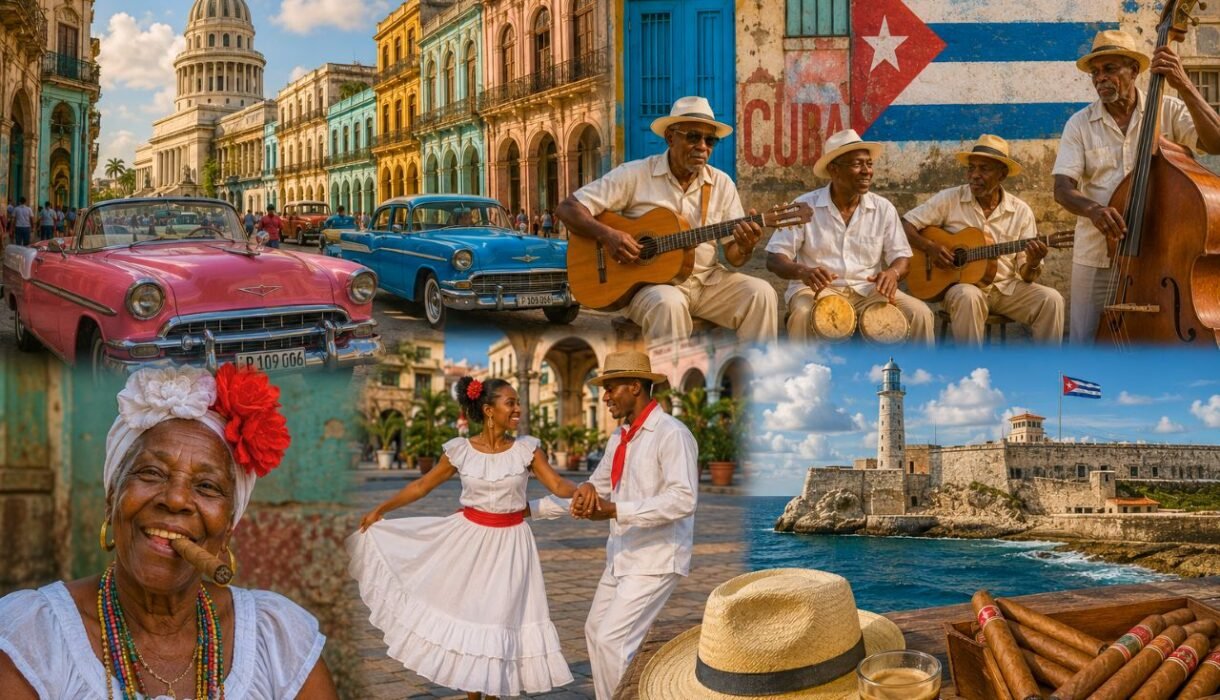
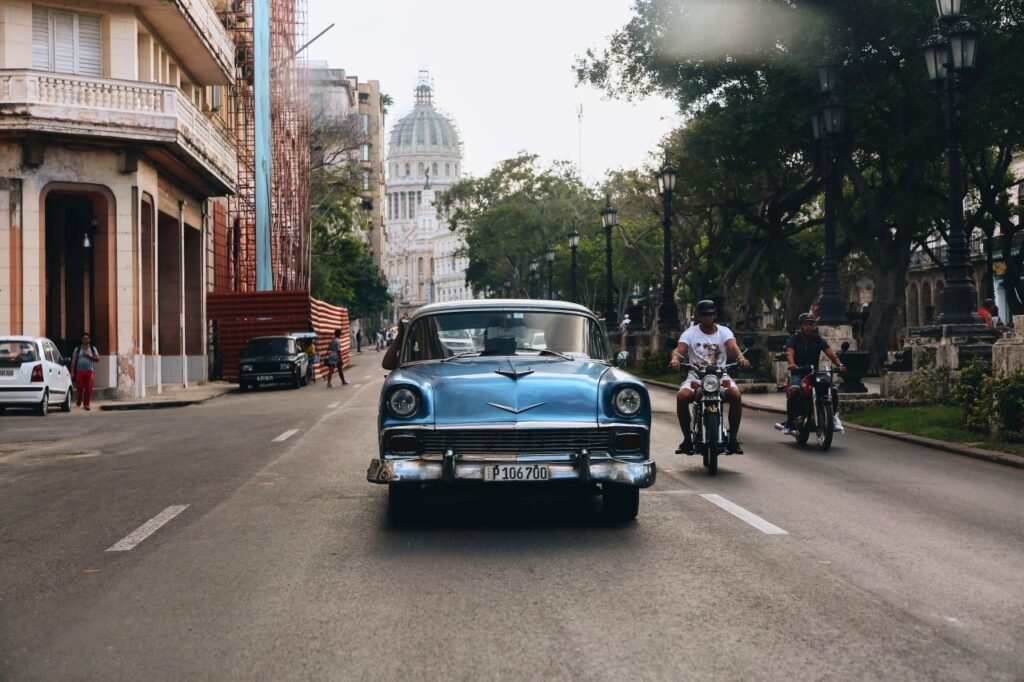
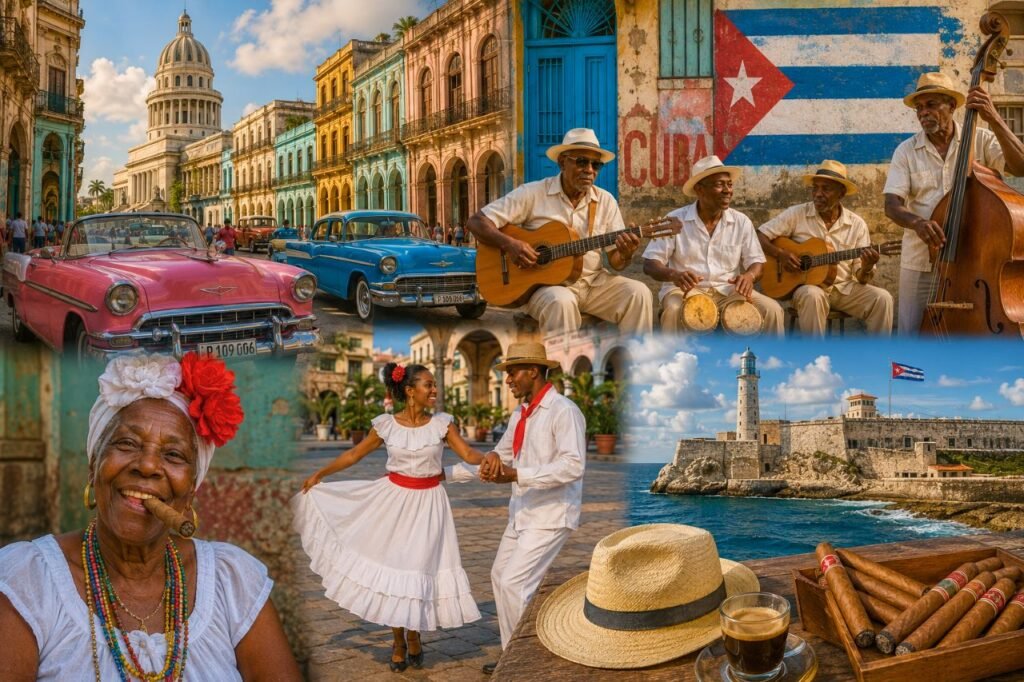
Floating strategically at the intersection of the northern Caribbean Sea, the Gulf of Mexico, and the Atlantic Ocean, the archipelago of Cuba is the largest island nation in North America’s Caribbean region. Often described as a living time capsule, Cuba’s cultural footprint is massive, extending far beyond its signature pastel-colored colonial facades, rolling mid-century vintage American cars, and world-renowned tobacco fields.
To truly understand the people of Cuba—known as Cubanos—is to meet an exceptionally passionate, highly literate, and deeply resourceful society. Faced with decades of geopolitical isolation and material scarcity, Cubans have mastered the art of inventiva (creative problem-solving). Their identity is not a passive blending, but a highly electric fusion of Spanish colonial structures, deep West African spiritual traditions, and a fierce, post-revolutionary national pride.
History & Origins
The historical evolution of Cuba is a dramatic narrative of conquest, forced migration, and revolutionary transformation. Long before European exploration, the island was home to indigenous Amerindian societies, predominantly the Taíno and Ciboney peoples, who practiced advanced agriculture and seafaring.
The Colonial Era and African Influx
Christopher Columbus claimed the island for Spain in 1492, calling it “the most beautiful land human eyes have ever seen.”
- The Sugar and Tobacco Boom: As Spanish colonizers established massive sugarcane and tobacco plantations, the indigenous population was tragically devastated by European diseases and forced labor.
- The Transatlantic Shock: To fill the massive labor vacuum, Spain forcibly imported hundreds of thousands of enslaved West Africans, primarily from the Yoruba, Igbo, and Congolese communities. These individuals brought complex spiritual worldviews, highly advanced polyrhythmic musical structures, and unique linguistic idioms.
Independence and Revolution
Unlike much of Latin America, Cuba remained a Spanish colony until the late 19th century, gaining independence after the Spanish-American War of 1898. Following decades of deep economic dependency on the United States and stark social inequalities, the course of the nation changed permanently on January 1, 1959.
Led by Fidel Castro, the Cuban Revolution overthrew the US-backed dictatorship of Fulgencio Batista, establishing the first socialist state in the Western Hemisphere and reshaping the country’s social, economic, and cultural policies for generations to come.
Culture, Traditions & Customs
The Core of the Family and Community Solidarity
In Cuban society, family forms the absolute emotional and structural bedrock of daily life. Due to historical housing shortages, multi-generational households are the norm rather than the exception. Grandparents, parents, and children routinely share intimate living spaces, leading to incredibly close-knit family bonds and a natural system of shared childcare.
Beyond blood relations, the concept of neighborhood solidarity is powerful; vecinos (neighbors) function as an extended family network, freely borrowing ingredients, sharing scarce resources, and keeping watch over one another’s homes.
Life-Cycle Milestones and Vibrant Festivals
- La Quinceañera: The absolute pinnacle of life-cycle celebrations in Cuba is a young girl’s 15th birthday. This historic rite of passage marks her transition into womanhood, celebrated with elaborate, highly stylized photo shoots around historic cities, grand choreographed waltzes, and community feasts.
- The Carnivals of Santiago de Cuba: Held annually in July, this is the country’s oldest and most explosive festival. Born originally from the holidays granted to enslaved workers during the colonial era, it features massive street processions filled with comparsas (neighborhood carnival dance troupes), towering conga drums, and intense brass bands.
Languages & Communication
Spanish is the official language of Cuba, but it is spoken with a highly distinct Caribbean flavor. Cuban Spanish is characterized by its exceptionally fast-paced delivery, the frequent dropping of the final “s” sounds from words, and a melodic, highly animated cadence accompanied by expressive hand gestures.
The language has been deeply influenced by African vocabulary, particularly from the Lucumí (Yoruba-derived) liturgical tongue used in spiritual practices, as well as distinct maritime and revolutionary terms.
Popular Cuban Expressions and Proverbs:
- “¿Qué bolá?” – The ultimate, universal Cuban slang greeting, translating closely to “What’s up?” or “How are things?”
- “Resolver” – A foundational cultural verb meaning to overcome an obstacle, fix a broken item, or find a creative loophole using whatever scarce materials are on hand.
- “No te dejes meter gato por liebre” – Do not let them sell you a cat instead of a hare (A classic warning to stay sharp and avoid being cheated or deceived).
- “El que no tiene de inga, tiene de mandinga” – He who does not have European ancestry has African ancestry (A famous national phrase highlighting that all Cubans share a deeply mixed, multi-ethnic heritage).
Geography
Occupying a highly commanding position at the mouth of the Gulf of Mexico, Cuba is a long, narrow island frequently compared to the shape of an alligator (El Caimán). The landscape is a spectacular blend of natural topographies:
[ The Landscapes of Cuba ]
┌─────────────────────────┬─────────────────────────┬─────────────────────────┐
│ The Coastal Keys │ The Fertile Valleys │ The Rugged Highlands │
│ Low-lying coral islets │ Flat plains dominated by│ Dense mountain chains │
│ like Cayo Coco featuring│ mogotes (limestone │ like the Sierra Maestra,│
│ pristine white beaches │ hills) and premium │ the historic birthplace │
│ and turquoise lagoons. │ tobacco agriculture. │ of national revolutions.│
└─────────────────────────┴─────────────────────────┴─────────────────────────┘
The interior is sliced by fertile agricultural plains, notably the Viñales Valley, a UNESCO World Heritage site famous for its unique limestone karst hills (mogotes) and rich red soils optimized for harvesting the world’s finest cigar tobacco. The island enjoys a warm tropical climate, tempered constantly by refreshing trade winds but occasionally challenged by intense Atlantic hurricane seasons.
Economy
Cuba operates under a highly distinct, state-dominated socialist economic framework. Following the fall of the Soviet Union in 1991, the island entered a severe economic crisis known as the Período Especial (Special Period), forcing the nation to diversify away from pure sugar exports.
Today, international tourism is a massive economic driver, drawing millions of global travelers to its pristine beaches and historic cities. The second primary source of national income is the export of professional services, notably sending highly trained Cuban medical brigades to developing nations worldwide.
Furthermore, the state produces world-class luxury boutique exports, specifically premium Habanos cigars and premium aged rums, alongside a growing, tightly regulated domestic private sector (cuentapropistas) running local restaurants, guest houses, and artisan shops.
Politics
Cuba is a constitutionally defined socialist republic, guided politically by a single-party system led by the Communist Party of Cuba (PCC). The state architecture is built around the National Assembly of People’s Power, which elects the President, who serves as the head of state and government.
The domestic political landscape remains profoundly shaped by the legacy of the 1959 Revolution, maintaining state control over key industries, national media, and public utilities. Internationally, Cuban politics has been defined for over sixty years by its resistance to the stringent United States trade embargo (El Bloqueo), leading the nation to advocate heavily for global anti-imperialism, regional Latin American integration, and climate resilience for island nations.
Ethnic Groups
Centuries of colonial plantation history and transatlantic migration have created a beautifully diverse demographic layout across Cuba’s fifteen provinces:
| Broad Ethnic Group | Estimated Population Share | Historical Lineage & Contribution |
| White / European Descent | ~64.1% | Primarily descended from waves of Spanish settlers (Canarian, Andalusian, and Galician) who arrived throughout the colonial era. |
| Mulatto / Mestizo / Mixed | ~26.6% | Representing generations of deep cross-cultural integration across the island’s urban and rural agricultural zones. |
| Black / African Descent | ~9.3% | Tracing ancestral lineages directly to enslaved West African peoples who preserved the core drum and spiritual rituals. |
Note: Cuba is also home to a historic, influential Chinese-Cuban minority, descended from 19th-century indentured laborers who settled in Havana’s Barrio Chino.
Beliefs & Values
The Dual Spiritual World: Catholicism and Santería
The spiritual identity of Cuba is a fascinating display of religious syncretism. While the island was historically Roman Catholic, the arrival of enslaved West Africans gave rise to Santería (also known as Regla de Ocha). To preserve their ancestral faith under strict Spanish Catholic masters, the Yoruba people cleverly hid their African deities (Orishas) behind Catholic saints:
- Babalu Ayé became syncretized with Saint Lazarus (the patron of healing).
- Yemayá (the goddess of the ocean) became syncretized with the Virgin of Regla.
- Ochún (the goddess of love and rivers) became syncretized with the Virgen de la Caridad del Cobre, who is honored universally as the official Patron Saint of Cuba.
Today, Santería is practiced openly across all racial demographics. It is common to see Iyawós (new initiates into the faith) walking the streets of Havana dressed entirely in sacred, unblemished white garments.
National Moral Values
The baseline moral worldview of a Cuban centers around solidaridad (intense mutual support), a deep pride in their advanced national education and world-class healthcare systems, and a shared artistic love for musical and athletic excellence.
Food & Cuisine
Cuban cuisine—known as Cocina Criolla—is a rich, deeply comforting, and non-spicy culinary tradition that emphasizes slow-cooking methods, savory garlic bases, and fresh local tubers.
The National Dish: Ropa Vieja
The absolute masterpiece of the Cuban kitchen is Ropa Vieja (literally translating to “Old Clothes”). The dish gets its unique name from its shredded appearance, resembling tattered rags:
- The Meat: Flank steak is slow-simmered for hours in a savory broth until it becomes incredibly tender, then meticulously pulled apart into long, thin shreds.
- The Sofrito: The shredded beef is then braised in a rich, highly aromatic sauce built on a foundation of sofrito—a slow-sautéed mix of onions, green bell peppers, copious garlic, crushed tomatoes, cumin, oregano, and splashings of dry white wine, accented with green olives.
Other Essential Culinary Delicacies
- Arroz Congrí (Moros y Cristianos): A staple side dish consisting of black beans and white rice cooked together in the same pot with rendered pork fat, garlic, onions, and cumin, causing the rice to turn a beautiful dark brown color.
- Lechón Asado: Pork marinated in a potent Mojo Sauce (sour orange juice, crushed garlic, salt, and oregano) and slow-roasted over an open fire pit until the skin becomes intensely crispy.
- Tostones: Thick slices of green plantains that are double-fried, smashed flat into small savory rounds, and heavily salted, served warm as a favorite street snack.
Clothing & Symbols
The Guayabera: The Shirt of State
In daily life, Cubans dress in modern, lightweight Western clothing suited for the intense tropical heat. However, the official national garment of Cuba is the Guayabera.
Crafted from breathable white linen or cotton, this iconic, structured shirt features four symmetrical front pockets, two vertical rows of tight pleating (alforzas), and decorative buttons. Worn untucked, the Guayabera is considered highly formal attire; it is legally recognized as the official dress shirt for Cuban diplomats, presidents, and international state functions.
[ The Architecture of the Cuban Flag ]
┌───────────────────────────────────────────────────────────────────────────┐
│ BLUE HORIZONTAL STRIPE │
├───────────────────────────────────────────────────────────────────────────┤
│ WHITE HORIZONTAL STRIPE │
├────────────────────────────────────┬──────────────────────────────────────┤
│ RED TRIANGLE │ BLUE HORIZONTAL STRIPE │
│ (On the hoist side, ├──────────────────────────────────────┤
│ containing a single │ WHITE HORIZONTAL STRIPE │
│ White Lone Star) ├──────────────────────────────────────┤
│ │ BLUE HORIZONTAL STRIPE │
└────────────────────────────────────┴──────────────────────────────────────┘
The primary national symbol is The Lone Star (La Estrella Solitaria), which sits proudly inside a red equilateral triangle on the hoist side of the national flag. The three blue stripes represent the historical military departments of colonial Cuba, the two white stripes symbolize the purity of the independence movement, and the red triangle represents the blood spilled by national heroes. The single white star represents absolute national liberty and sovereignty.
Music, Dance & Art
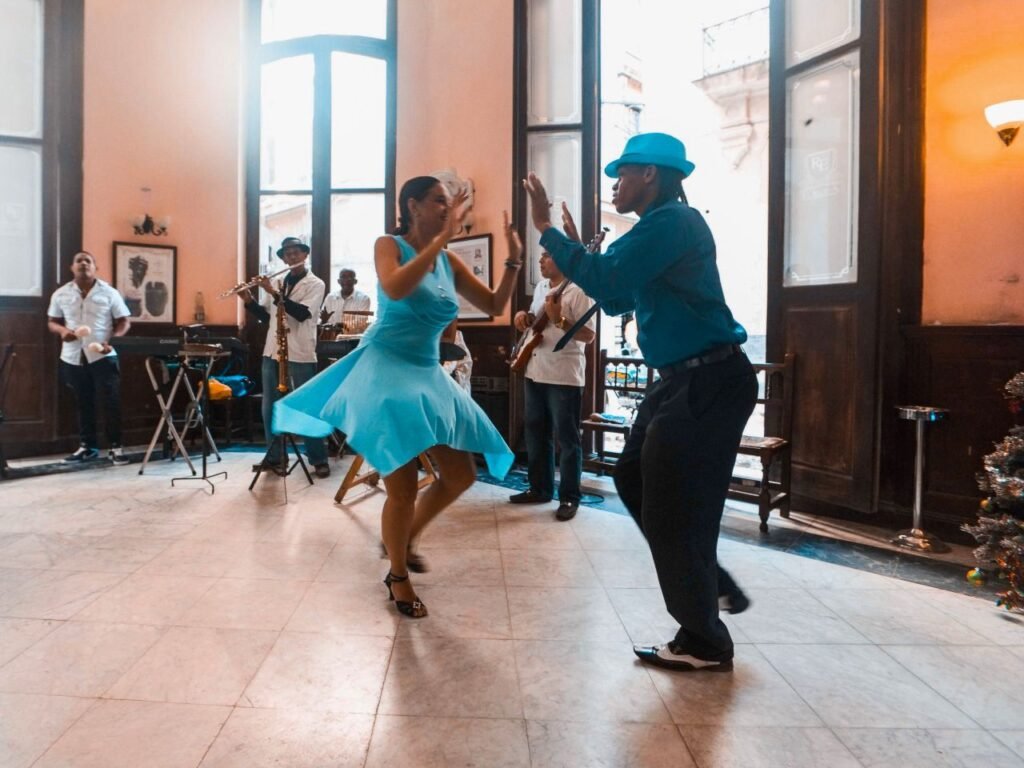
A lively dance performance capturing joy and rhythm in a bustling café with live musicians – Havana, Cuba
The Global Heartbeat of Son and Salsa
Music is the absolute soul of Cuba; it pours out of every open colonial window, street corner, and seaside promenade across the island. The foundational genre of Cuban music is Son Cubano, which beautifully fuses Spanish guitar structures and lyrical poetry with African polyrhythmic percussion. Son achieved massive international acclaim through the legendary masters of the Buena Vista Social Club.
Cuba is the historic birthplace of numerous world-class musical genres and dance styles:
- The Mambo and Chachachá: Fast, stylized ballroom dances that dominated global dance floors in the mid-20th century.
- Salsa and Casino: Modern, hyper-kinetic couple dances defined by intricate, spinning footwork and syncopated breaks.
[ The Percussive Core of Cuban Music ]
┌─────────────────────────┬─────────────────────────┬─────────────────────────┐
│ The Conga Drums │ The Claves │ The Tres Guitar │
│ Large, barrel-shaped │ Two solid wooden sticks │ A unique Cuban guitar │
│ hand drums that deliver │ struck together to drive│ featuring three pairs of │
│ the deep African-derived│ the structural rhythmic │ strings, anchoring the │
│ bass heartbeat. │ timeline (the clave). │ melodic patterns. │
└─────────────────────────┴─────────────────────────┴─────────────────────────┘
Visual Arts and Contemporary Mastery
In the visual arts, Cuba boasts a world-class legacy anchored by the National School of the Arts (ISA) in Havana. Cuban artists are internationally celebrated for their bold graphic printmaking, avant-garde installations, and vibrant murals that offer sharp commentary on contemporary sociology, migration, and Caribbean identity. The street art project Fusterlandia in the Jaimanitas neighborhood of Havana has transformed an entire fishing village into a massive, surreal open-air mosaic masterpiece inspired by Antoni Gaudí and Wilfredo Lam.
Summary
The culture of Cuba stands as a monumental global testament to the enduring power of creative expression and social resilience. By protecting the sacred rhythms of the batá drum, the structured elegance of the Guayabera, and a social network grounded in deep community solidarity, this Caribbean republic has forged one of the most mesmerizing identities in North America. From the nostalgic chords of a acoustic guitar in a shaded plaza to the comforting aroma of a fresh plate of ropa vieja, Cuba continues to captivate the world—proudly preserving its rich cultural diversity and sharing its indomitable spirit.
At Best Culture Insight, we see culture as the heartbeat of every society – the way people live, connect, and express their identity.