Pride and Industry: A Deep Journey Into Barbados Culture
Posted in :

Rising gracefully out of the western Atlantic Ocean as the easternmost jewel of the Lesser Antilles, Barbados is a brilliant cultural power in North America’s Caribbean region. Famously dubbed “Little England” due to more than three centuries of unbroken British colonial administration, the true identity of Barbados runs vastly deeper than its historical colonial structures or its world-renowned, sun-drenched coral beaches. – Barbados culture
To experience Barbados culture is to encounter a highly educated, self-assured, and deeply resilient society. The people, known affectionately as Bajans (pronounced bay-juns), have crafted a distinctive lifestyle centered around a balance of elegant social manners, sharp wit, and a passionate, kinetic artistic expression. Their national identity is an intricate, centuries-old synthesis of West African ancestral traditions, British institutional systems, and a modern, forward-thinking Caribbean consciousness.
History & Origins
The historical foundations of Barbados date back well before European exploration, serving as a vital home to the seafaring Amerindian groups, specifically the Arawaks and Caribs. Portuguese navigators visited the uninhabited island in the 1500s, naming it Os Barbados (“The Bearded Ones”) after the striking, aerial root systems of the native bearded fig trees.
The structural trajectory of the nation changed permanently in 1627 with the arrival of British settlers at Holetown. Unlike neighboring Caribbean islands that repeatedly shifted hands between warring European superpowers, Barbados remained uninterrupted under British rule for 334 years.
- The Sugar Revolution: By the mid-17th century, colonial planters converted the island into a massive, intensive sugarcane plantation economy.
- The Atlantic Influx: To sustain this labor-intensive enterprise, hundreds of thousands of enslaved West Africans were forcibly imported. These individuals brought complex spiritual worldviews, linguistic frameworks, and percussive musical rhythms.
- The Road to Self-Determination: Following the full abolition of slavery in 1834, the emancipated population engaged in a generational struggle for political, economic, and social equality.
Led by national heroes like Errol Barrow, Barbados peacefully achieved full political independence on November 30, 1966. Elevating its journey of self-determination further, the nation transitioned smoothly into a republic on November 30, 2021, removing the British monarch as head of state and installing its own Barbadian President.
Culture, Traditions & Customs
Bajan Hospitality and Life-Cycle Celebrations
Family serves as the emotional bedrock of Bajan society, characterized by strong, multi-generational networks where extended relatives actively share child-rearing duties. Life-cycle milestones—such as infant baptisms, grand church weddings, and traditional “Homegoing” funeral services—are deeply respected community affairs that blend strict Christian liturgy with expansive, lively social receptions.
A central pillar of everyday neighborhood life is the Rum Shop. Found on nearly every country crossroads across the island’s eleven parishes, the traditional Bajan rum shop is much more than a place to drink. It is an essential democratic community hub where people from all walks of life gather to debate international politics, share local news, and engage in high-speed, thunderous matches of Dominoes, slam-banging tiles onto wooden tables with absolute theatrical intensity.
The Peak of Cultural Joy: Crop Over
The absolute pinnacle of the Barbadian cultural calendar is the Crop Over Festival. Originating in the 1780s on colonial plantations to mark the successful harvest of the sugarcane crop, this historic custom has transformed into a spectacular, multi-week national celebration of music, culinary arts, and masquerade.

- The Cohobblopot: A massive cultural stage show featuring the crowning of the King and Queen of Carnival, alongside high-energy musical competitions.
- Grand Kadooment: Held on the first Monday of August, the festival reaches its climax in a spectacular street parade. Thousands of masqueraders organize into elaborate bands, wearing magnificent feathered and beaded costumes that dance across the streets of Bridgetown, celebrating historic liberation and creative genius.
Languages & Communication
While English is the official language utilized in civil government, international commerce, law courts, and the education system, the authentic voice of daily life is Bajan Creole (Bajan Dialect). This vibrant, English-based creole language seamlessly infuses standard English vocabulary with West African grammatical structures, maritime terminology, and highly rhythmic idiomatic phrases. It is characterized by its fast-paced delivery, unique glottal stops, and an inherently poetic, expressive cadence.
Popular Bajan Proverbs and Sayings:
- “Wuh ya gine do?” – A standard, universal colloquial phrase meaning “What are you going to do?”
- “Don’t run down two rabbits” – A wise proverb advising against dividing your attention between two competing goals, which ultimately leads to losing both.
- “Hard ears does make white back” – A classic generational warning meaning that failing to listen to wise counsel will inevitably result in harsh physical or legal consequences.
Geography
Barbados occupies a highly unique geographic position in the Atlantic basin. Unlike its volcanic neighboring islands in the Lesser Antilles, Barbados is a low-lying island formed primarily over millions of years by the steady accretion of ancient coral limestone reefs.
[ The Geographic Zones of Barbados ]
┌─────────────────────────┬─────────────────────────┬─────────────────────────┐
│ The Western Riviera │ The Interior Highlands│ The Scotland District │
│ Calm, translucent waters│ Gently rolling hills │ Rugged, clay-rich soil │
│ and pristine white-sand │ punctuated by intricate │ featuring dramatic, wind-│
│ coral beaches. │ underground limestone │ swept Atlantic wave │
│ │ caverns like Harrison’s.│ cliffs in the northeast.│
└─────────────────────────┴─────────────────────────┴─────────────────────────┘
The island’s landscape is highly scannable: the western and southern coastlines feature calm, crystal-clear turquoise waters and soft sand, while the rugged, clay-dominant Scotland District in the northeast exposes dramatic topography constantly pounded by the wild, untamed rollers of the Atlantic Ocean.
Economy
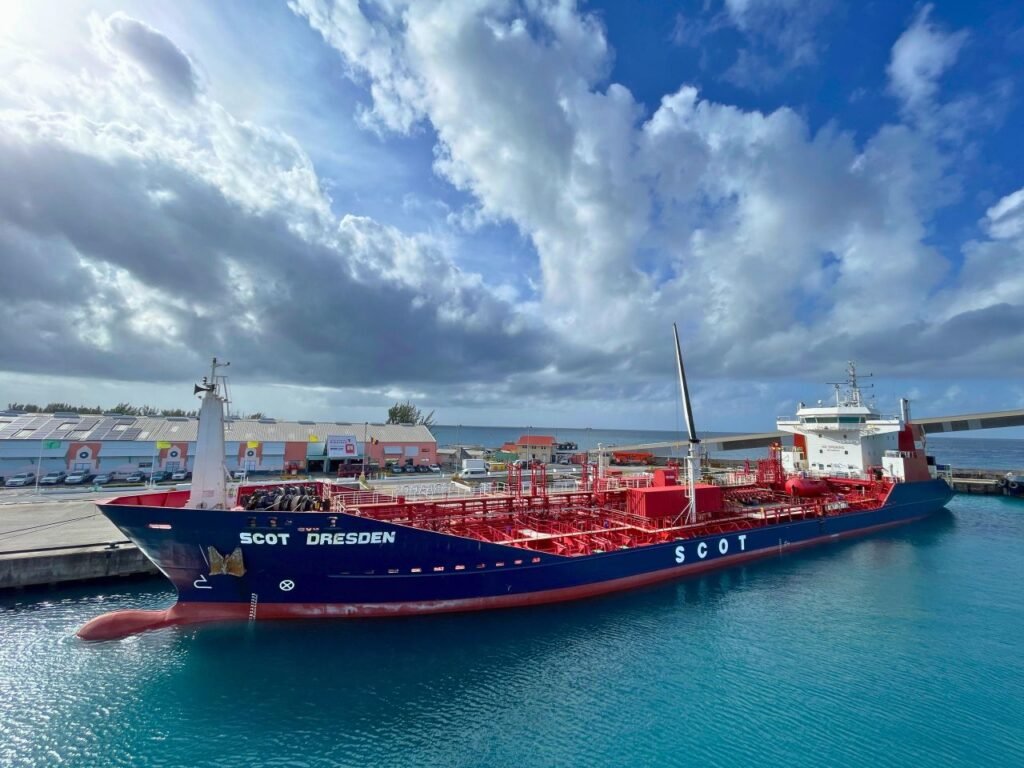
Barbados possesses one of the most prosperous and economically stable development profiles in the Caribbean. Historically dependent on sugarcane cultivation for centuries, the country successfully modernized its economic base through the late 20th century.
A large container ship docked at a vibrant harbor in Barbados under a partly cloudy sky
Today, luxury international tourism and hospitality serve as the primary economic engine, drawing global travelers to its premium resorts. The second pillar consists of international financial services, information technology, and light manufacturing. Furthermore, Barbadian agriculture has adapted to include boutique sugar exports and the manufacturing of premium, world-class aged rums, a spirit that Barbados proudly claims to have invented in 1703.
Politics
Barbados is a stable, highly progressive parliamentary republic. Executive power is exercised by the Prime Minister, who serves as the head of government and leads the Cabinet, drawing political authority from the majority party within the bicameral Parliament. The ceremonial head of state is the President of Barbados.
The nation has maintained an unblemished record of institutional transparency, civil peace, and democratic transitions of power since independence. Bajan political discourse is highly sophisticated, focusing heavily on regional climate advocacy, sustainable green energy transitions, and advanced educational access.
Ethnic Groups
Centuries of transatlantic migration and historical plantation structuring have left a distinct, harmonious demographic footprint across the island:
| Ethnic Group | Population Share | Historical Influence and Footprint |
| African Descent | ~92.4% | The demographic and cultural core of the nation, tracing ancestry directly to West African communities. |
| Mixed / Multiracial | ~3.1% | Representing generations of cross-cultural integration across the modern Caribbean basin. |
| White / Caucasian | ~2.7% | Tracing lineage to original British settlers, plantation managers, and later European expatriates. |
| Other / East Indian | ~1.8% | Includes highly influential communities of East Indian, Syrian, and Lebanese business and merchant families. |
Beliefs & Values
Barbados is a deeply spiritual, structurally conservative society grounded heavily in Christian principles. The country boasts an exceptionally high density of churches per square mile, with the Anglican Church maintaining an influential institutional presence due to its colonial ties, alongside vibrant Pentecostal, Methodist, Moravian, and Seventh-day Adventist congregations.
Sunday remains a strictly respected day of rest, formal dress, and family gatherings across all parishes. Barbadian social values place immense emphasis on mutual respect, politeness, high educational achievement, and an active commitment to civic order. Alongside mainstream Christian denominations, small but culturally vibrant Rastafarian and Muslim communities contribute meaningfully to the country’s diverse spiritual fabric.
Food & Cuisine
Barbadian cuisine—known globally as Bajan cooking—is a deeply aromatic, intensely seasoned fusion of West African culinary methods, British staples, and fresh, tropical maritime ingredients.
Barbados street food and cooking vibes
The National Dish: Cou-Cou and Flying Fish
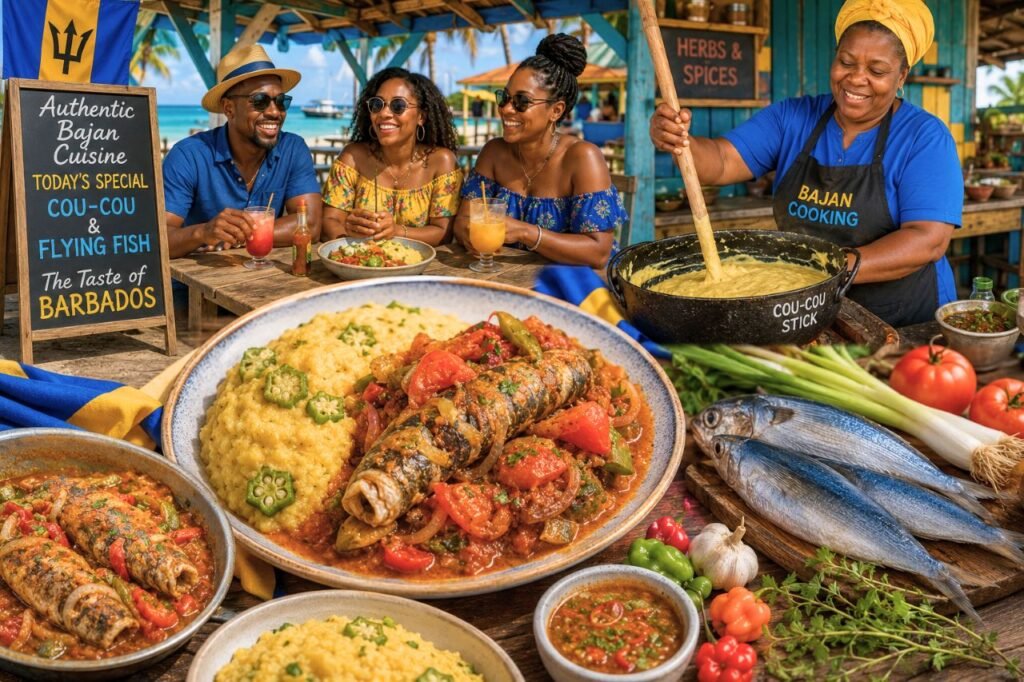
The absolute culinary centerpiece of national pride is Cou-Cou and Flying Fish. This complex dish requires meticulous skill and patience to prepare correctly:
- The Flying Fish: The fresh fish is carefully deboned, rolled, and seasoned with a potent, signature Bajan Seasoning (a blended paste of scallions, garlic, scotch bonnet peppers, thyme, lime juice, and clove). It is then gently stewed in a rich, savory tomato, onion, and bell pepper gravy.
- The Cou-Cou: A smooth, firm mixture of cornmeal and fresh okra slices, cooked down in a heavy iron pot and continuously stirred with a specialized wooden implement known as a “Cou-Cou stick” until it achieves a perfect, velvety consistency.
Other Local Delicacies
- Pudding and Souse: A traditional Saturday staple. “Souse” is a pickled dish made from various cuts of pork cured in lime juice, cucumbers, onions, and hot peppers, served alongside “Pudding,” which is steamed sweet potato mixed with local herbs and spices.
- Fish Cakes: Savory, deep-fried fritters made from salted codfish, flour, herbs, and Bajan pepper sauce, found universally at roadside stalls and cocktail receptions alike.
Clothing & Symbols
The Heritage of Bajan Dress and National Motifs
In contemporary daily life, Bajans dress in modern Western styles; however, historic national clothing takes center stage during heritage celebrations. Traditional women’s ceremonial attire consists of an off-the-shoulder white cotton peasant blouse, accented with delicate lace detailing, paired with a long, flowing tiered skirt crafted from vibrant floral or plaid cotton cloths.
Men wear clean, structured shirts cut from breathable linen or matching heritage patterns, creating an elegant look that honors their ancestors’ transition from labor to freedom.
[ The Architecture of the Bajan Trident ]
┌─────────────────────────┬─────────────────────────┬─────────────────────────┐
│ The Left Band │ The Center Band │ The Right Band │
│ Ultra-marine blue │ Golden yellow stripe │ Ultra-marine blue │
│ representing the vast │ representing the sand │ representing the sky │
│ ocean surrounding land. │ and sunshine of island. │ and celestial hope. │
└─────────────────────────┴─────────────────────────┴─────────────────────────┘
[ Centerpiece: The Broken Black Trident ]
Symbolizes breaking away from colonial rule; the shaft is severed to show
independence, while the three prongs represent the principles of democracy.
The primary national symbol is The Broken Trident, which sits proudly in the center of the national flag. The flag features three vertical bands of ultramarine blue and gold. The broken shaft of the black trident symbolizes Barbados’s historic break from its colonial past, while the three prongs represent the core principles of democracy: government of, by, and for the people.
Music, Dance & Art
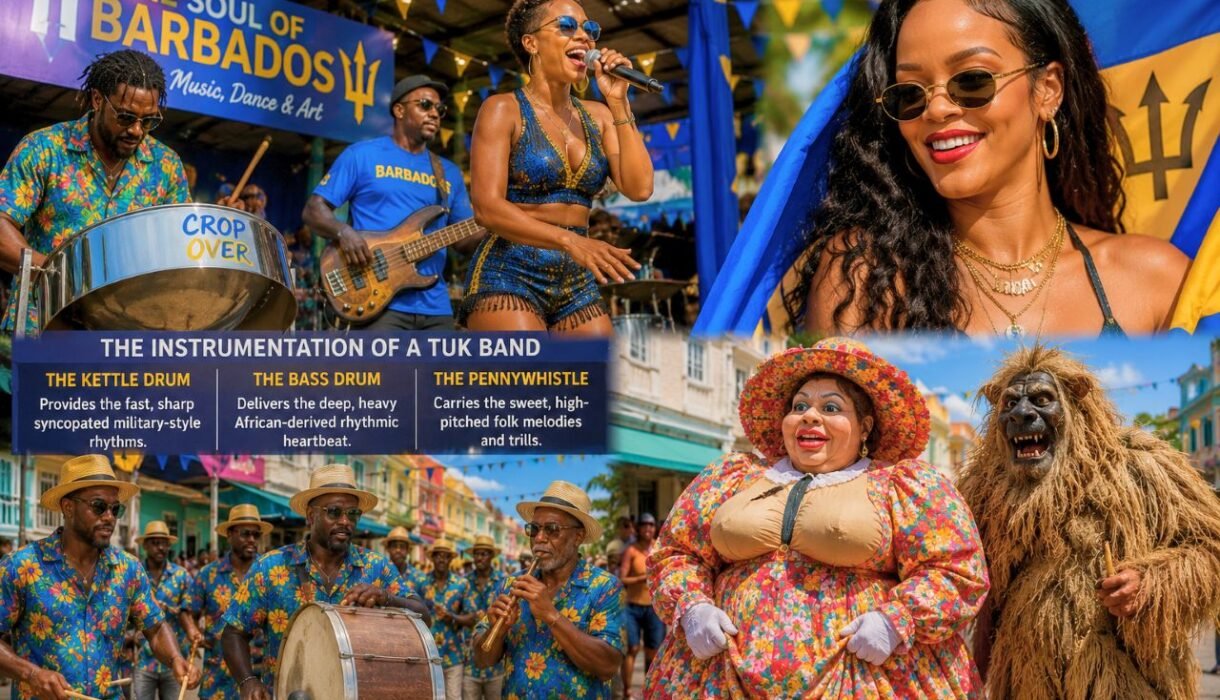
Crop Over parade celebration in Barbados
The Power of Soca and Tuk Bands
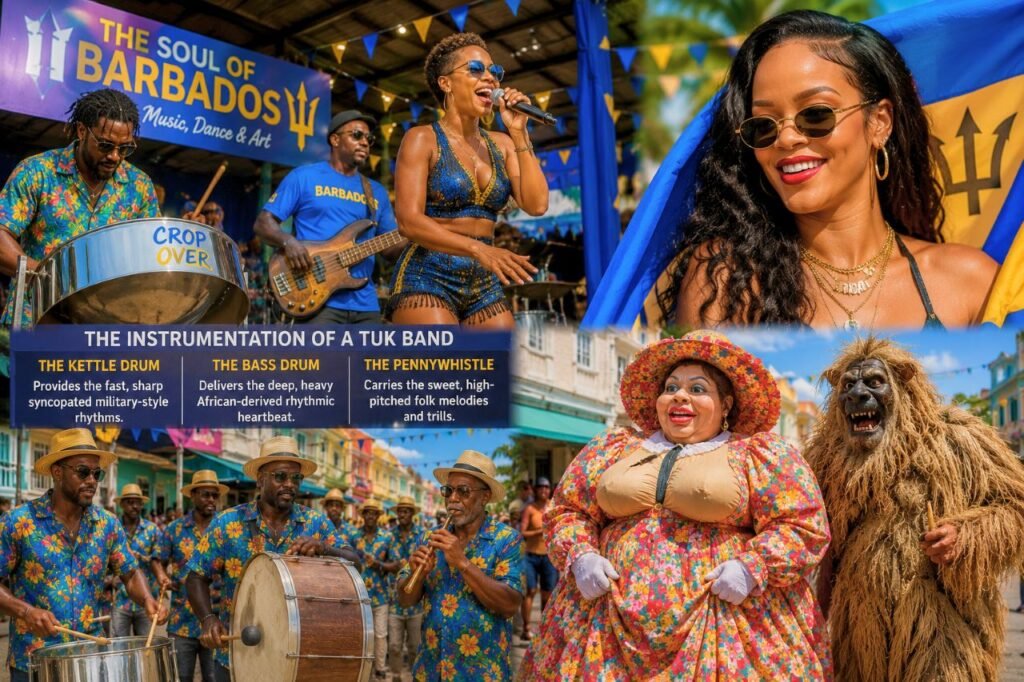
The sonic landscape of Barbados is dominated by the high-energy, infectious rhythms of Soca and Calypso. Barbadian soca music is globally unique, featuring sweet, melodic horn arrangements and driving basslines that define the Crop Over season. The nation holds immense international musical capital as the birthplace of global pop icon and National Hero, Rihanna.
Simultaneously, the foundational folk music of the island is kept alive by the traditional Bajan Tuk Band.
[ The Instrumentation of a Tuk Band ]
┌─────────────────────────┬─────────────────────────┬─────────────────────────┐
│ The Kettle Drum │ The Bass Drum │ The Pennywhistle │
│ Provides the fast, sharp│ Delivers the deep, heavy│ Carries the sweet, high-│
│ syncopated military-style│ African-derived rhythmic│ pitched folk melodies │
│ rhythms. │ heartbeat. │ and trills. │
└─────────────────────────┴─────────────────────────┴─────────────────────────┘
The Tuk band blends British military marching drum cadences with complex, syncopated African rhythms, providing music for iconic costumed folklore characters like the Landship, the Mother Sally (with exaggerated physical proportions), and the Shaggy Bear.
Fine Arts and Pottery
In the visual arts, Barbados is home to Earthworks Pottery, an internationally acclaimed studio that preserves the island’s functional clay traditions, turning local red clay into magnificent, hand-painted ceramic art pieces that reflect the rich colors of the Caribbean environment.
Summary
The culture of Barbados is a magnificent testament to how a society can honor its complex history while building a progressive, self-determined nation. By preserving the rhythmic traditions of the Tuk band, the culinary mastery of cou-cou, and an institutional structure grounded in democracy and education, this island republic stands tall as a beacon of cultural preservation. From the communal debates in a neighborhood rum shop to the spectacular visual artistry of Grand Kadooment, Barbados continues to shine—proudly celebrating its cultural diversity and sharing its enduring spirit with the world.
At Best Culture Insight, we see culture as the heartbeat of every society—the way people live, connect, and express their identity.