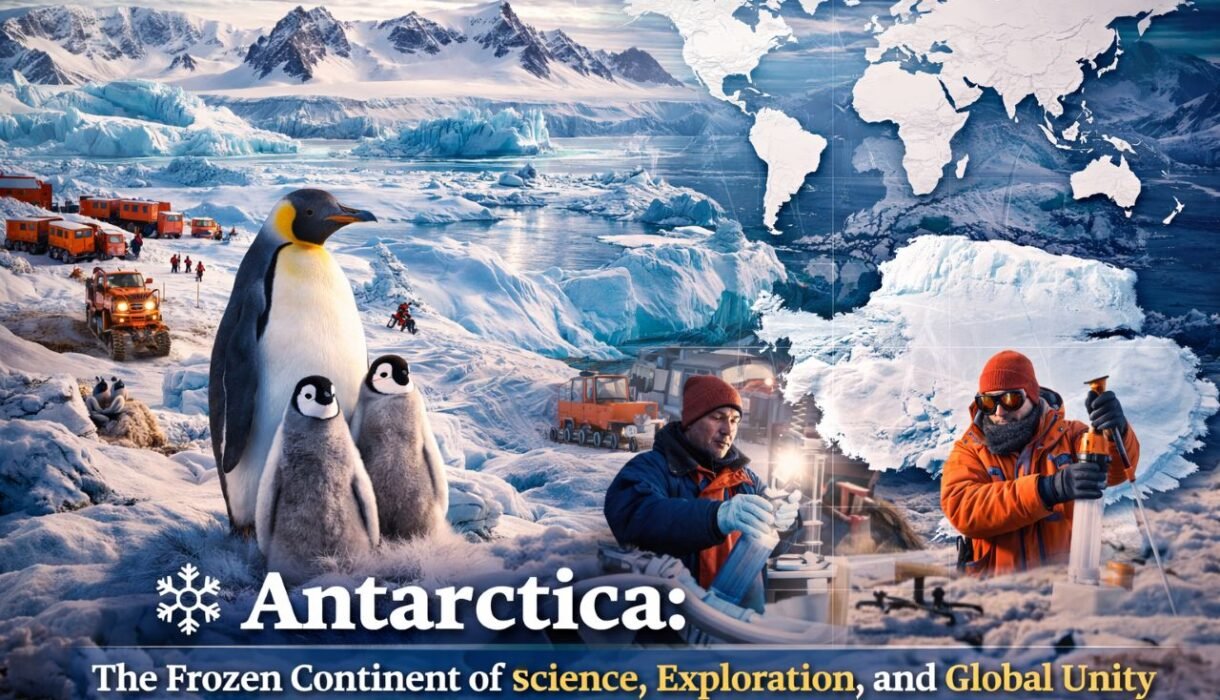
❄️ Antarctica: The Frozen Continent of Science, Exploration, and Global Unity
Posted in :

Antarctica: Facts, Geography, Wildlife, Research & Life on the Frozen Continent
Antarctica is the southernmost continent on Earth, known for its extreme cold, vast ice sheets, and breathtaking landscapes. Unlike other continents, Antarctica has no permanent population, no indigenous culture, and no countries.
Instead, it is a place where scientists, researchers, and explorers from around the world live temporarily, forming a unique international community. During summer, about 5,000 people live in research stations, while only around 1,000 remain in winter.
Antarctica represents a global culture of cooperation, science, and environmental preservation.
🟤 History & Origins
Antarctica’s “culture” originates from exploration and scientific discovery, not traditional human settlement.
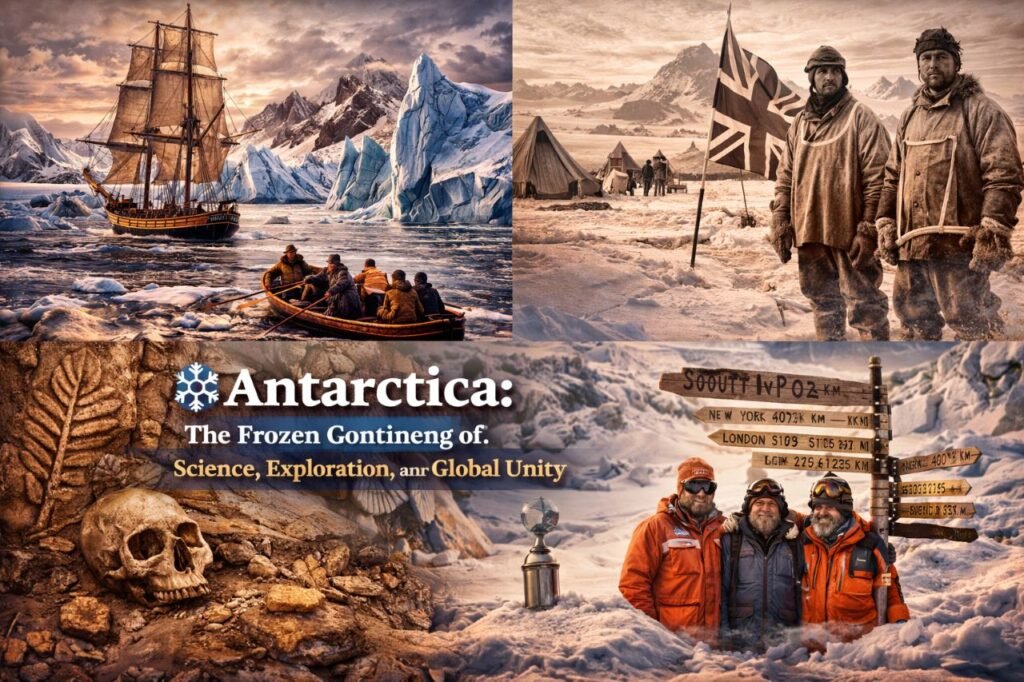
Key Historical Phases:
- Early Exploration (18th–19th Century): Explorers searched for the “southern continent”
- Heroic Age (1897–1922): Famous expeditions by Roald Amundsen and Robert Scott
- Scientific Era (20th Century–Present): Establishment of research stations
- Antarctic Treaty (1959): Declared Antarctica a continent for peace and science
Today, Antarctica’s identity is shaped by international scientific collaboration and environmental protection.
🎭 Culture, Traditions & Customs
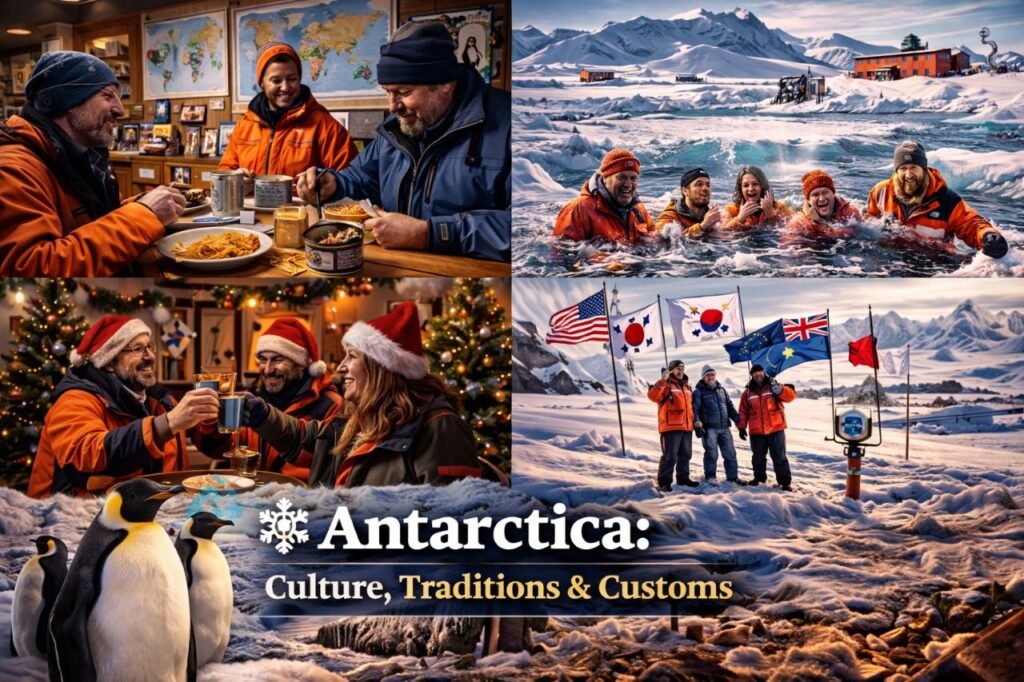
Antarctic life; traditions and celebrations
Although Antarctica has no traditional culture, it has developed unique customs among researchers and explorers.
🔸 Community Life
- Small international teams live together in isolated stations
- Strong sense of teamwork and shared responsibility
🔸 Traditions
- Midwinter Festival: Celebrated in June to mark the longest night
- Polar Plunge: Jumping into icy water as a tradition
- Film nights, shared meals, and celebrations
🔸 Life Events
- No formal marriage or naming traditions unique to Antarctica
- People bring their own cultural practices from home countries
🌍 Countries and Capitals
❗ Important Note:
Antarctica has NO countries and NO capitals.
- It is not owned by any nation
- Territorial claims exist but are frozen under international agreement
Governed collectively under the Antarctic Treaty System
🗣️ Languages & Communication
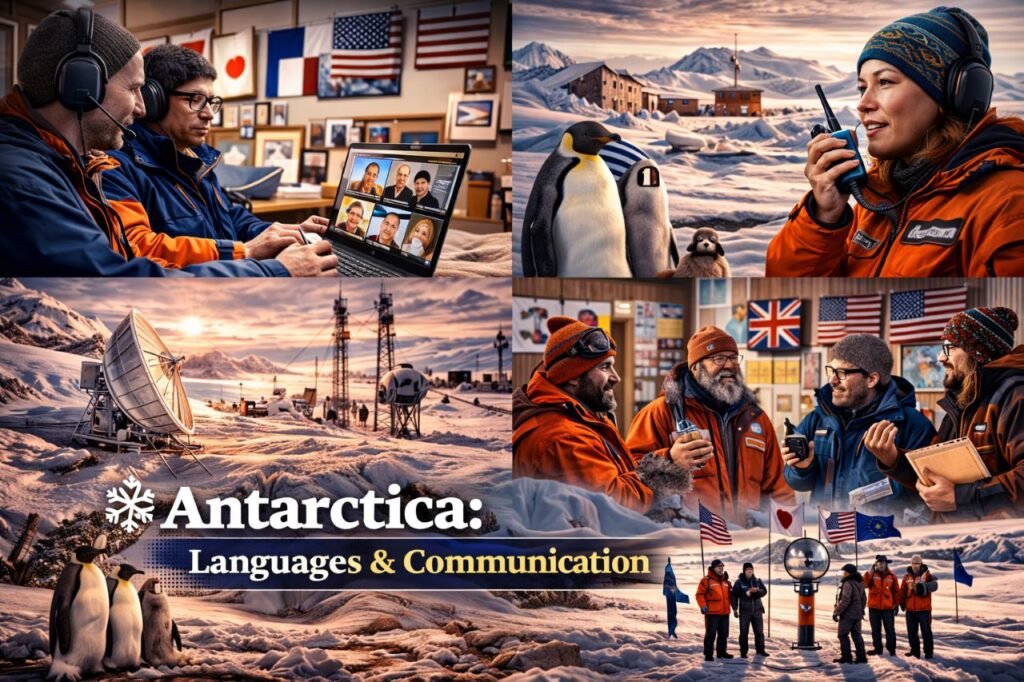
Antarctica’s communication and language diversity
There is no single language in Antarctica.
Common Languages:
- English (most widely used)
- Russian
- Spanish
- French
- Chinese
Communication Style:
- Clear, direct communication (important for survival)
- Strong teamwork and mutual respect
- Multicultural collaboration
🌄 Geography
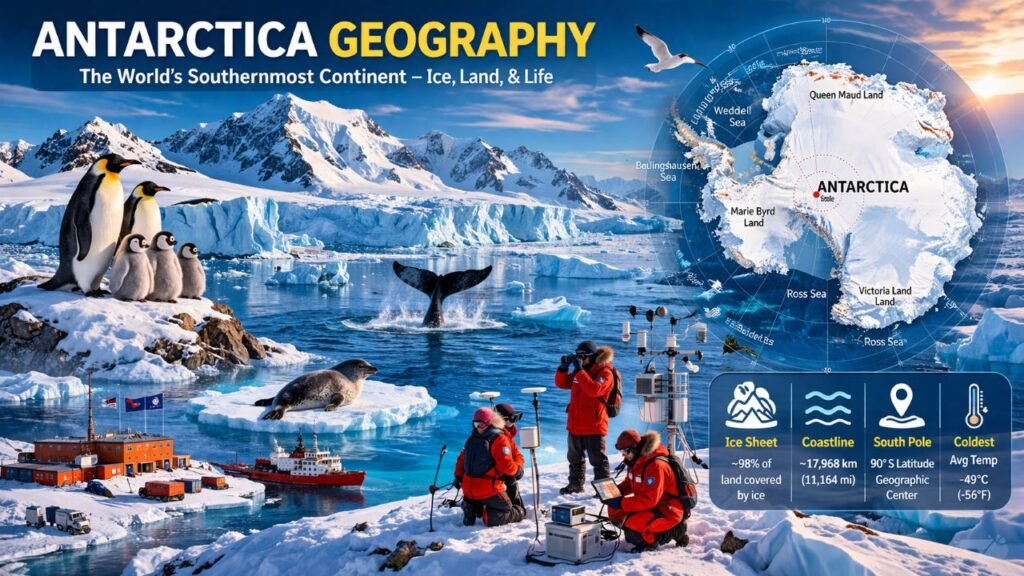
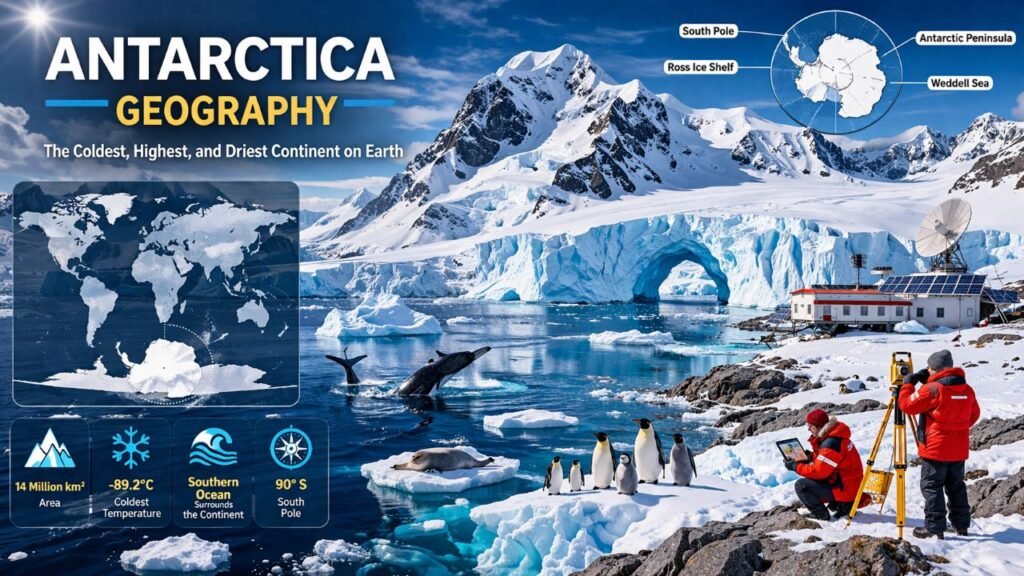
Antarctica geography
Antarctica is a continent of extremes:
- Coldest, driest, windiest continent
- Covered by ice (about 98% of land)
- Contains about 90% of the world’s ice
Key Features:
- South Pole
- Transantarctic Mountains
- Ice shelves and glaciers
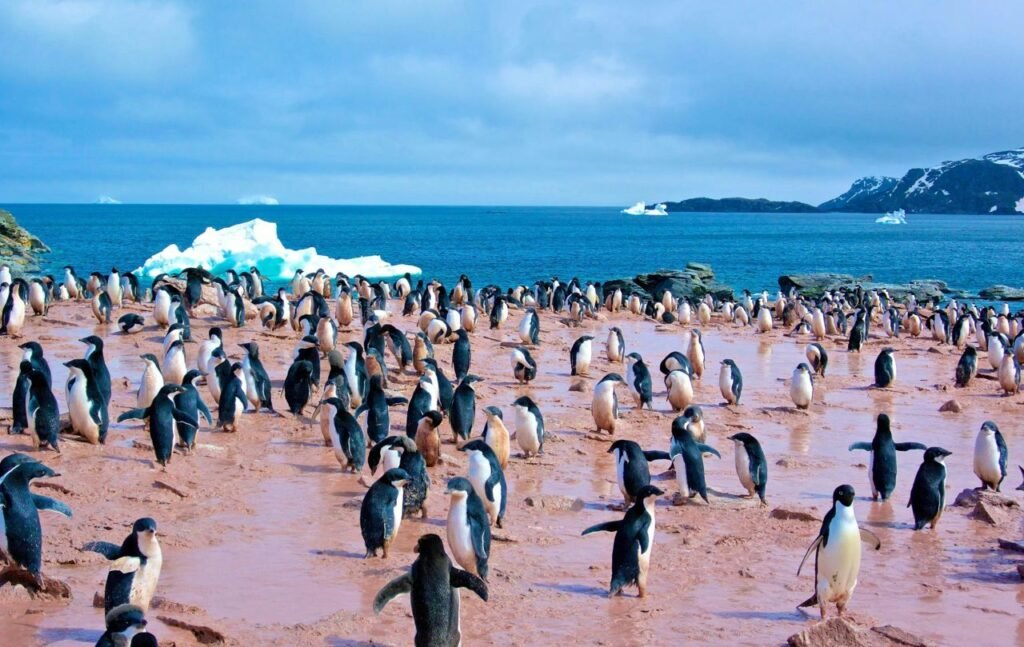
- Unique wildlife: penguins, seals, whales
💰 Economy
Antarctica has no traditional economy.
Main Activities:
- Scientific research
- Tourism (limited and controlled)
- Fishing in surrounding waters
There is no agriculture, industry, or permanent trade system.
🏛️ Politics
Antarctica has a unique global governance system.
- Governed by the Antarctic Treaty System
- Signed in 1959 by multiple countries
- Ensures:
- Peaceful use only
- No military activity
- No nuclear testing
- Free scientific cooperation
Today, over 50 countries participate in governing Antarctica
👥 Ethnic Groups
Antarctica has no native ethnic groups.
- Residents are temporary scientists and workers
- People come from many countries and cultural backgrounds
- It is one of the most diverse international environments on Earth
🙏 Beliefs & Values
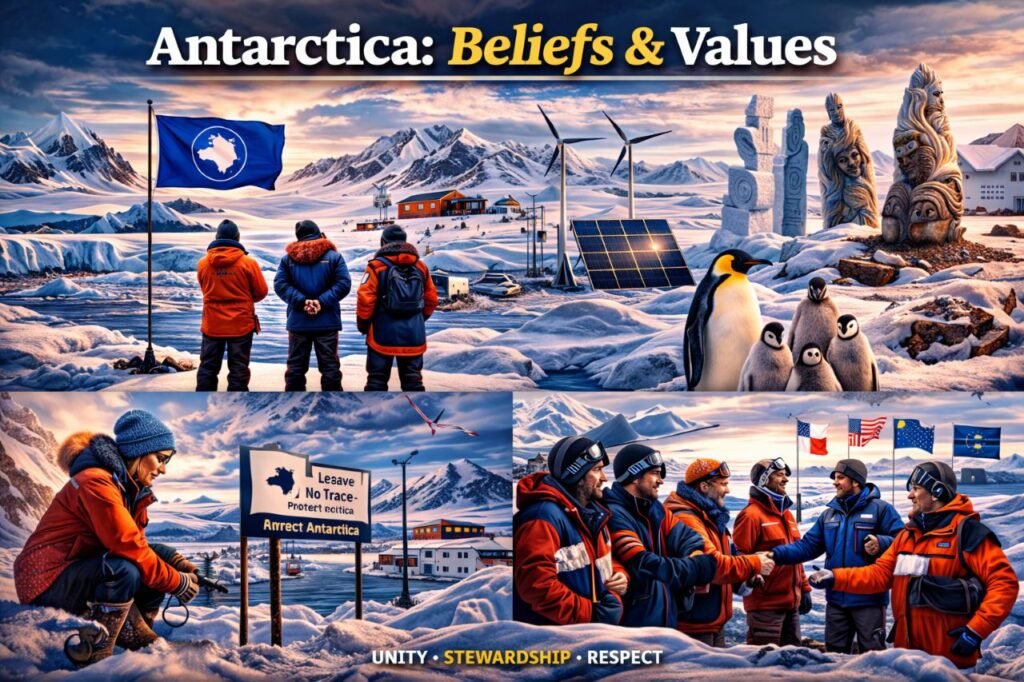
Antarctica; unity and stewardship in action
Antarctica reflects shared global values:
Core Values:
- Scientific discovery
- Environmental protection
- Peaceful cooperation
- Respect for nature
- Global unity
It is often described as a continent dedicated to “peace and science”
🍲 Food & Cuisine
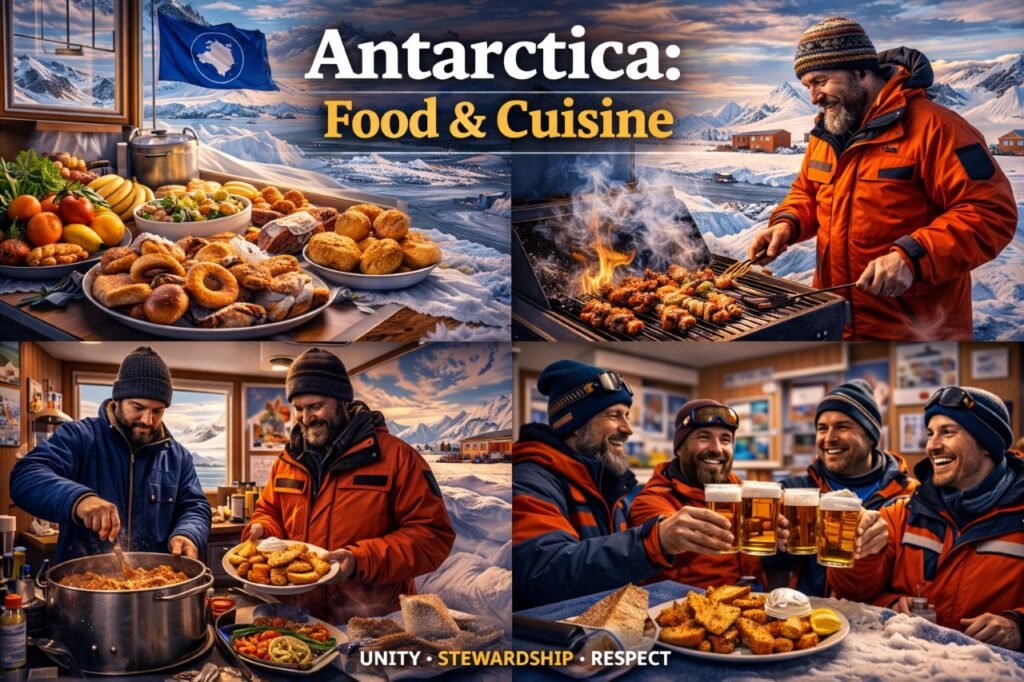
Antarctic cuisine in action
There is no native Antarctic cuisine.
Food Characteristics:
- Imported and preserved food
- Frozen and canned supplies
- International dishes depending on staff
Cultural Meaning:
- Shared meals help build community and morale in isolation
👘 Clothing & Symbols
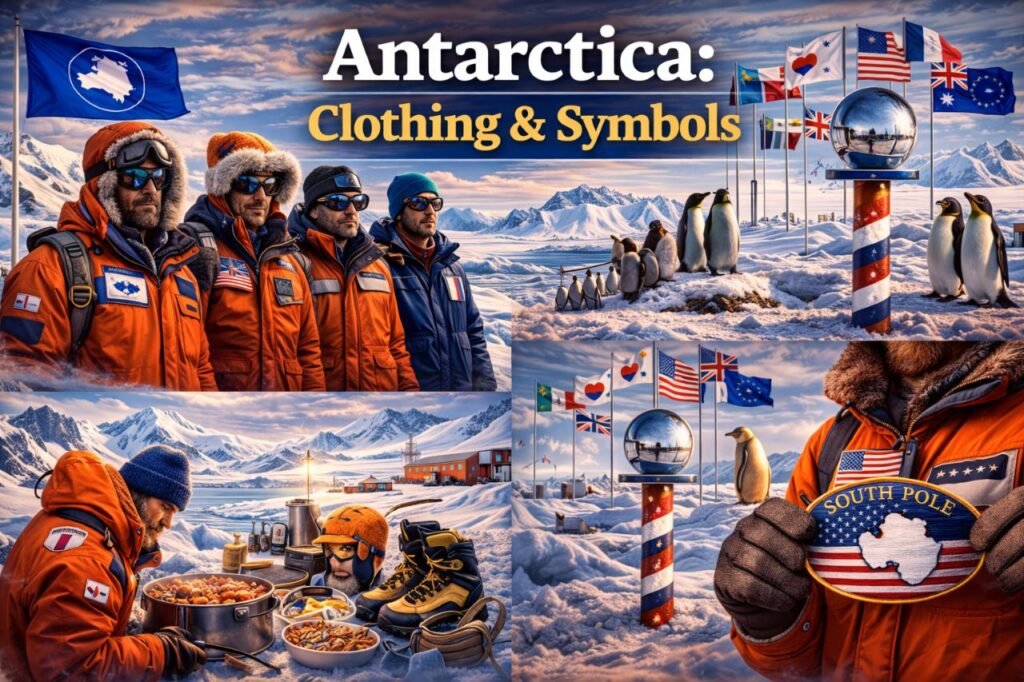
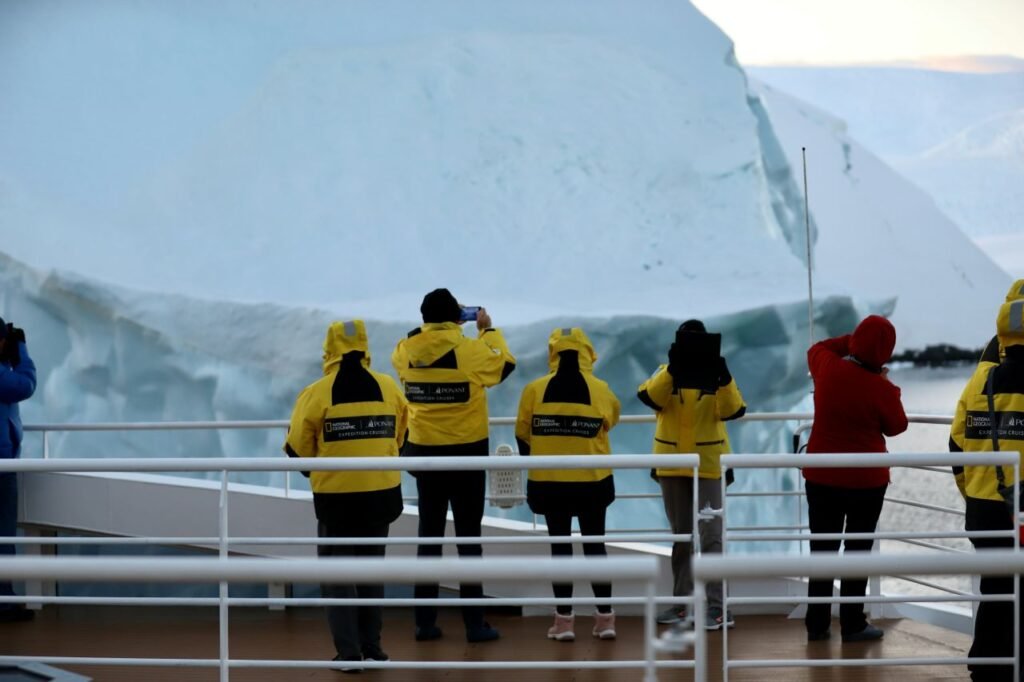
Antarctic research gear and flags
Clothing in Antarctica is functional and survival-based.
Features:
- Heavy insulated jackets
- Thermal layers
- Protective boots and gloves
Symbolism:
- Represents resilience and survival in extreme conditions
🥁 Music, Dance & Art
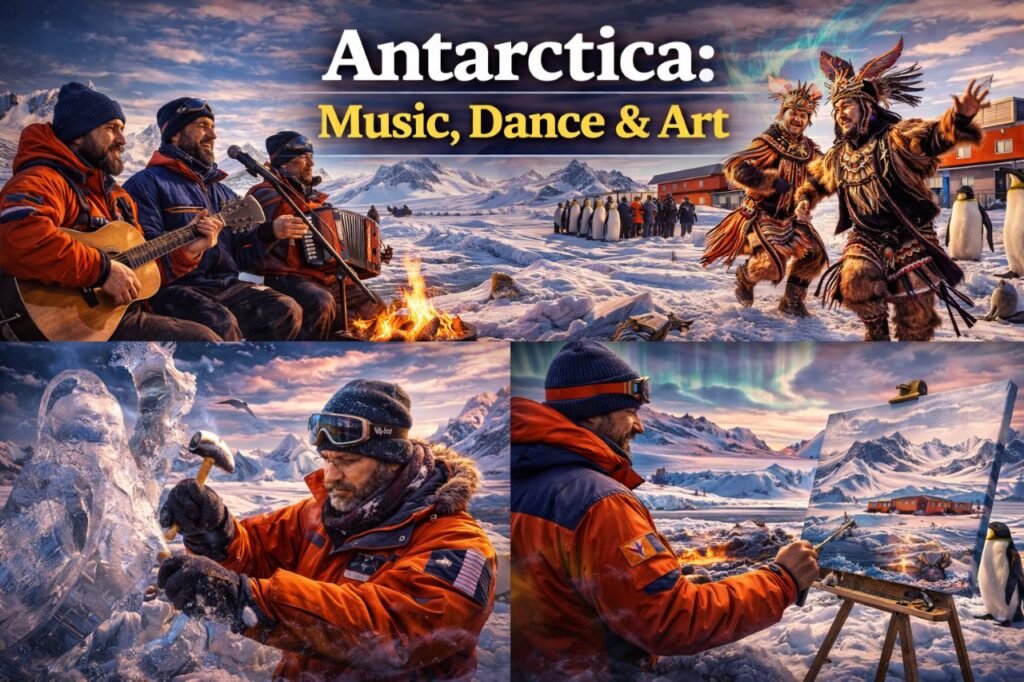
Art and culture in Antarctica
There is no traditional Antarctic art, but:
- People create music, photography, and art during their stay
- Activities include:
- Playing instruments
- Movie nights
- Cultural exchanges
Art reflects human creativity in isolation.
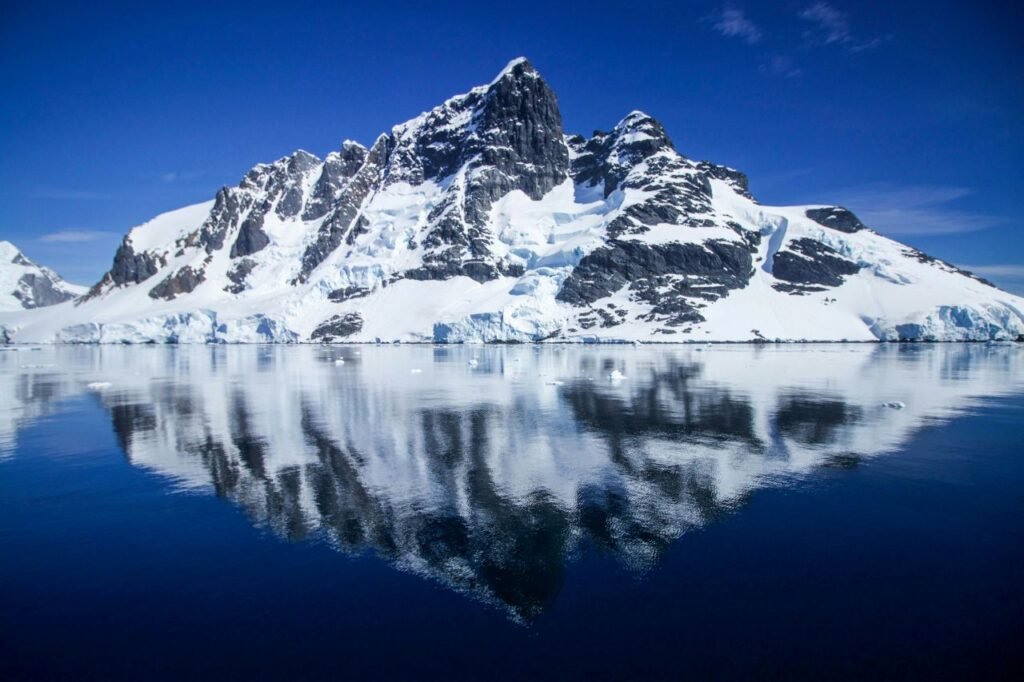
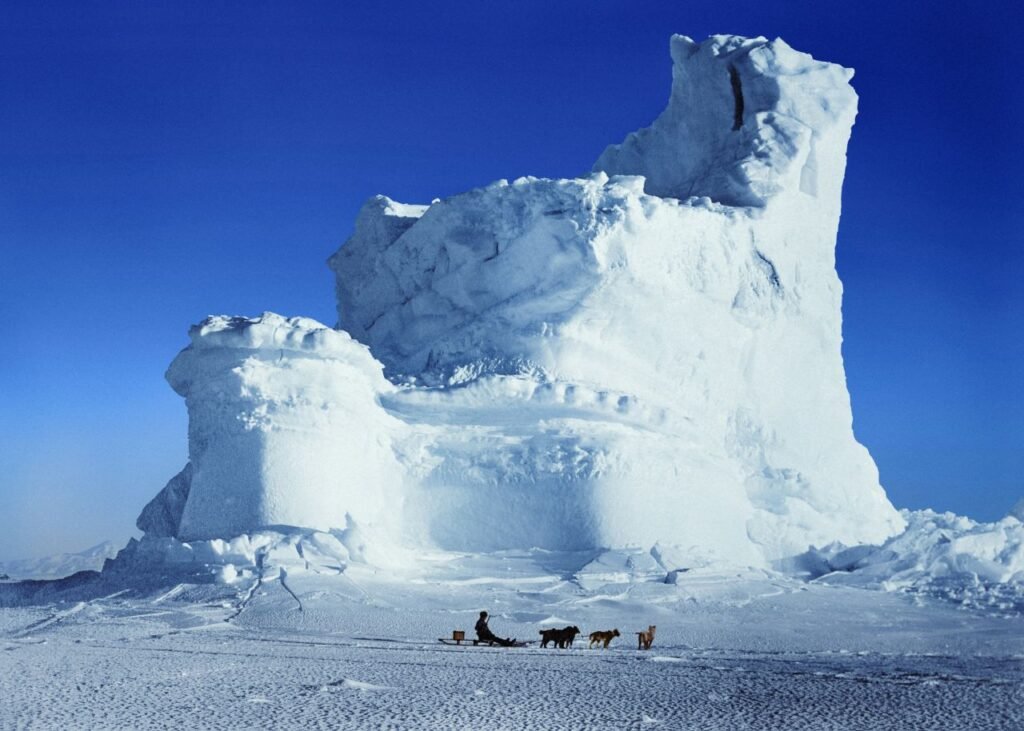
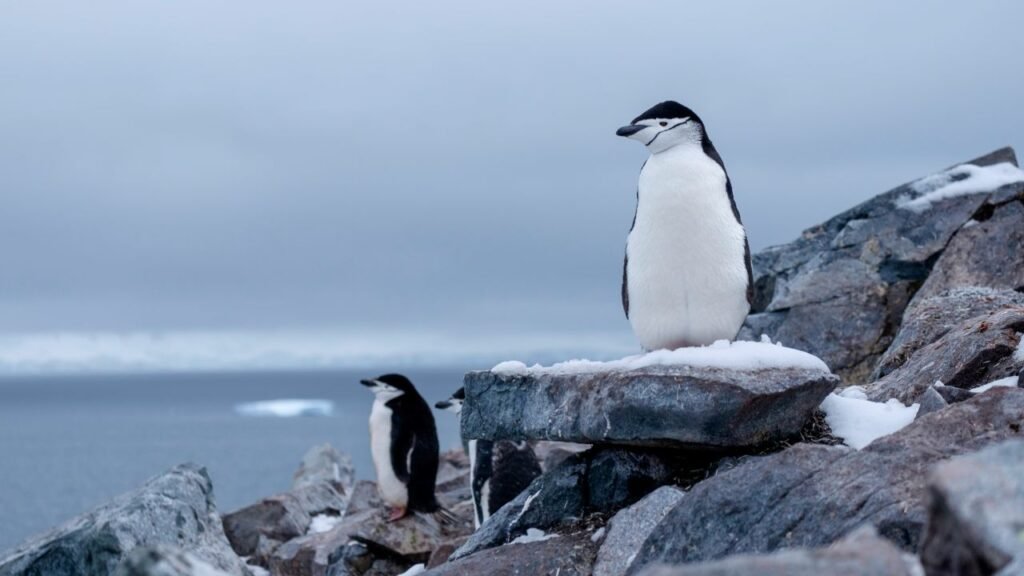
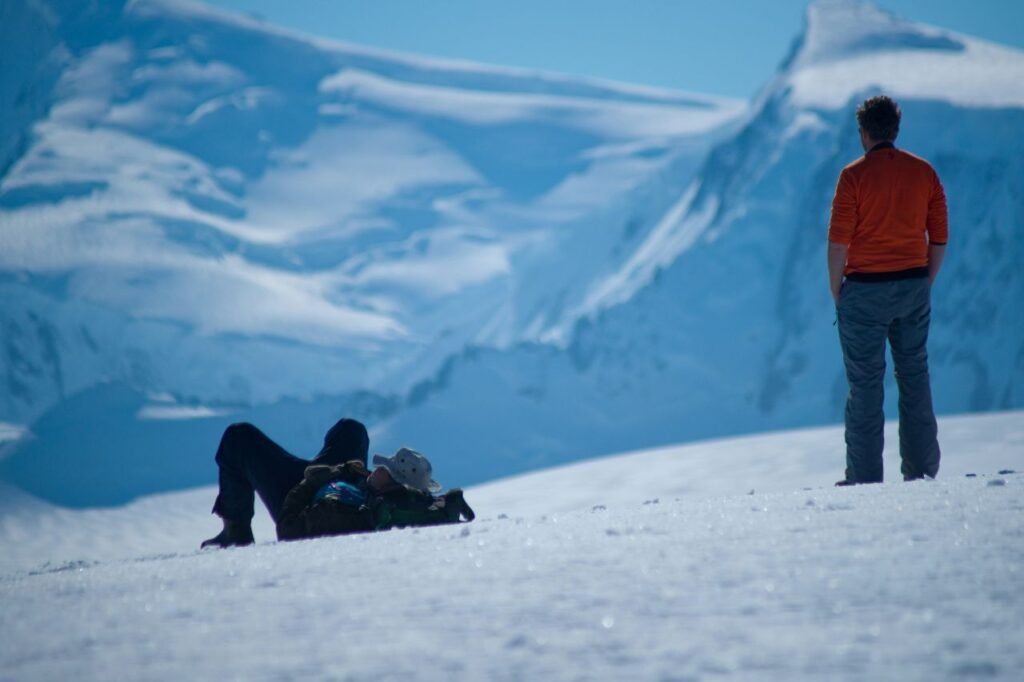
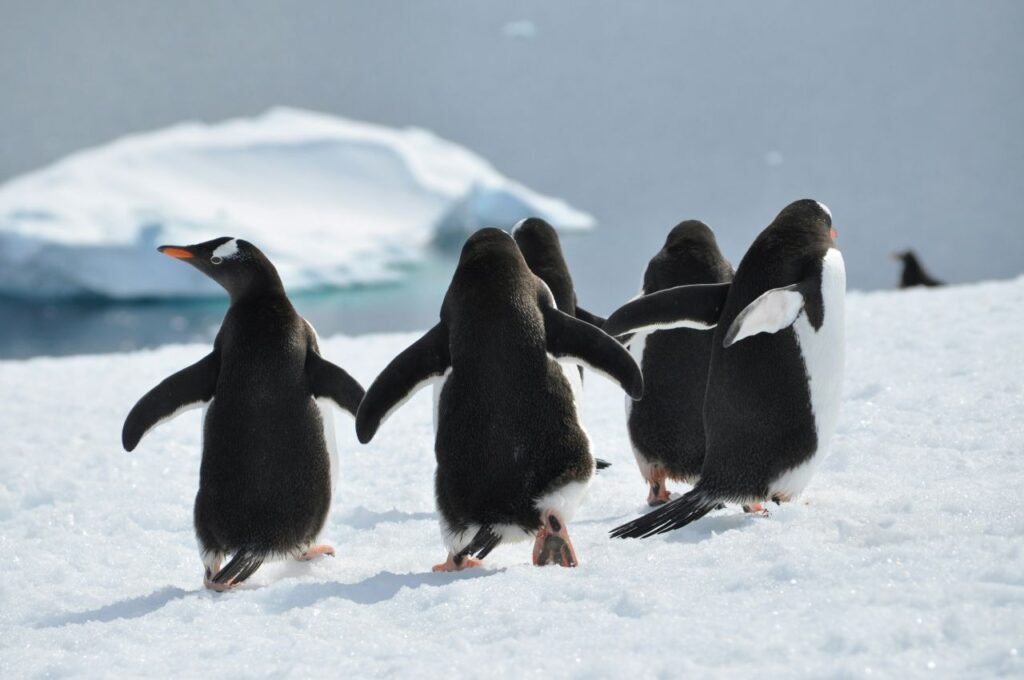
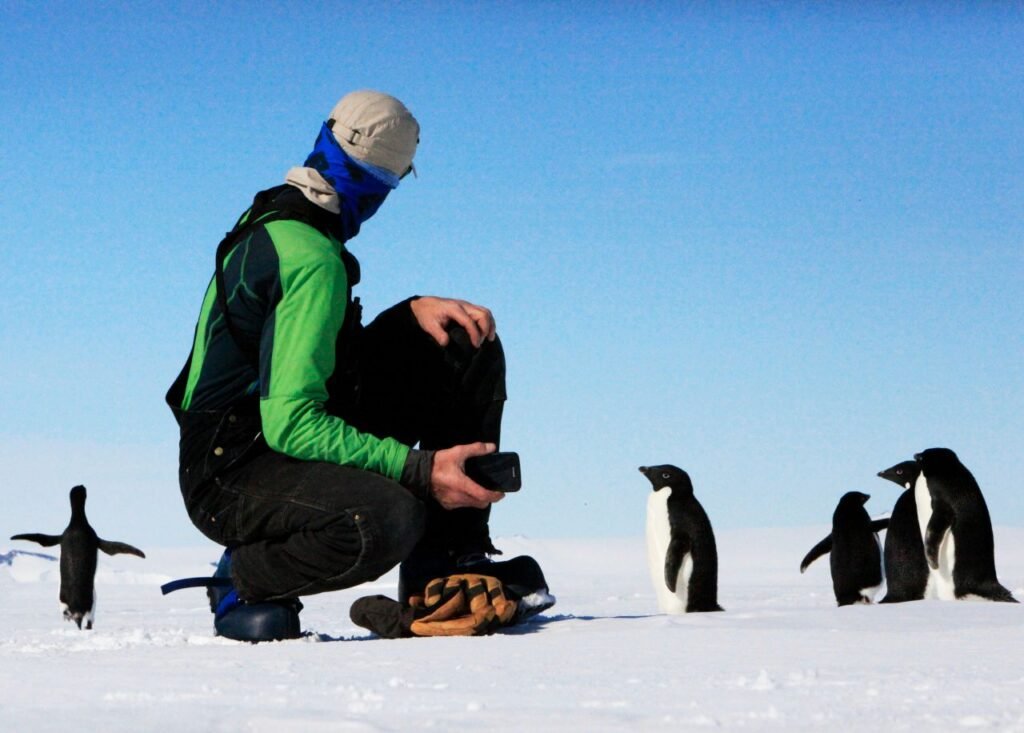
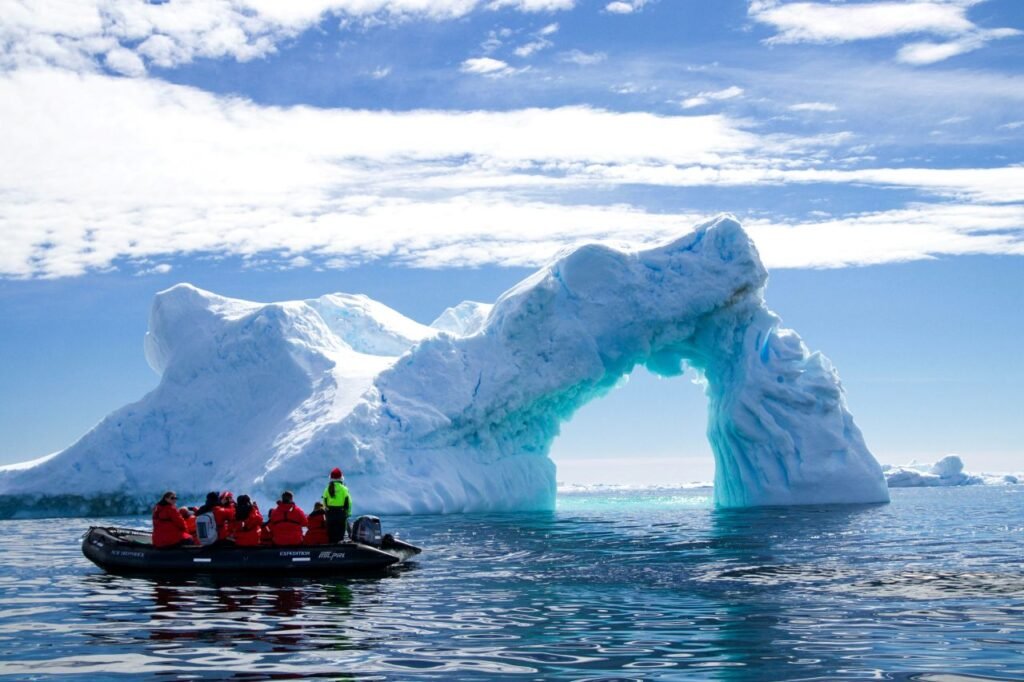
Photo Gallery
Antarctica is unlike any other continent—it has no permanent population, no countries, and no traditional culture. Yet, it represents one of humanity’s greatest achievements: global cooperation for science and peace.
It stands as a symbol of:
- Unity beyond borders
- Respect for nature
- The pursuit of knowledge
❄️ Antarctica reminds us that even in the coldest place on Earth, humanity can come together as one.
👉 Explore more continents on Best Culture Insight
👉 Discover how culture shapes our world—even in the most unexpected places