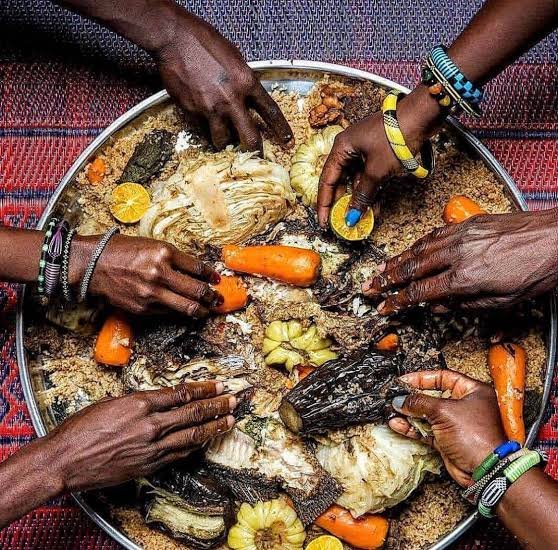

In the heart of West Africa, dining is far more than a routine biological necessity; it is a profound expression of social cohesion, solidarity, and cultural identity. At the center of daily life in Mali sits tô, a thick, dense cake-like dough made from ground millet, sorghum, or maize flour. While the dish itself is disarmingly simple, the social framework surrounding its consumption reflects a deeply held worldview: that food is a shared blessing, and no individual should ever eat in isolation when others are present.
The Heart of the Malian Household
Tô (pronounced toe) serves as the undeniable cornerstone of Malian cuisine. Prepared daily in households across the country, it requires significant skill and physical patience to make. Cooks vigorously stir grain flour into boiling water until it thickens into a smooth, firm paste that holds its shape when mounded onto a platter. On its own, tô has a mild, earthy taste, making it the perfect vehicle for rich, savory sauces—such as okra, peanut (tigadègana), or baobab leaf (faki)—which provide flavor, essential nutrients, and moisture.
The Platter as a Symbol of Equality
The true significance of tô emerges when it is served. In Malian culture, individual plates are rarely used during family meals. Instead, the tô is placed in the center of a single large bowl or tray, surrounded by a generous ladle of warm sauce. Family members, guests, and neighbors gather in a circle, seated on mats around the shared bowl. This seating arrangement removes social barriers, placing everyone on equal footing. By sharing directly from the same dish, participants demonstrate mutual trust, togetherness, and a shared reliance on the household’s resources.
Etiquette and Unspoken Respect
Communal eating in Mali is governed by a subtle yet meaningful code of etiquette passed down through generations. Diners wash their hands thoroughly before gathering and always use their right hand to eat. Each person eats strictly from the section of the bowl directly in front of them, respecting the shared boundary. Elders or hosts often break off pieces of meat or choice vegetables and push them toward younger participants or guests as a gesture of hospitality and care. These unwritten rules turn every meal into an ongoing lesson in manners, generosity, and mutual respect.
A Powerful Counter to Modern Isolation
In an increasingly fast-paced world where individualistic dining habits have become the norm, Mali’s tô culture offers a timeless alternative. The practice forces a pause in the day, demanding that people sit together, look one another in the eye, and converse. It reinforces the West African philosophy of humanity toward others—the belief that an individual’s well-being is tied directly to the well-being of the community. In a Malian home, an unexpected guest is never viewed as a burden; the circle simply expands, and another spot is made at the bowl.
Nourishing both Body and Community
Beyond its role as an affordable, nutrient-dense staple, tô acts as the glue holding social bonds together. Whether during everyday family dinners or major community gatherings, the shared bowl reminds participants of their shared heritage and interdependency. To experience tô in Mali is to understand that the essence of a great meal lies not only in the ingredients cooked inside the pot, but in the spirit of unity shared around it.