
In a fast-paced world obsessed with convenience, Sudan holds fast to a powerful tradition where breakfast is not just sustenance, it is a deliberate, communal act. For the Sudanese people, the morning meal is a sacred pause—a time to slow down, connect, and reinforce relationships before the workday begins. Central to this daily ritual are two iconic foods: Ful Medames and Kisra. These dishes are more than fuel; they are the heart and soul of Sudanese culinary identity, embodying a lifestyle defined by patience, generosity, and hospitality.
The Essence of Slow Culture
While many global cities run on coffee to go and hurried commutes, Sudan operates on a different clock during the early hours. Morning is a collective experience. The traditional workplace or neighborhood in Sudan often halts as colleagues or families gather around large communal trays. This is not a “business breakfast” where strategy is discussed, but a social gathering designed to solidify bonds. The slow consumption is matched by the deliberate preparation of the food, where shortcut ingredients are rarely seen as options. This slow pace is the first secret ingredient.
Ful Medames: The Rich, Patient Stew
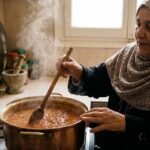
At the core of the meal is Ful Medames, often simply called Ful. This hearty stew of fava beans is the cornerstone of Sudanese cuisine. Its magic lies in patience. Ful is cooked slowly—often overnight or for many hours—in large copper pots called jidras. This extended simmering process allows the tough fava beans to transform into a creamy, deep, complex mass. Far from bland, Ful is typically customized at the table with olive oil, sesame oil, fried onions, eggs, and dynamic additions like garlic, cumin, chili, and gibna (a type of local feta cheese).
Kisra: The Ancient Fermented Bread
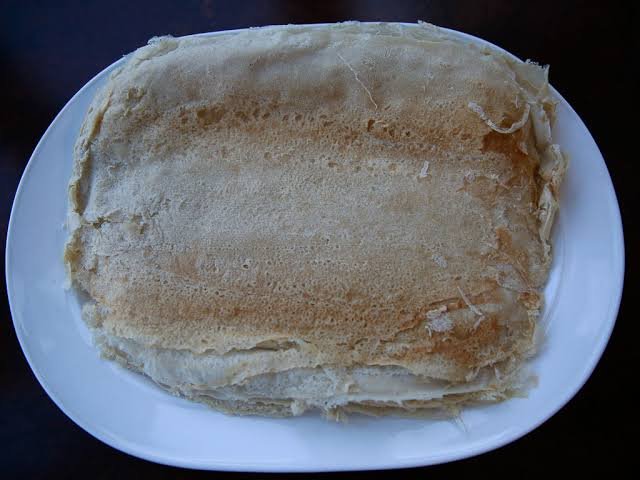
If Ful is the substance of the meal, Kisra is its partner. Kisra is a traditional, ultra-thin, fermented pancake-like flatbread made from sorghum flour. The process begins with aza, a starter dough left to ferment (sometimes for days), giving Kisra its distinctive sour tang and a sponge-like texture that absorbs stews and oils. Experienced women spread the thin batter over a hot, smooth griddle known as a saj using a small spatula, producing thousands of delicate layers daily. It is not just bread; it is a fundamental utensil for scooping Ful and other dishes, connecting the diner directly to the food.
The Communal Art of Dining
What truly distinguishes Sudanese morning culture is how the food is consumed. The idea of a personal plate is absent in this traditional setting. Instead, the large shared tray (often called a tabag) holds several bowls—one big bowl of Ful, another of salad, perhaps some eggs or ta’ameya (falafel)—all accompanied by stacks of Kisra. Diners sit around the tray, tear pieces of Kisra (or another local bread called garrasa), and scoop from the shared bowls. Eating together from one vessel fosters unity, breaks down social barriers, and encourages a genuine spirit of sharing.
An Open Invitation to Hospitality
The breakfast table is never “full” in Sudan. It is flexible and inherently welcoming. Hospitality is a paramount virtue, and the morning meal is the primary expression of that virtue. If a guest, neighbor, or even a stranger passes by during a meal, they are always greeted with the earnest invitation: “Tafaddal” (Please, join us). An empty space is immediately made, and the shared tray is instantly adapted to accommodate another person. To refuse Tafaddal is considered impolite, as the invitation is not perfunctory but a genuine offering of nourishment and fellowship.
More Than a Meal: A Cultural Cornerstone
Ultimately, the ritual of Ful and Kisra is a powerful statement about human connection. It prioritizes community over efficiency, friendship over deadlines, and the tactile joy of sharing food over convenient consumption. While modern life may put pressures on traditional schedules, this deliberate, slow morning ritual endures in Sudan as a profound cultural cornerstone. It reminds us that in a busy world, some things—like a shared tray of patient food and the presence of loved ones—are worth slowing down for every single day.