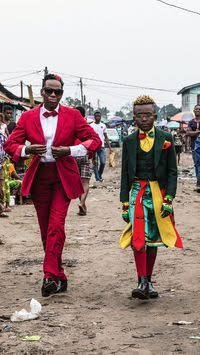
The Congolese Sapeurs — Men Who Live in Poverty but Dress Like Parisian Royalty as a Political Act
Posted in :

In the midst of Brazzaville, the capital of the Republic of the Congo, an unexpected sight regularly turns heads. Men, and sometimes women, strut down dusty streets in immaculate, vibrant suits, bowler hats, and polished leather shoes. They are members of ‘La Sape’—an acronym for the Société des Ambianceurs et des Personnes Élégantes (the Society of Ambiance-Makers and Elegant People). To the casual observer, these “Sapeurs” look like wealthy dandies, but the reality is more complex: many live in poverty, investing all they have into their wardrobe. However, this is not just vanity; it is a powerful form of cultural and political expression.
The Origins: A Cultural Collision
The roots of La Sape go back to the early 20th century during the French and Belgian colonial occupation of the Congo Basin. The French used clothing as a tool of dominance, enforcing dress codes to “civilize” the indigenous population. However, a group of Congolese workers employed by the colonial administration decided to turn the tables. They adopted French style, but exaggerated and refined it, creating a unique aesthetic that subverted the intention of their masters. By mastering the fashion of the oppressor, they asserted their own identity.
More Than Just a Suit: The Political Act
After Congo gained independence in 1960, La Sape evolved. Today, it remains a political act, but its targets have shifted. The extravagance of the Sapeurs is a deliberate protest against the persistent poverty and corruption that plague the nation. In a country where basic needs are often struggle, dressing like Parisian royalty is a statement of defiance. It says: “We may be poor, but we are not broken. We have dignity, and we have the power to define our own appearance.” It is a peaceful, stylish rebellion against the limitations of their economic circumstances.
The Sapeur’s Code: Discipline and Decorum
Being a Sapeur is not simply about owning expensive clothes; it is about adherence to a strict code of ethics and conduct. A true Sapeur is expected to be a gentleman—always polite, peaceful, and respectful. Violence and drug use are strictly forbidden within the community. The movement promotes social harmony and respect, positioning the Sapeur as a role model. This discipline extends to the “science” of clothing: they obsess over fabric quality, fit, and the harmonious (or deliberately clashing) combination of colors.
The Great Balancing Act: Poverty and Passion
The contradiction at the heart of La Sape is what makes it so fascinating. Sapeurs often live in modest homes, working low-wage jobs. Yet, their wardrobes represent thousands of dollars. They frequently take out loans or save for years to acquire a single jacket from a high-end designer like Versace, Kenzo, or Gaultier. Critics argue that this is irresponsible consumerism that trap people further in poverty. Sapeurs, however, see it as an investment in their personal pride, community identity, and psychological well-being.
Evolution and Global Recognition
While once a purely local phenomenon, La Sape is now gaining global recognition. Their unique style and compelling philosophy have been featured in international documentaries, fashion magazines, and even advertising campaigns. This exposure has, in turn, allowed some Sapeurs to turn their passion into a career, working as fashion consultants, models, or brand ambassadors. The movement is also diversifying, with more women, known as Sapeuses, adopting and adapting the style, adding a new dimension to this vibrant subculture.
The Legacy of La Sape
The Congolese Sapeurs prove that clothing can be much more than fabric; it can be a tool for empowerment, resistance, and self-definition. In the face of adversity, they have created a language of color and style that speaks louder than their financial circumstances. Their legacy is one of creativity, dignity, and the enduring power of human expression, reminding us that even in the toughest of situations, elegance can be a revolutionary act.