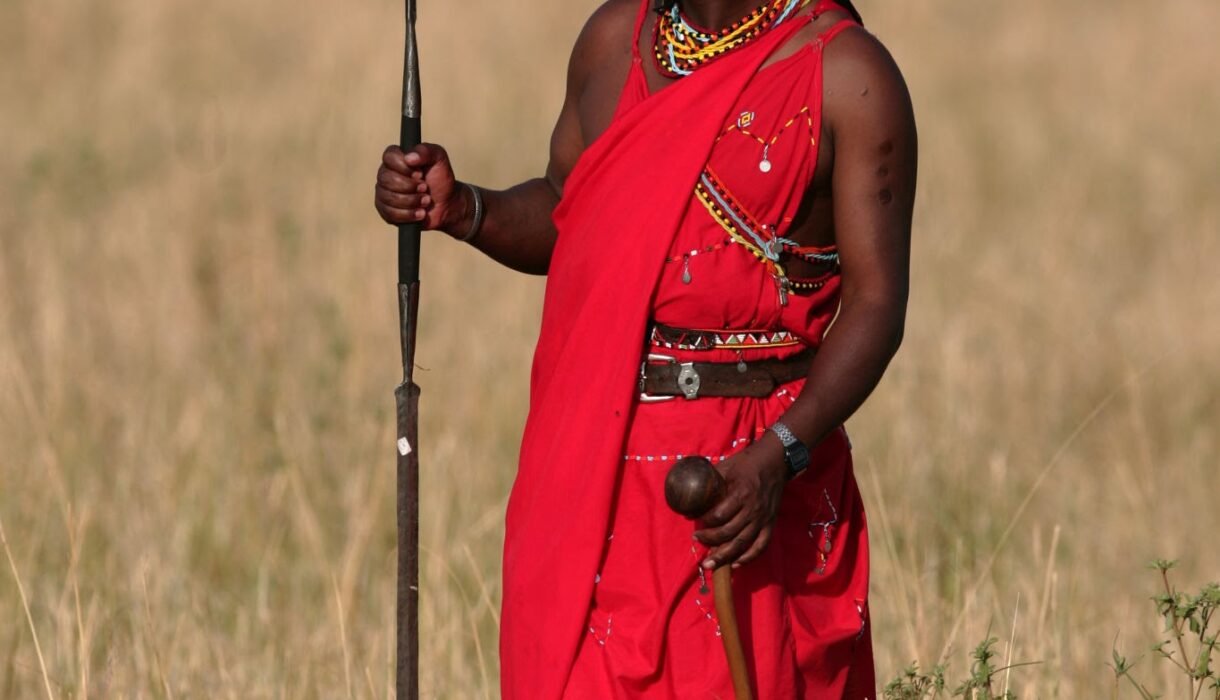

Across the vast savannahs of Kenya and Tanzania, the Maasai people are world-renowned for their vibrant red shuka garments, rich cultural traditions, and deep harmony with the natural environment. For centuries, one particular ritual stood as the ultimate test of bravery for young men: Olamayio, the ceremonial hunting of a wild lion. To transition from a boy into a respected warrior, known as a Moran, a young man had to confront Africa’s apex predator using only a spear and shield, proving his physical strength, mental fortitude, and readiness to protect his community.
The Cultural Roots of the Olamayio Tradition
In traditional Maasai society, cattle represent wealth, survival, and life itself. Because lions naturally posed a direct threat to livestock, warriors were tasked with protecting the herd and village from apex predators. Over time, lion hunting evolved into an essential rite of passage. Engaging a lion was never a careless act of destruction; rather, it was a structured cultural milestone designed to instill courage, discipline, and absolute self-reliance in young men before they assumed responsibilities as elders and leaders.
The Sacred Rules of the Single-Handed Hunt
Although lion hunting was often conducted in small groups of young warriors, the most coveted honor was reserved for the individual who struck the first spear blow. Strict customary rules governed the ritual. Female lions, cubs, and injured animals were strictly protected from being hunted, ensuring the natural balance of lion populations was maintained. A warrior had to track a healthy, fully-grown male lion, face the charging beast directly, and display unwavering bravery—as turning back in fear brought lasting dishonor to his family.
From Battle Victory to Community Honor
Successfully completing the Olamayio hunt transformed a young man’s status instantly. The brave warrior who delivered the decisive blow earned the lion’s mane, which was crafted into a sacred headdress worn during ceremonial dances. Upon returning to the village, he was welcomed with grand celebrations, songs, and gifts of livestock. He was no longer viewed as a youth dependent on his family, but as a proven leader capable of shielding his people from danger.
The Modern Shift Toward Wildlife Conservation
As lion populations plummeted across East Africa due to habitat loss and human encroachment, the Maasai recognized the urgent need to adapt their ancient tradition. Today, customary lion hunting is officially prohibited in Kenya and Tanzania, and Maasai communities have taken a leading role in wildlife conservation. Through collaborative efforts with conservationists, former lion hunters have transitioned into “Lion Guardians”—using their extraordinary tracking skills to monitor wild pride movements, prevent human-wildlife conflict, and protect the very species they once hunted.
The Maasai Olympics: A New Era of Valor
To preserve the spirit of warriorhood without harming wildlife, Maasai elders created the Maasai Olympics. Held every two years in the shadow of Mount Kilimanjaro, this cultural sports event replaces lion hunting with athletic competitions, including spear throwing, high jumping, and long-distance running. Young men now compete for medals, educational scholarships, and community recognition, proving their courage and athleticism through sport rather than hunting.
A Legacy of Courage and Cultural Adaptation
The evolution of the Maasai lion hunt offers a inspiring model of how ancient cultural traditions can adapt to solve modern environmental challenges. While the physical hunt belongs to history, the fundamental values behind it—bravery, leadership, discipline, and community protection—remain deeply alive. Today’s Maasai warriors prove their strength not by killing lions, but by standing as their strongest defenders on the African savannah.