The Senegalese “Teranga” — The Culture of Hospitality So Deep It Has No English Translation
Posted in :

In standard dictionaries, the Wolof word Teranga is often loosely translated into English as “hospitality.” However, to anyone who has ever set foot in Senegal, that simple definition falls vastly short of reality. Teranga is not merely a polite greeting, a commercial service, or a occasional good deed reserved for expected visitors. Instead, it is a comprehensive social philosophy, a way of life, and a moral compass that dictates how Senegalese citizens interact with every human being they encounter. It is a spirit of radical generosity that treats strangers not as outsiders, but as honored gifts from Above.
The Philosophy of Open Doors and Shared Plates
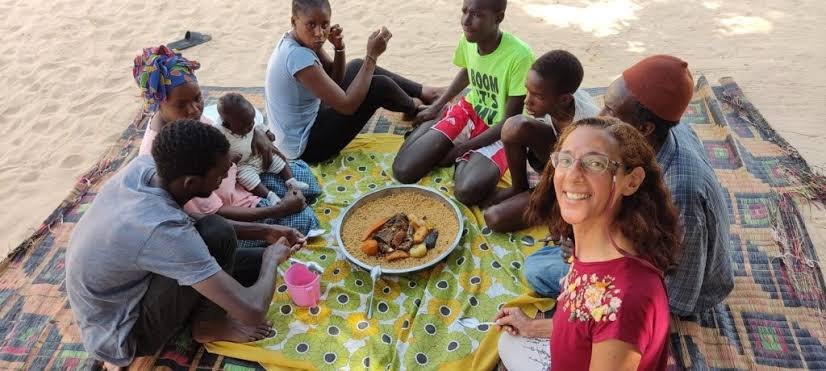
At the heart of Teranga is an unshakeable belief in universal connection. In Senegalese society, a home is rarely viewed as a private fortress meant to lock out the surrounding world. Rather, front doors remain unlocked, and visitors—whether long-time neighbors, passing travelers, or total strangers—are welcomed with open arms. When mealtime approaches, families intentionally cook extra portions of popular dishes like Thiéboudienne (fragrant fish and rice). Food is traditionally served from a single large platter placed on a communal mat, and guests are immediately invited to sit down, pull up a spoon, and share in the family’s sustenance.
Treating the Stranger as a Blessing
While Western cultures often view unexpected visitors as an inconvenience, Teranga flips this concept entirely. In Senegal, an unexpected guest is seen as a source of divine blessing and good fortune for the household. Host families routinely surrender their best rooms, offer their finest food, and ensure their guests feel completely secure before tending to their own personal comfort. This selflessness is driven by a deep-rooted cultural ethic: making someone feel at home elevates the dignity of both the receiver and the giver, reinforcing a shared sense of humanity that transcends social, national, or financial boundaries.
The Sacred Ritual of Attaya Tea
Few practices embody the patient, attentive rhythm of Teranga quite like the traditional tea ritual known as attaya. Prepared over small charcoal burners, attaya consists of three distinct rounds of green mint tea served sequentially. Each cup carries a symbolic meaning: the first is strong and bitter like friendship, the second is sweet with a hint of mint like love, and the third is smooth and sweet like peace. Serving attaya is a deliberate exercise in slowing down time. It encourages people to linger, converse, resolve disputes, and build lasting friendships in an environment entirely stripped of modern hurry and distraction.
A Pillar of Peace and Religious Harmony
Teranga serves as the social glue that maintains Senegal’s reputation as one of the most stable and peaceful democracies in West Africa. The country is celebrated globally for its remarkable religious harmony, where a Muslim majority and a Christian minority live side-by-side in mutual respect, regularly celebrating each other’s religious holidays. Because Teranga prioritizes respect and solidarity over differences, community ties naturally supersede religious, political, or ethnic divisions. Generosity acts as a protective shield against hostility, fostering a culture where empathy and dialogue always prevail.
Preserving Human Connection in a Globalized World
In our hyper-connected, digital age—where individual independence and personal privacy are constantly glorified—the Senegalese commitment to Teranga provides a refreshing and vital alternative. It reminds us that human happiness is not found in isolation, but in belonging, mutual reliance, and sincere community support. By teaching children from a young age to share what they have, care for those around them, and welcome the world with a warm smile, Senegal offers humanity a timeless blueprint for living with warmth, grace, and genuine connection.