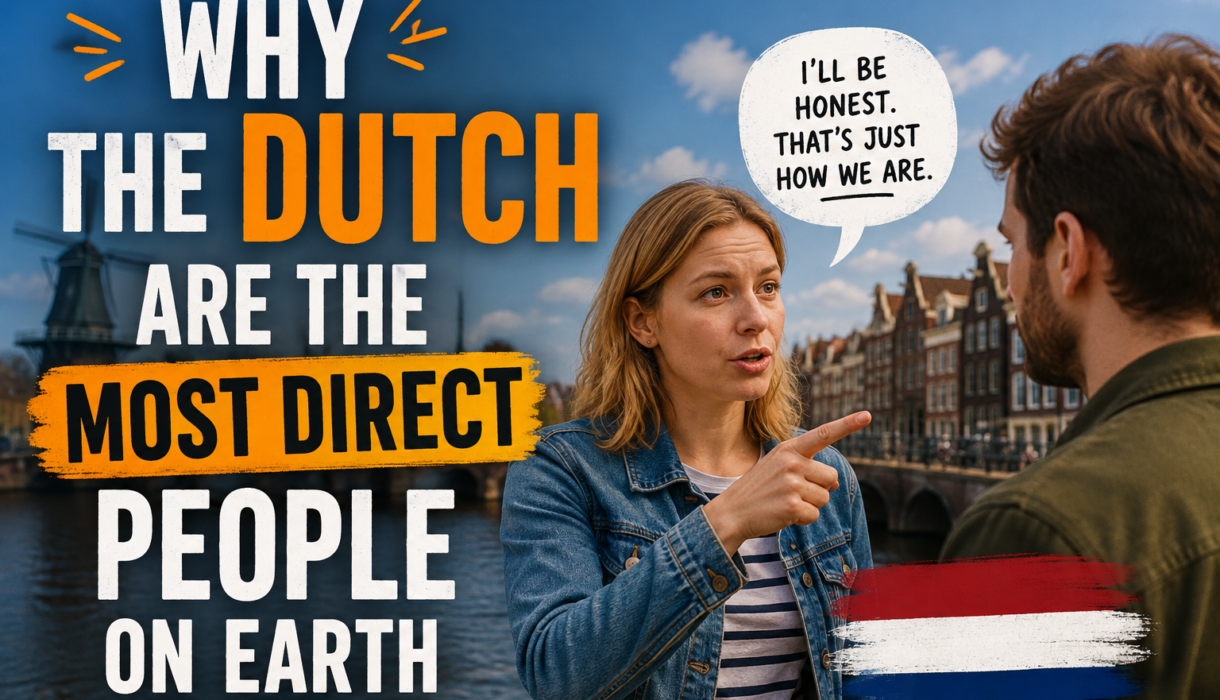

For newcomers visiting or working in the Netherlands, a conversation with a local can feel startlingly unfiltered. What many foreigners initially misinterpret as bluntness or rudeness is actually a cornerstone of Dutch culture known as bespreekbaarheid—the belief that every topic should be discussed openly and transparently. The Dutch prioritize clarity over sugarcoating, preferring to say exactly what they mean rather than leaving room for ambiguity or politeness-driven misunderstandings.
The Polder Model and Historical Equality
This unique communication style is deeply rooted in the nation’s geography and the famous “Polder Model”. For centuries, the Dutch had to reclaim land from the sea and construct elaborate dike systems to prevent catastrophic flooding. To survive, people from every social class were forced to sit at the same table, voice their opinions clearly, and make quick, pragmatic decisions regardless of rank. This birthed an intensely egalitarian society where dynamic hierarchy is downplayed, and everyone—from interns to CEOs—is expected to speak up honestly.
Calvinist Roots and the “Act Normal” Ethos
Another major driver of Dutch directness stems from the country’s historic Calvinist Protestant heritage. Calvinism emphasized humility, hard work, and unvarnished truth, laying the groundwork for the popular modern national idiom, “Doe maar normaal, dan doe je al gek genoeg” (“Just act normal, that is crazy enough”). Flattery, exaggerated compliments, and superficial pleasantries are often viewed with skepticism or seen as disingenuous. Because virtue is tied to authenticity, speaking the direct truth is considered a moral duty rather than a social infraction.
Efficiency and Pragmatism in Communication
From a practical standpoint, the Dutch view roundabout communication as an unnecessary waste of time. In business and personal life, skipping the indirect fluff allows teams to identify problems, negotiate solutions, and reach consensus far more quickly. Constructive criticism is offered freely because the Dutch separate a person’s performance or opinion from their self-worth, meaning a sharp critique of an idea is rarely taken as a personal insult.
Honesty as the Ultimate Form of Respect
Ultimately, Dutch directness is not about being unkind; it is built on a foundation of profound mutual respect. Sugarcoating feedback is seen as condescending because it implies the listener is not mature enough to handle reality. By giving you their immediate, unfiltered perspective, a Dutch person is signaling that they trust your resilience, value your time, and view you as an equal capable of handling genuine, transparent human connection.