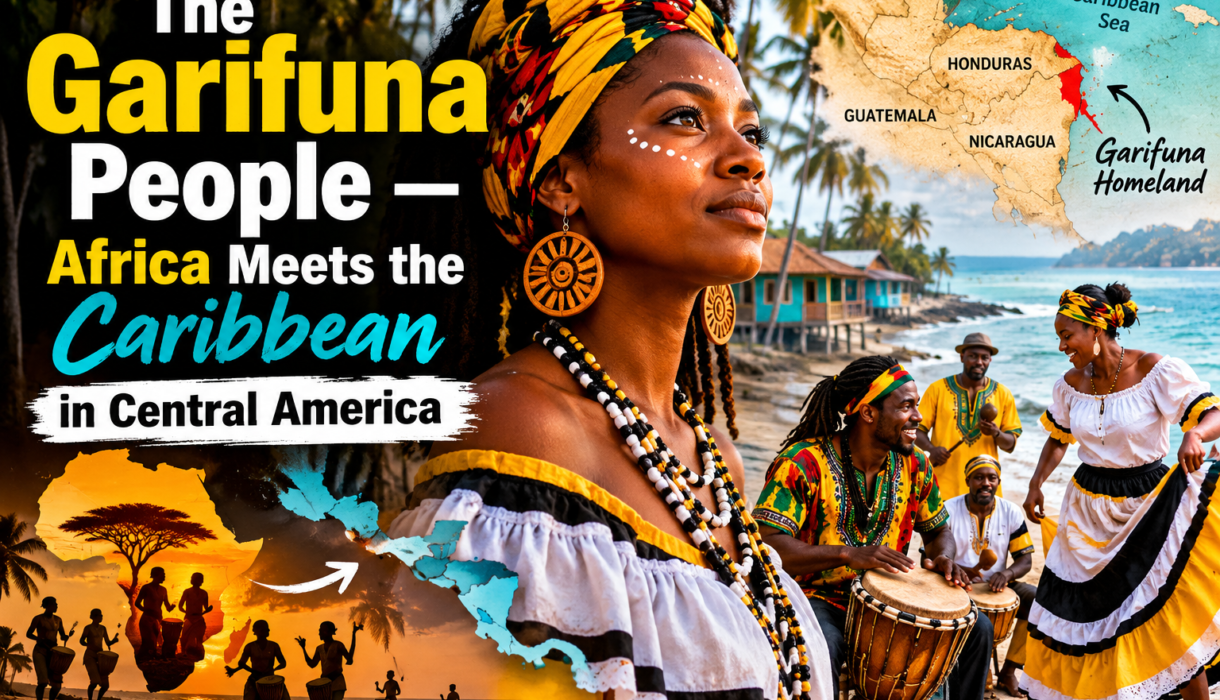
The Garifuna People — Africa Meets the Caribbean in Central America
Posted in :

Along the sun-drenched Atlantic coastlines of Belize, Honduras, Guatemala, and Nicaragua lives a vibrant community whose history is unlike any other in the Americas. The Garifuna people represent an extraordinary cultural fusion—a living bridge where West African heritage seamlessly intertwined with indigenous Caribbean traditions. Known for their soul-stirring music, rich spiritual practices, and enduring resilience, the Garifuna offer a powerful testament to how human identity can adapt, survive, and flourish despite centuries of historical upheaval.
A Legacy Born of Resistance and Survival
The story of the Garifuna began in the 17th century on the Caribbean island of St. Vincent (Yurumein). Shipwrecked West Africans made landfall on the island and integrated with the native Island Carib and Arawak populations, forming a distinct Afro-indigenous community. Resisting European enslavement for generations, they fiercely defended their independence until the late 18th century. Following British conquest, thousands of Garifuna were forcibly exiled, eventually settling along the coast of Central America, where they established permanent coastal settlements that remain cultural strongholds today.
A Uniquely Blended Linguistic Heritage
One of the most remarkable aspects of Garifuna culture is its unique language, which reflects its complex ancestral roots. Belonging primarily to the Arawakan language family, the Garifuna tongue is heavily enriched with West African grammatical structures, alongside vocabulary borrowed from French, English, and Spanish. Remarkably preserved through centuries of oral storytelling, songs, and spiritual rites, the language stands as a rare linguistic treasure. Its singular historical importance led UNESCO to proclaim Garifuna language, dance, and music a Masterpiece of the Oral and Intangible Heritage of Humanity.
Rhythm, Movement, and Culinary Traditions
At the heart of daily Garifuna life is a profound celebration of community through music, dance, and food. The signature rhythm of Garifuna culture is Punta, an energetic folk dance accompanied by the steady cadence of hardwood drums (Garawoun), maracas, and shell shakers. Their cuisine is equally reflective of their coastal environment and heritage, heavily featuring cassava, plantains, coconut milk, and fresh seafood. Staples like Hudut (a savory coconut fish stew served with mashed plantains) highlight a deep culinary connection to both land and sea.
Preserving a Global Cultural Treasure
Today, an estimated 600,000 Garifuna people live across Central America and within major diaspora hubs in the United States, such as New York and New Orleans. While modern pressures like economic migration and environmental shifts pose challenges to preserving their native language, community leaders are actively driving cultural revival efforts. Through local educational programs, music festivals, and global advocacy, the Garifuna continue to safeguard their ancestral identity. They remain a shining beacon of Afro-indigenous pride, reminding the world of the transformative power of cultural unity.