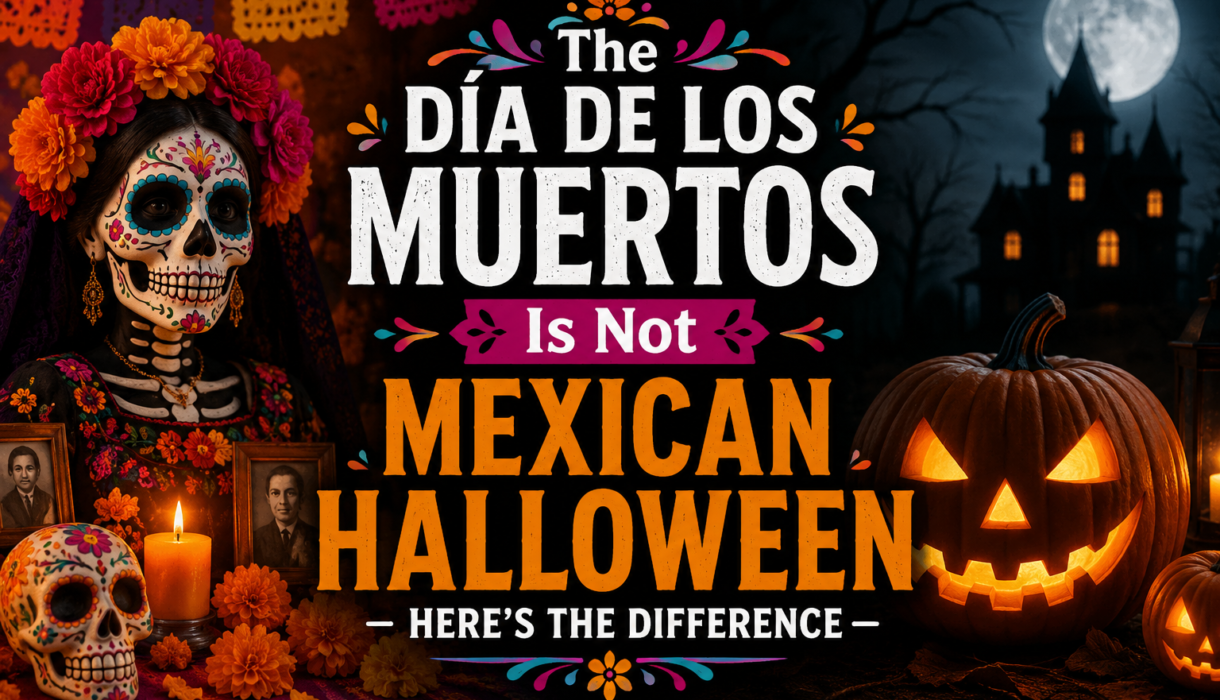
The Día de los Muertos Is Not Mexican Halloween — Here’s the Difference
Posted in :

Every year as late October transitions into early November, colorful displays of sugar skulls, vibrant orange marigolds, and intricate paper decorations appear across global pop culture. Because it closely coincides with October 31st, many outsiders mistakenly assume that Día de los Muertos (Day of the Dead) is simply a Mexican variation of Halloween. However, grouping these two events together overlooks centuries of unique cultural history. While both holidays share a thematic connection to the concept of death, their underlying philosophies, emotional tones, and core traditions are fundamentally different.
Rooted in Sacred Tradition, Not Fear
The primary distinction between the two holidays lies in their cultural purpose and overall atmosphere. Halloween, which evolved from the ancient Celtic festival of Samhain, historically focused on warding off harmful spirits, a theme that modern commercialization transformed into spooky costumes, horror movies, and trick-or-treating. In stark contrast, Día de los Muertos is an indigenous Mesoamerican and Catholic tradition rooted in love, honor, and joy. Rather than viewing death as something frightening or macabre, Mexican culture embraces it as a natural, continuous part of the human journey, turning the holiday into a warm family reunion rather than a night of frights.
The Sacred Purpose of the Ofrenda
At the heart of Day of the Dead celebrations is the ofrenda, a private or public altar meticulously built to honor deceased loved ones. Unlike Halloween decorations intended to startle or entertain neighbors, an ofrenda serves a deeply spiritual purpose. It is carefully arranged with vibrant cempasúchil (marigold) flowers to guide spirits home, framed photographs of family members, burning copal incense, and the deceased’s favorite foods and drinks. These altars act as symbolic portals, welcoming the souls of departed ancestors back to the physical world for a brief, joyous 24-hour visit with their living relatives.
Distinct Calendars and Symbolic Meanings
The two holidays also differ significantly in their scheduling and iconic symbols. Halloween is celebrated strictly on the single night of October 31st. Day of the Dead, however, spans across two days: November 1st (Día de los Inocentes, dedicated to children who have passed) and November 2nd (Día de los Muertos, honoring departed adults). Furthermore, while Halloween relies on imagery like ghosts, witches, and jack-o’-lanterns, Day of the Dead is world-renowned for its elegant Calaveras (skeletons), particularly La Calavera Catrina. These stylishly dressed skeletal figures remind the living that social status and material wealth fade, but human love and memory endure forever.
A Celebration of Life and Eternal Memory
Ultimately, mistaking Day of the Dead for “Mexican Halloween” misses the profound beauty of this recognized UNESCO Intangible Cultural Heritage practice. Halloween asks us to dress up and playfully confront our fear of the unknown, whereas Día de los Muertos invites us to pause, remember our lineage, and celebrate the enduring impact of those who came before us. By understanding these key differences, global observers can appreciate Day of the Dead for what it truly is: a joyful, heartfelt affirmation that our loved ones are never truly gone as long as we keep their memories alive.