The Fon Kingdom of Dahomey Had an All-Female Army Called the Agojie That Terrorized Empires
Posted in :

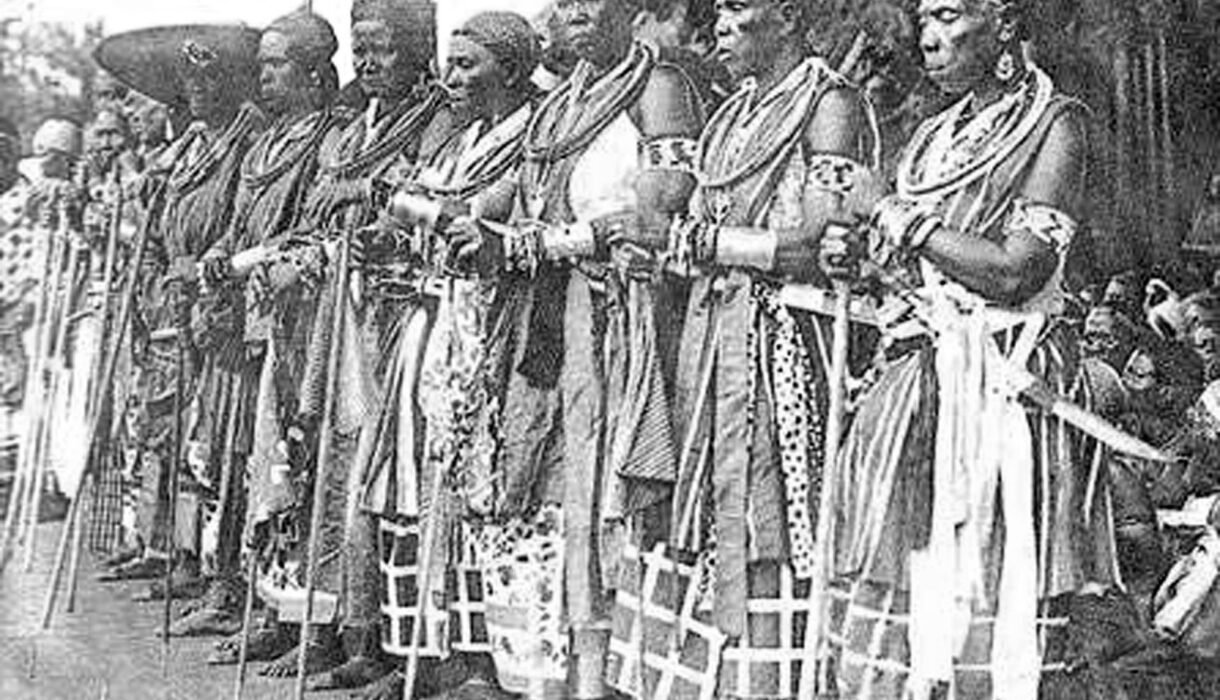
In the heart of West Africa, within what is present-day Benin, a powerful monarchy built one of the most formidable military forces in world history. The Kingdom of Dahomey, established by the Fon people in the seventeenth century, stood out not only for its strategic prowess but for a legendary military unit unlike any other. Known locally as the Agojie—and referred to by European observers as the “Dahomey Amazons”—this all-female standing army grew into an elite, terrifying force that reshaped regional power dynamics and defended its nation against rival empires.
The Humble Origins of a Royal Guard
The formation of the Agojie began not as a grand imperial war machine, but as a practical solution to internal security. During the reign of King Houegbadja in the late seventeenth century, a group of women was organized to serve as royal palace guards and elephant hunters. Because men were frequently called away for foreign warfare and agricultural labor, the king relied on women to protect the royal grounds.
Over time, subsequent rulers recognized the discipline and fierce loyalty of these guardians. King Agaja, who ruled in the early eighteenth century, expanded their role from palace security to active combat units. Faced with constant threat from larger neighboring states, Dahomey needed every available fighter, transforming what started as a specialized security corps into a full-scale military division.
Rigorous Training and Total Dedication
Becoming an Agojie warrior required total commitment and intense physical conditioning. Recruits were selected from various backgrounds—some volunteered, while others were conscripted or sent by family members. Once enrolled, the women underwent brutal training regiments designed to eliminate fear, heighten pain tolerance, and build extreme physical endurance.
The training included navigating dense, thorn-covered barriers without showing pain, surviving extended periods in the wilderness with minimal rations, and mastering hand-to-hand combat. Additionally, the Agojie swore vows of celibacy while serving, effectively marrying the king in a symbolic sense. This sacred status elevated their social standing above ordinary citizens and reinforced their singular loyalty to the throne and to their fellow soldiers, whom they referred to as Mino (“our mothers”).
Tactical Dominance on the Battlefield
On the battlefield, the Agojie were renowned for their speed, stealth, and ruthless efficiency. They operated in distinct specialized regiments, including archers, gunners, heavy artillery operators, and elite razor-warriors equipped with massive, specialized blades designed for swift decapitation. They often launched surprise attacks at dawn, breaching enemy fortifications before defenders could organize a response.
Their reputation spread quickly across West Africa, causing panic among rival states. Neighboring powers, such as the massive Oyo Empire, soon realized that facing Dahomey meant confronting a disciplined force that fought with absolute fearlessness and refused to surrender under any circumstances.
Clash with European Powers and Colonial Resistance
By the nineteenth century, the Agojie made up roughly one-third of Dahomey’s entire army, numbering several thousand soldiers. Their greatest challenge arrived during the Franco-Dahomean Wars of the late 1800s, when France attempted to colonize the region. European military commanders initial underestimated the female soldiers, expecting a swift victory against native forces.
Instead, French officers were stunned by the tactical intelligence and ferocious counterattacks of the Agojie. Equipped with modern rifles and traditional weaponry, the female warriors inflicted heavy casualties on French troops during intense close-quarters combat. Although France ultimately conquered Dahomey using superior artillery and machine guns, French soldiers frequently praised the skill and bravery of the Agojie in their official military logs.
The Lasting Legacy of the Agojie
Following the fall of Dahomey, the army was formally disbanded, and surviving members reintegrated into civilian society or lived out their remaining years quietly. The last known surviving Agojie warrior, a woman named Nawi, passed away in 1979 at over a hundred years old, closing a direct link to one of history’s most unusual military traditions.
Today, the legacy of the Agojie continues to inspire books, academic research, and major historical films. Their story stands as a compelling testament to female military strategy, resilience, and power, proving that the defensive strength of an empire once rested comfortably in the hands of its women.