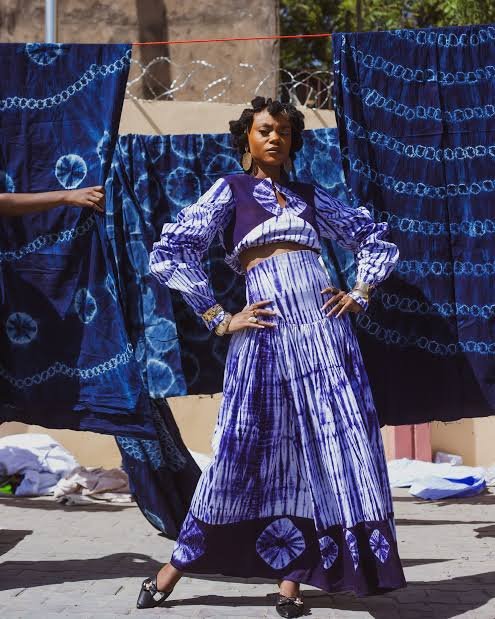

Across the vast Saharan landscapes and vibrant markets of Chad, a striking aesthetic tradition immediately captures the eye. Many women wrap themselves in deep, midnight-blue fabrics dyed with natural indigo—so heavily saturated that the pigment rubs off directly onto their forearms, necks, and faces. Rather than seeing this blue residue as a temporary stain or an unwanted mess, Chadian culture views it as a mark of elegance, prestige, and feminine allure.
The Art of the Deep Indigo Dye
The journey toward this prized shade of blue begins in traditional dyeing pits across Central and West Africa. Artisans soak cotton fabrics in fermented vats of crushed indigo leaves, repeating the dipping process multiple times over several days. To achieve the deep, near-black blue favored in Chad, the cloth is intentionally unwashed after its final dip, leaving heavy deposits of raw pigment sitting on the surface. When beaten with wooden mallets, the fabric takes on a metallic, iridescent sheen that sparkles under the desert sun.
A Living Cosmetics Treatment for the Desert
Far from being purely decorative, wearing raw indigo serves a practical purpose in Chad’s harsh, arid climate. The fine indigo powder transfer acts as a natural shield against intense sunlight, wind, and dust. Furthermore, traditional beliefs hold that indigo possesses soothing and antibacterial properties for the skin. As women move through their daily routines, sweat mixes with the dye, creating a cooling layer that protects the skin while imparting a soft, blue-tinted glow that is deeply admired.
A Symbol of Wealth, Status, and Marriage
In Chadian society, particularly among nomadic Tuareg and Sahelian communities, indigo fabric has historically functioned as currency and a status symbol. Quality indigo cloth requires immense labor, time, and skill to produce, making it an expensive luxury item. When a woman wears cloth so richly dyed that it rubs off onto her skin, it serves as a public declaration of prosperity. It signals that her family can afford authentic, hand-dyed textiles rather than cheap synthetic imitations.
The Blue Skin Mark of Celebrations
The deliberate staining of skin becomes particularly significant during weddings, religious festivals, and major social gatherings. Brides and young women wrap themselves in freshly dyed indigo shawls (lafaya) for days leading up to a ceremony to ensure their skin absorbs the blue tint. Paired with intricate henna designs, gold jewelry, and fragrant scented oils, the blue residue creates a striking contrast that is considered the pinnacle of traditional beauty and readiness for celebration.
Preserving Identity in a Modern World
In an era dominated by mass-produced Western clothing and modern cosmetics, the endurance of indigo culture in Chad stands as a powerful testament to heritage preservation. While chemical dyes and factory-printed fabrics have flooded global markets, Chadian women continue to champion traditional indigo techniques passed down through generations. Wearing blue-stained skin is a proud expression of cultural identity that connects modern women directly to their ancestors.
Redefining Global Standards of Beauty
The Chadian celebration of indigo-stained skin challenges conventional Western definitions of cosmetics and skincare. It demonstrates how beauty standards around the world are deeply intertwined with geography, history, and natural resources. For Chadian women, the deep blue glow on their skin is not a flaw to be washed away—it is a cherished crown of elegance, tradition, and timeless grace.