The Poro Society of Liberia’s Grebo Tribe — Where Boys Enter the Forest as Children and Return as Men
Posted in :

In the dense, tropical forests of West Africa, ancient customs continue to shape the lives of young men long before modern institutions take over. Deep within Liberia, among ethnic groups like the Grebo tribe, the transition from youth to adulthood is not marked by age alone or formal school graduations. Instead, it is governed by an age-old secret institution known as the Poro Society. For centuries, this traditional brotherhood has served as the social, political, and spiritual backbone of community life.
The Poro Society operates as a traditional bush school, where young boys leave behind their families and enter a secluded sanctuary in the rainforest. Known as the “Poro Bush,” this hidden camp is completely off-limits to women and non-initiates. Inside this natural classroom, boys undergo an intense period of physical endurance, cultural education, and character building designed to strip away childhood innocence and forge accountable community leaders.
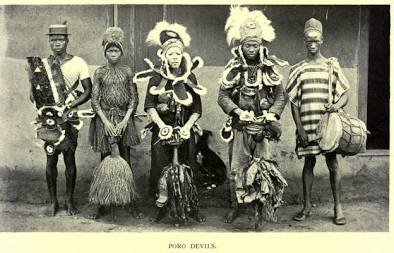
Poro Society Ritual Figures and Initiates. Source: Humanities LibreTexts
The Symbolic Death and Rebirth in the Sacred Forest
The journey begins with a dramatic symbolic ritual that marks the end of boyhood. When a young boy enters the sacred forest, elders describe the process as being swallowed by the Poro spirit or forest deity. This symbolic act represents the death of his childhood identity, cutting ties with his past dependence on family and domestic life.
During their time isolated in the forest, initiates endure rigorous physical challenges, discipline, and endurance tests. They live under strict rules managed by senior society members, learning self-reliance, emotional control, and respect for authority. When their training is complete, the young men emerge from the forest in a celebration that signifies their rebirth—returning to their villages as fully formed adults ready to take on social responsibilities.
Essential Skills and Practical Survival Training
While spiritual transformation is central to the Poro experience, the society functions heavily as a practical vocational school. Inside the forest, elders teach initiates crucial life skills necessary for survival in their local environment. Boys learn advanced hunting techniques, sustainable farming methods, local medicinal plant uses, and house-building techniques passed down through generations.
In addition to physical labor and survival skills, the curriculum focuses heavily on civic duty and governance. Initiates are taught native laws, tribal history, and social ethics. They learn how disputes are resolved, how decisions are made within the tribe, and the importance of holding community secrets. This ensures that every graduate understands both how to provide for a family and how to contribute positively to social order.
Preservation of Cultural Heritage and Social Unity
For the Grebo people and neighboring ethnic groups in Liberia, the Poro Society plays a pivotal role in preserving tribal identity. In a rapidly modernizing world, the bush school keeps oral histories, traditional songs, dances, and folklore alive. It creates a shared cultural bond that connects living generations directly to their ancestors.
Furthermore, the society builds lifelong brotherhoods among its members. Boys who undergo the grueling training together form unbreakable bonds of trust that endure for the rest of their lives. This social cohesion helps maintain peace within villages, as members are bound by oath to support one another, respect tribal authority, and work toward the common good of their people.
Modern Challenges and Contemporary Relevance
In recent decades, the traditional practices of the Poro Society have faced increasing pressure from Western education, religious shifts, and modern human rights advocacy. Concerns regarding academic disruption for young boys and the secrecy surrounding traditional practices have sparked discussions between local leaders and governmental bodies.
Despite these modern friction points, the Poro Society remains deeply respected across rural Liberia. Tribal elders have increasingly sought balance, adjusting initiation schedules so they do not conflict with formal school calendars. The society continues to adapt, proving that even amidst societal change, the core desire to guide young boys into responsible manhood remains a timeless human priority.