The Baga Tribe’s “Nimba” Fertility Goddess — The Most Sacred Object in West Africa
Posted in :

Along the swampy Atlantic coast of Guinea, the Baga people have long guarded one of African art history’s most revered spiritual treasures. Known locally as D’mba (and widely referred to globally as Nimba), this towering wooden shoulder mask embodies far more than artistic craftsmanship. It represents the ultimate ideal of womanhood, maternal devotion, and communal abundance. For generations, Nimba has stood as a sacred spiritual force that guides the Baga people through life’s most essential transitions, earning a reputation as one of the most sacred carved objects in all of West Africa.
The Sacred Meaning Behind Nimba
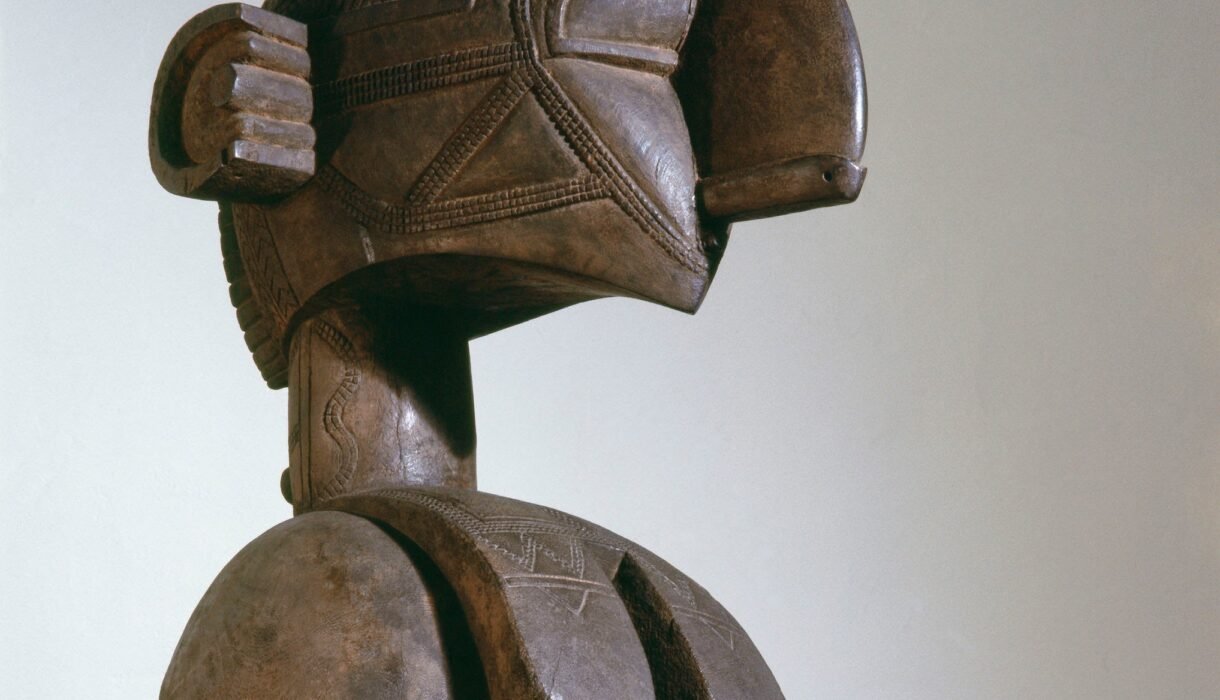
Unlike traditional African face masks that cover only the features of a dancer, the Nimba sculpture is a massive shoulder headdress carved from a single block of wood. It can weigh upwards of eighty pounds and rests directly upon the shoulders of a male dancer who is fully concealed beneath thick layers of raffia fiber. Rather than depicting a specific ancestor or scary spirit, Nimba represents an abstract ideal: the mother of fertility, wisdom, and protection. She is a spiritual mother who nurtures not just human children, but also the land, crops, and entire community.
Distinct Visual Symbolism and Design
The physical appearance of Nimba is instantly recognizable by its dramatic, exaggerated proportions. The carving features a prominent, bird-like crest along the top of the head, a large, hooked nose, and a pair of pendulous breasts that hang downward. Each of these exaggerated features carries deep symbolic weight for the Baga tribe:
- Pendulous Breasts: Symbolize a woman who has nursed many generations and continues to give life and sustenance to her community.
- Large Hooked Nose and Head Crest: Represent nobility, vision, and the ability to look out over the village to protect it from harm.
- Scarification Marks: Intricate line patterns carved into the cheeks honor traditional identity and beauty standards.
The Role of Nimba in Agricultural and Social Life
Nimba is called upon during the most crucial moments of community life, particularly during the planting and harvesting of rice, which is the staple crop of the region. During harvest festivals, the dancer carrying Nimba performs dynamic, rhythmic movements accompanied by village drumming and singing. As the heavy mask sways, women toss rice grains at Nimba’s feet as a prayer for rich harvests and healthy children. The spirit of Nimba is also summoned during weddings to bless new brides and at funerals to guide elders safely into the ancestral realm.
Surviving Historical Suppression and Colonial Resistance
The history of the Nimba mask is also a story of cultural survival against intense pressure. During the mid-20th century, European colonization and aggressive religious conversion efforts in Guinea led to widespread destruction or confiscation of traditional sacred art. Many original Nimba carvings were smuggled out of the country and sold to foreign collectors and prestigious Western museums. For decades, traditional public performances were suppressed by political authorities seeking to modernize the nation.
Modern Revival and Worldwide Legacy
Despite decades of suppression, the spirit of Nimba never disappeared from the collective memory of the Baga people. In recent decades, village elders and artisans have actively revived the carving and performance traditions, restoring Nimba to her rightful place at the center of Baga cultural life. Today, Nimba is so iconic that her silhouette is featured on national symbols in Guinea, serving as an emblem of cultural pride across West Africa.
A Lasting Monument to Maternal Grace
Ultimately, the Nimba mask remains a powerful reminder of how art, spirituality, and community intersect in traditional African societies. She is not merely a statue to be admired behind museum glass; she is a living emblem of life, generosity, and resilience. Through her imposing wooden form and graceful presence, the Baga tribe continues to honor the fundamental truth that all prosperity begins with the nurturing power of motherhood.