
In traditional Igbo cosmology, death is never viewed as a final destination or an abrupt end to human existence. Instead, the Igbo people of southeastern Nigeria understand death as a vital transition from the physical world into the spiritual realm, known as Ala Muo. Because of this core belief, funeral rites are taken incredibly seriously. How a person is buried is a direct reflection of who they were in life, what they achieved, and how they are expected to function in the afterlife.
While most ordinary individuals in traditional Igbo society were laid to rest lying down, a highly unusual and fascinating exception was made for kings (Eze) and elite titled men, such as those in the revered Nze na Ozo society. Historically, these noblemen were often buried in a sitting position. This practice is not just a myth; archaeological evidence from the famous 10th-century Igbo-Ukwu site revealed the ancient burial of a highly revered figure who was interred sitting upright on a stool, surrounded by rich bronze artifacts and beads.
The Symbol of Eternal Alertness
The primary reason for the seated burial position is deeply philosophical. In Western and modern cultures, death is often referred to as “eternal rest” or “sleeping.” However, the traditional Igbo worldview dictates that a great leader does not sleep when he transitions. By burying a king or titled man sitting up, the community symbolizes that his spirit remains awake, alert, and fiercely watchful over his descendants. He is positioned to actively protect his people from the ancestral realm, rather than lying down in passive slumber.
Unbroken Authority and Kingship
Furthermore, the seated posture represents unbroken authority. In life, an Igbo king or chief governs and presides over his community from a seated position on his throne. By placing him on a stool or a carved wooden chair inside his grave, the community acknowledges that his reign does not end with his last breath. He carries his leadership status directly into the spirit world. He arrives in the afterlife not as a subordinate, but as a ruler ready to take his rightful place among the great ancestors who came before him.
Dressing for the Ancestral Journey
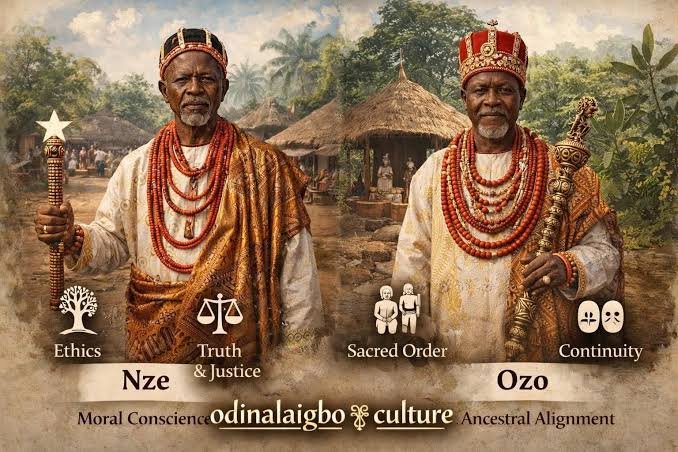
Because the deceased is expected to arrive in the spirit world with dignity, the preparation of the body is meticulous. A seated nobleman is never buried in plain clothes. He is dressed in his finest traditional woven wrappers, adorned with coral beads, and often holds his staff of office (Ofo or Alo). This elaborate dressing ensures that when the ancestors welcome him, they immediately recognize his high social rank and grant him the respect he earned during his earthly life.
A Strict Hierarchy of Death
It is important to note that this specific burial style was an exclusive honor, strictly reserved for those who had reached the pinnacle of societal achievement. In Igbo culture, a “good death” is one where an individual lived to a ripe old age, raised a family, and contributed positively to the community. Only men who had taken high titles and fulfilled all traditional obligations were granted the privilege of a seated burial. For a commoner or a young person to be buried in such a manner would have been considered a severe breach of cultural order.
The Enduring Legacy in Modern Times
Today, the literal practice of burying the dead in a sitting position has largely faded across Igboland. The widespread adoption of Christianity, the use of modern mortuaries, and contemporary burial laws have shifted the culture toward standard caskets and lying-down burials. However, the philosophical essence of the tradition remains untouched.
Modern Igbo families still spend immense resources on elaborate “second burial” ceremonies (Ikwa Ozu) to ensure their loved ones transition properly into the ancestral realm. Even though today’s elders may be buried lying down in wooden caskets, they are still dressed in their royal regalia, clutching their staffs of authority. The physical posture may have changed, but the profound Igbo belief that the dead are still present, still leading, and still watching remains as powerful as ever.